

Clear Durable Storage Bins for Organizing: A How-To Guide
Table of Contents
- Why Clear Durable Storage Bins Work Better Than Opaque Alternatives
- Choosing the Right Size and Material for Your Space
- Understanding Clear Storage Bin Weight Capacity
- How to Organize a Closet With Clear Bins
- Organizing Your Pantry and Kitchen With Clear Bins
- Maintenance and Long-Term Storage Best Practices
- Frequently Asked Questions
Last Updated: October 1, 2026
Why Clear Durable Storage Bins Work Better Than Opaque Alternatives
Clear durable storage bins are transforming how families organize their homes. Unlike opaque containers that hide contents, transparent walls let you see exactly what's stored without opening every bin. This visibility saves time during daily tasks and prevents duplicate purchases.
The difference between clear and opaque storage comes down to practical efficiency. When you can see what's inside, you make faster decisions about where items belong. You avoid the frustration of forgetting what you stored three months ago. According to organizational psychology research from the University of California, visual accessibility increases the likelihood that storage systems remain organized long-term.
Viva homeStore specializes in practical home organization solutions, and clear durable storage bins sit at the core of that mission. These bins address a real problem: families spend time searching for items they already own. The stackable design maximizes vertical space, and the transparent construction eliminates guesswork.
Durability matters equally. Polypropylene and impact-resistant plastics withstand repeated use, temperature changes, and the weight of stacked items. A quality bin won't crack, warp, or become brittle after a few years. This longevity makes them a smarter investment than cheaper alternatives that degrade quickly.
Choosing the Right Size and Material for Your Space
Selecting the correct bin size depends on your available space and what you're storing. Small bins work well for closets and shelving units. Medium and large bins suit garage storage and under-bed organization. The key is matching bin dimensions to your actual storage locations before you buy.
Polypropylene vs. Other Plastics: What Durability Means
Polypropylene is the gold standard for storage bins because it resists cracking and maintains clarity over years of use. This plastic handles temperature swings without becoming brittle in cold or warping in heat. It's also BPA-free, making it safe for food storage and items that will touch your family's belongings.
Other plastics like PET or PVC offer lower durability. PET containers yellow over time and become cloudy, reducing visibility. PVC can off-gas and isn't ideal for long-term storage. Polypropylene doesn't have these drawbacks, which is why it dominates the storage bin market.
The weight-bearing capacity of polypropylene bins typically ranges from 25 to 50 pounds per bin when stacked properly. This means you can store heavier items like seasonal clothing, books, or tools without worrying about structural failure. Always check the manufacturer's specifications for your specific bin, as capacity varies by wall thickness and design.
Stackable Storage Bins With Lids: Maximizing Vertical Space
Stackable storage bins with lids transform how you use vertical space. A closet that holds four single-layer bins can hold eight or more when you stack them. This doubling of capacity happens without requiring additional floor space.
Latching lids keep contents secure and dust-free. The latch mechanism prevents the lid from shifting during stacking, which protects items inside and keeps the stack stable. Non-latching lids are simpler but less reliable during movement or in homes with children and pets.
The stackable design works because modern bins have reinforced corners and flat tops. The flat surface distributes weight evenly across the bin below, preventing collapse. This engineering detail separates quality bins from cheaper alternatives that cave under pressure.
Understanding Clear Storage Bin Weight Capacity
Weight capacity is the maximum load a single bin can safely hold, but manufacturers' ratings often lack transparency about how they're tested or what happens when you exceed them. The Federal Trade Commission does not mandate standardized weight-capacity testing for storage containers, which means ratings vary widely across brands and can be difficult to verify independently.
For stackable bins, the rating typically accounts for the bin's own weight plus contents. A bin rated for 50 pounds can safely hold 50 pounds of items inside, not including the bin itself. However, this rating assumes the bin sits alone or on a single layer. Stacking multiplies the load on lower bins exponentially. If you stack three bins on top of each other, the bottom bin supports its own weight plus the weight of two bins above it and their contents. A bottom bin in a four-bin stack might support 150+ pounds total, so verify that your bin is rated for stacked use at that scale.
The material thickness directly affects weight capacity. Bins made from polypropylene with walls thicker than 0.15 inches generally handle stacking better than thin-walled alternatives. Thicker walls resist deformation under pressure and prevent the corner stress failures that cause cracks in cheaper bins. Quality manufacturers publish wall thickness specifications; if a product listing doesn't include this detail, it's a red flag.
How to Verify Weight Capacity Claims
Manufacturers test weight capacity using different methods, and not all methods reflect real-world stacking scenarios. Some test a single bin in isolation; others test stacked configurations. Before purchasing, look for product documentation that specifies:
- Test method used (static load test, dynamic stacking test, or both)
- Wall thickness in inches or millimeters
- Maximum number of bins safe to stack (this is often lower than you'd assume)
- Temperature conditions tested (capacity can decrease in cold environments where plastic becomes more brittle)
If a manufacturer doesn't publish these details, contact their customer service directly. Reputable companies will provide test reports or third-party certification. Avoid bins with vague claims like "heavy-duty" or "industrial strength" without supporting specifications.
Real-World Failure Modes
Bins fail in predictable ways when overloaded. The most common failure point is the corner seams where walls meet the base. Stress concentrates there, and thin plastic cracks under sustained weight. The second failure mode is lid warping, when weight presses down on a lid, it can bow inward, making it difficult to remove or causing contents to shift during stacking.
Temperature amplifies these problems.
How to Organize a Closet With Clear Bins
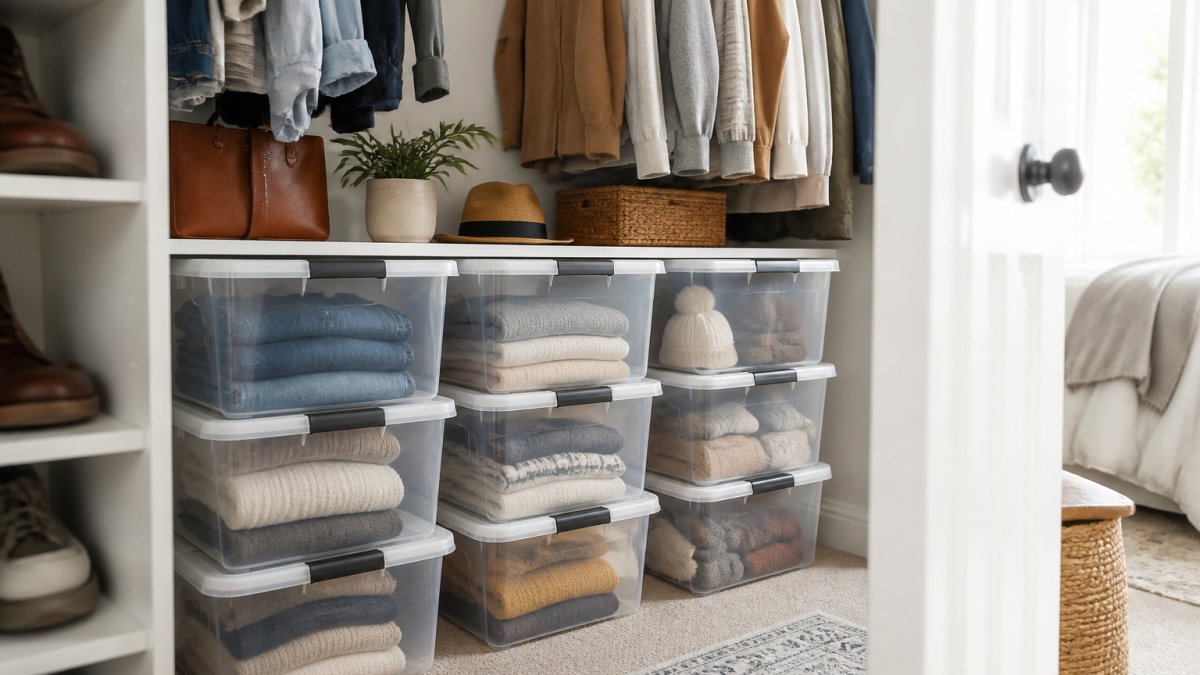
Closet organization with clear bins follows a simple process. First, measure your closet shelves to determine which bin sizes fit. Standard closets accommodate medium and large bins side by side. Measure height to see how many bins you can stack vertically.
Seasonal Rotation and Labeling Systems
Seasonal rotation keeps your closet relevant and accessible. During winter, store summer clothing in bins on upper shelves or in less-accessible areas. Rotate them down when seasons change.
Organizing Your Pantry and Kitchen With Clear Bins
Kitchen and pantry organization with clear bins prevents food waste and simplifies meal prep. Clear containers let you see when you're running low on staples like flour, sugar, or pasta. You avoid buying duplicates and waste less money on forgotten ingredients.
Maintenance and Long-Term Storage Best Practices
Clear durable storage bins require minimal maintenance but benefit from occasional attention to preserve clarity and structural integrity. Wipe down exterior surfaces with a damp cloth to remove dust and prevent discoloration. This keeps bins looking transparent and maintains visibility of contents. For interior cleaning, use a dry cloth for clothing and household items. For pantry items, wash bins occasionally with warm soapy water and dry completely before refilling to prevent mold growth and keep contents fresh.
Storing Empty Bins: Nesting and Space Efficiency
One of the most overlooked aspects of bin organization is how to store the bins themselves when they're empty. Unlike stacking, which saves vertical space when bins are full, nesting saves horizontal floor space when bins are empty, a critical advantage for homes with limited storage.
Eco-Friendly and Recycled Plastic Alternatives
Most clear storage bins on the market are made from virgin polypropylene, which is petroleum-based and generates carbon emissions during manufacturing. For environmentally conscious consumers, recycled plastic alternatives offer similar durability with a lower environmental footprint.
Frequently Asked Questions
Are clear storage bins better than opaque ones for home organization?
Yes. Clear durable storage bins let you see contents without opening them, reducing time spent searching and preventing duplicate purchases. Transparent walls also help you quickly identify what's stored where, making inventory management easier. For pantry, closet, and garage organization, visibility eliminates guesswork and keeps items more accessible.
How do you choose durable plastic bins that won't crack?
Look for bins made from polypropylene, which resists impact and temperature changes better than standard plastic. Check for shatter-resistant construction and BPA-free certification. Examine the thickness of the walls and base. Test latching lids to ensure they fit snugly without warping. Bins rated for heavy-duty use typically have reinforced corners and thicker plastic that withstand stacking weight and frequent handling.
What's the best way to label clear storage bins?
Use waterproof labels on the front and top of each bin for easy identification from multiple angles. Include item names, quantities, and date stored. For pantry items, add expiration dates. Laminated labels resist moisture and won't fade. Color-coded labels by category (seasonal, pantry, closet) speed up retrieval. For long-term storage, take a photo of bin contents before sealing, then attach the photo to the label as backup.
How can you maximize vertical space using stackable storage bins?
Stack bins up to the ceiling, using wall-mounted shelving or freestanding units designed for stackable bins. Ensure each bin's weight capacity supports the items above it. Place heavier bins on lower shelves and lighter ones higher up. Use uniform bin sizes to create neat, stable stacks. Nestable bins save floor space when empty. Vertical stacking in closets, garages, and pantries transforms unused wall height into functional storage, freeing up floor area.