

Durable Storage Bins for Garage Organization: A How-To Guide
Table of Contents
- Understanding Durable Storage Bins for Garage Organization
- Heavy Duty Garage Storage Totes: What Makes Them Different
- Best Practices for Garage Organization
- Garage Storage Labeling Ideas for Easy Inventory Management
- Weather-Resistant and Moisture-Proof Features
- Organizing Seasonal Items and Decluttering
- Eco-Friendly and Recycled Storage Options
- Frequently Asked Questions
Last Updated: October 3, 2026
Understanding Durable Storage Bins for Garage Organization
Durable storage bins for garage organization are the foundation of any functional system. At Viva homeStore, we offer a curated selection of practical and innovative home essentials that can help families transform chaotic garages by focusing on materials, features, and systems that actually work.
The difference between bins that last and bins that fail comes down to construction quality, load capacity, and environmental resistance. Most people buy the cheapest option, then wonder why their system collapses within a year.
Material Types That Matter: Polypropylene vs. Other Options
Polypropylene is the industry standard for heavy-duty garage storage totes because it resists moisture, chemicals, temperature swings, and impact while holding its shape under heavy loads.
Polypropylene outperforms steel (which rusts), wood (which warps), and thin plastics (which crack). It stays stable through freeze-thaw cycles, resists UV damage, and won't degrade from gasoline or fertilizer spills.
Look for containers with molded walls at least 3-4mm thick. Thinner bins flex under load and stacks collapse. Heavy-duty options use reinforced corners and ribbed sidewalls to distribute weight evenly.
Key Features to Evaluate
Start with snap-lock lids that keep moisture and pests out while staying secure on shelves. Airtight seals matter most for seasonal items or anything sensitive to humidity.
Clear-view design lets you scan contents without opening bins, saving time on the most frequent task: locating items.
Look for reinforced handles molded as part of the structure, not glued on. Many bins fail when handles break under weight.
Heavy Duty Garage Storage Totes: What Makes Them Different
Heavy duty garage storage totes are engineered for weight distribution and impact resistance, showing immediate differences when stacking or moving.
Standard bins max out at 25-30 pounds; heavy-duty versions handle 50-100+ pounds with thicker material and reinforced bases. This matters for tools, seasonal decorations, and heavy items.
Load-Bearing Capacity and Weight Distribution
A stack of five bins puts enormous pressure on the bottom unit. If the base isn't designed for it, walls bow outward and crack.
Quality heavy-duty totes have:
- Reinforced base with internal ribbing to prevent flexing
- Thicker sidewalls that resist deformation under stacked weight
- Weight-rated labeling so you know exactly what each unit can handle
- Tested structural integrity across temperature ranges
When stacking, the bottom container bears full weight of everything above. A five-bin stack with 50 pounds in each unit puts 250 pounds of pressure on the bottom bin. Choose containers rated for at least 150-200 pounds of load capacity if stacking more than three units high.
Impact-Resistant Construction and Durability Testing
Garages are harsh environments where bins get bumped with ladders and hit by doors. Impact-resistant construction prevents cracking when struck.
Heavy-duty bins use impact-resistant polypropylene that remains flexible from 0°F to 120°F. Brittle bins crack in winter when bumped.
The best containers are tested for impact resistance using standardized methods. This isn't marketing language, it's measurable durability.
Best Practices for Garage Organization
The best organization system is one your family will maintain, not one that looks perfect for one month then collapses.
Categorize items by storage needs: tools need easy access and visibility; seasonal items need temperature and moisture protection. This determines which bins you choose.
Stackable and Nestable Solutions for Space Optimization
Stackable bins use vertical space efficiently. Nestable bins save space when empty, letting you store extras without wasting shelf space.
The best solutions stack securely when full and nest when empty.
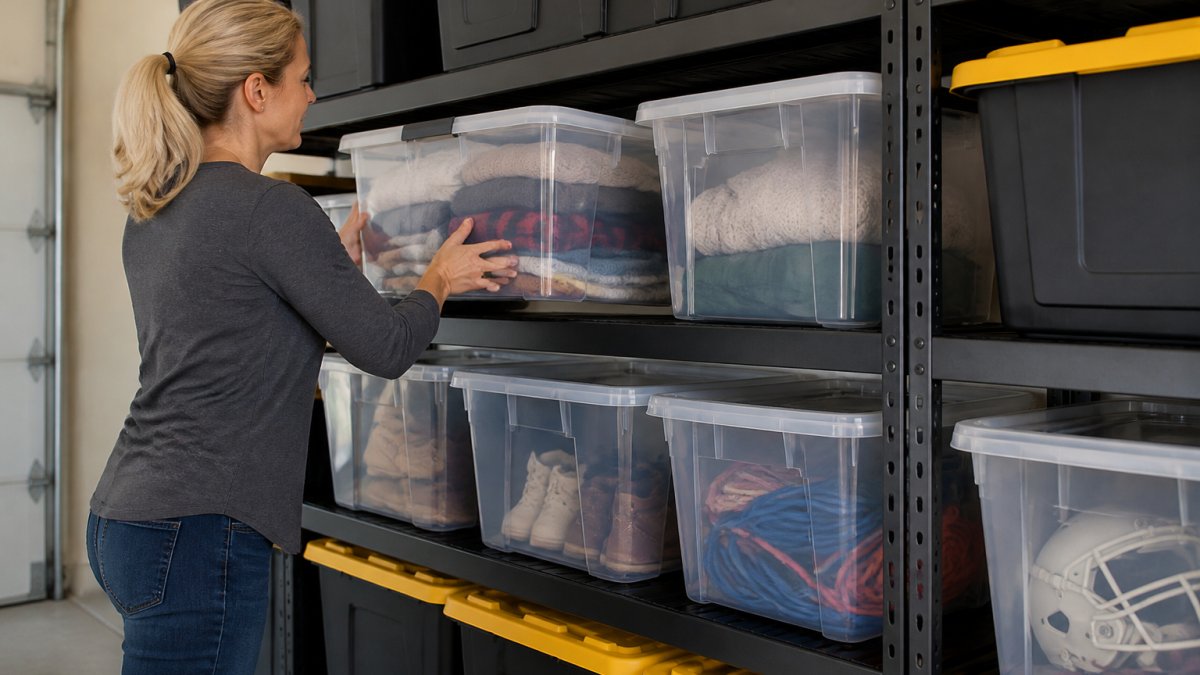
Stack bins on wall-mounted shelving instead of spreading them across the floor. A single wall section holds 10-15 bins stacked three or four high, freeing floor space for work and parking.
Verify shelving weight capacity. A metal shelf rated for 300 pounds can hold five 50-pound bins plus container weight (260-265 pounds total), but not a sixth bin.
Vertical Storage and Modular Shelving Systems
A modular shelving system lets you customize layout as storage needs change.
Industrial-grade shelving supports heavy bins without sagging. Look for systems with adjustable shelves so you can space them based on bin height. Some bins are 12 inches tall, others 18 inches. Adjustable shelving adapts to your actual containers rather than forcing you to work around fixed shelf heights.
The best modular systems use metal frames with bolt-together construction. This approach lets you reconfigure shelves, add additional units, or expand the system without replacing everything. Plastic shelving works for light loads, but metal handles the weight of multiple heavy-duty bins with no flex.
Garage Storage Labeling Ideas for Easy Inventory Management
A bin is useless if you can't find what's inside. Garage storage labeling ideas transform bins from mystery boxes into an actual inventory system.
The simplest approach uses white adhesive labels with a permanent marker. Write the contents and the date you stored them. This works, but labels fade, peel off, and wear away from handling.
Better systems use laminated labels protected by clear tape. These survive garage conditions and stay readable for years. Label the front and top of each bin so you can identify contents whether the bin is on a shelf or in a stack.
Creating a Labeling System That Lasts
A labeling system that lasts requires durable materials and consistent categories. Start by deciding on your category system. Will you organize by season, by room, by function, or by item type? Choose one approach and stick with it so everyone in your household can find things.
Use a label maker that prints on durable plastic labels. Adhesive labels eventually peel. Plastic labels stay put. Laminate the labels or cover them with clear packing tape for extra protection against moisture and wear.
Create a master inventory list on your phone or computer. Photograph each labeled bin and note its location. This takes 30 minutes initially but saves hours when you're searching for something months later. Update the list when you move bins or change contents.
Clear-View Bins and Bin Dividers for Quick Access
Clear-view bins let you see contents without opening them. This single feature cuts search time dramatically. Translucent or transparent polypropylene bins work for most storage, but they're essential for frequently accessed items.
Bin dividers turn a single large container into organized compartments. A 40-quart bin with dividers holds multiple categories of items, screws and fasteners in one section, batteries and light bulbs in another, electrical supplies in a third. This prevents the "dig through everything to find one thing" problem.
For tool storage, dividers are essential. A single large bin full of mixed tools is nearly useless. Divided bins let you organize by function: cutting tools, fastening tools, measuring tools. You find what you need in seconds instead of minutes.
Weather-Resistant and Moisture-Proof Features
Garages experience temperature swings, humidity, and moisture that indoor closets never face. A bin that works inside your house might fail in a garage within months.
Moisture-resistant construction keeps contents dry. Polypropylene doesn't absorb water, but seals and hinges fail if they're not designed for moisture exposure. Airtight lids with rubber gaskets prevent moisture from entering, which matters for seasonal clothing, electronics, and anything that corrodes or mildews in humidity.
Airtight Snap-Lock Lids and Rust-Resistant Hardware
An airtight seal is the difference between storage that protects and storage that just contains. Snap-lock lids with rubber gaskets create a moisture barrier. When you close the lid, you hear a distinct click, that's the seal engaging.
The hardware matters as much as the seal. Rust-resistant hinges and fasteners stay functional in humid garages. Cheap bins use steel hardware that rusts within months. Quality containers use stainless steel or plastic hardware that won't corrode.
UV-Resistant Materials for Long-Term Storage
UV-resistant materials don't fade or degrade in sunlight. If your garage has windows or skylights, UV exposure breaks down standard plastics over time. The bins become brittle and eventually crack.
UV-resistant polypropylene formulations include additives that absorb ultraviolet radiation before it damages the plastic structure.
Look for bins labeled as UV-stabilized or UV-resistant. This specification is essential if your garage gets direct sunlight.
Organizing Seasonal Items and Decluttering
Seasonal storage is where most garage organization fails. People store winter decorations in spring, then forget what's in the bins by December. A system that works handles seasonal rotation without confusion.
Before storing seasonal items, sort ruthlessly. If you haven't used something in two years, it's not coming back. Donate or discard it. This reduces the volume you're storing and makes the bins you do use actually functional.
Label seasonal bins with the season AND the year stored. "Winter Decorations 2026" tells you immediately what's inside and how old the contents are.
Store seasonal items in the coolest, driest part of your garage. If your garage gets hot in summer, store winter items in the shadiest corner. Temperature swings damage fabrics, decorations, and electronics.
Eco-Friendly and Recycled Storage Options
Sustainable storage options are becoming more available. Bins made from recycled polypropylene perform as well as virgin plastic but reduce environmental impact.
If environmental impact matters to your family, recycled options deliver the same performance with lower resource consumption.
Choosing the right durable storage bins for garage organization means matching container features to your actual garage environment and storage needs. At Viva homeStore, we understand that garage organization isn't one-size-fits-all. Temperature extremes, moisture levels, and space constraints vary by location and season. Start by assessing your specific conditions, temperature range, humidity, available space, and weight capacity requirements. The bins you choose become the foundation of an organization system that actually works. American Society for Testing and Materials standards on plastic container durability provide technical specifications that help identify quality construction.
Frequently Asked Questions
What type of bin is best for organizing a garage?
Heavy-duty plastic bins made from polypropylene offer the best balance of durability, moisture resistance, and affordability. Look for stackable containers with snap-lock lids, impact-resistant construction, and UV-resistant materials. Transparent or clear-view bins help you identify contents quickly, while modular designs allow you to customize your storage layout as needs change. Consider your specific storage needs, seasonal items, tools, or food prep supplies, and choose bins with appropriate load-bearing capacity for your garage environment.
How do you label garage storage bins for easy access?
Create a consistent labeling system using durable labels that withstand temperature fluctuations and moisture. Use waterproof label makers or laminated handwritten labels, and include category names, contents, and date stored. For bins with dividers, label each section separately. Keep a master inventory list on your phone or printed and posted in your garage. Color-coding by category (seasonal, tools, sports equipment) combined with text labels provides quick visual identification and prevents searching through multiple bins.
Are clear or opaque storage bins better for garage organization?
Clear or transparent bins are generally superior for garage organization because they allow quick visual identification of contents without opening each container. This saves time and reduces clutter from searching. However, opaque bins work better for items sensitive to light or for aesthetic consistency. Many organized garages use a combination: clear bins for frequently accessed items and opaque bins for seasonal storage or items you rarely need. Whichever you choose, ensure they're UV-resistant to prevent material degradation over time.
What storage capacity should I choose for heavy duty garage storage totes?
Storage capacity depends on your garage space and what you're storing. Standard heavy-duty totes range from 10 to 100+ gallons. For tools and small items, 20-30 gallon containers work well. For seasonal decorations or bulky items, 50-100 gallon bins maximize space efficiency. Consider your floor's weight-bearing limit and shelving capacity, stack lighter containers on upper shelves and heavier, filled bins lower. Measure your garage footprint and plan your layout before purchasing to ensure bins fit your vertical storage and modular shelving system.