

How to Choose Durable Furniture Materials: A 2026 Guide
Table of Contents
- Understanding Durability in Furniture Materials
- Most Durable Upholstery Fabrics for Long-Lasting Sofas and Chairs
- Solid Wood vs. Engineered Wood Furniture: Which Lasts Longer
- How to Test Furniture Quality Before Buying
- Best Furniture Materials for Pets and Kids
- Climate-Specific Material Performance and Longevity
- Repairability and Modularity: Extending Furniture Life
- Maintenance and Cleaning Requirements for Different Materials
Last Updated: August 10, 2026
Understanding Durability in Furniture Materials
Durability in furniture materials refers to how well pieces withstand daily use, environmental stress, and aging without significant deterioration. At Viva homeStore, we help families understand that durability isn't a single metric, it's the intersection of material selection, construction quality, and proper maintenance.
When investing in furniture, durability directly affects cost-per-year of ownership. A cheap chair that falls apart in 18 months costs more than a well-made one lasting eight years, even if the initial price is higher. Durability depends on fiber type (natural versus synthetic), frame construction (solid wood, engineered wood, or metal), and cushioning density, understanding these elements helps you make informed choices aligned with your household's actual needs.
Most Durable Upholstery Fabrics for Long-Lasting Sofas and Chairs
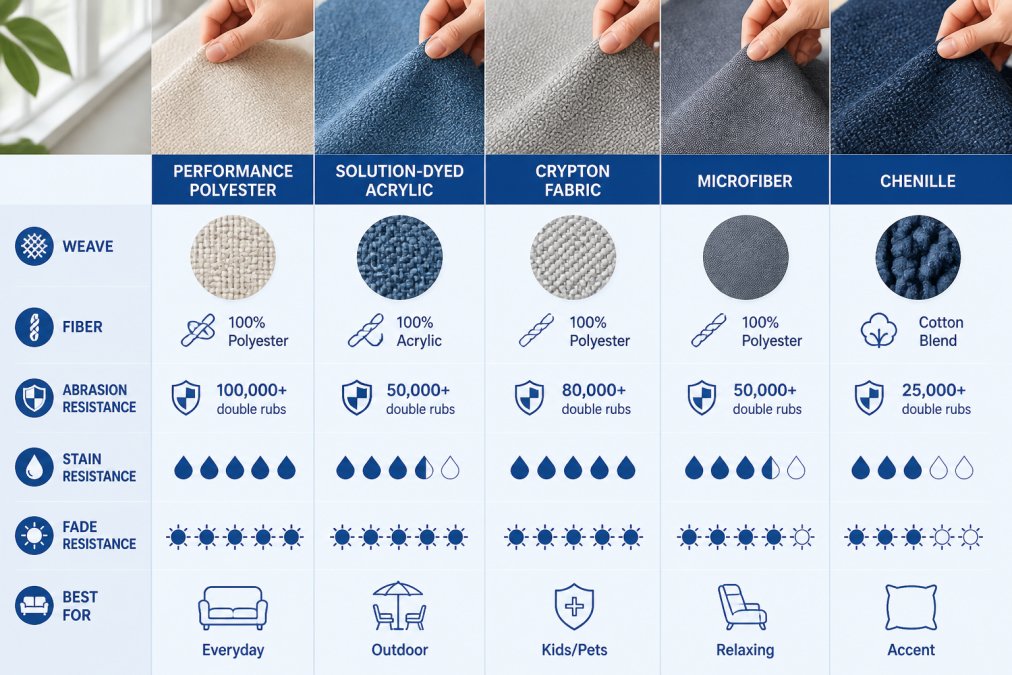
The most durable upholstery fabrics combine high abrasion resistance with stain resistance and easy maintenance. Performance fabrics dominate this category because they're engineered specifically to withstand heavy use.
Performance Fabrics and Stain Resistance
Performance fabrics use synthetic fibers like polyester, olefin, and acrylic, often blended with natural fibers, and receive specialized treatments that repel liquids and prevent soil absorption. Spills don't penetrate the fiber; they sit on the surface where you can wipe them away before they set. Olefin is particularly resistant to moisture and staining because the fiber itself is hydrophobic. These fabrics typically pass rigorous testing standards measuring their ability to withstand repeated stress.
Quality varies widely among performance fabrics. A cheap polyester blend may pill after six months, while high-quality performance fabric maintains surface integrity for years. The difference comes down to thread count, fiber denier (thickness), and stain-resistant finish quality. Look for fabrics that specify their performance rating rather than simply claiming "stain resistant."
Natural vs. Synthetic Fibers: Durability Comparison
Natural fibers like cotton, linen, and wool offer aesthetic appeal but require more careful maintenance and generally show wear faster than synthetics. Wool stands out among natural fibers for durability, it's naturally stain-resistant, flame-resistant, and can last 15+ years in furniture applications. However, wool requires professional cleaning and costs significantly more than synthetic alternatives.
The practical reality: synthetic fibers outperform natural fibers for durability in high-traffic households. A microfiber sofa will outlast a linen one in a home with children or pets. Natural fiber blends, combining cotton or linen with polyester, offer a middle ground: better aesthetics than pure synthetics with improved durability compared to 100% natural fibers.
Solid Wood vs. Engineered Wood Furniture: Which Lasts Longer
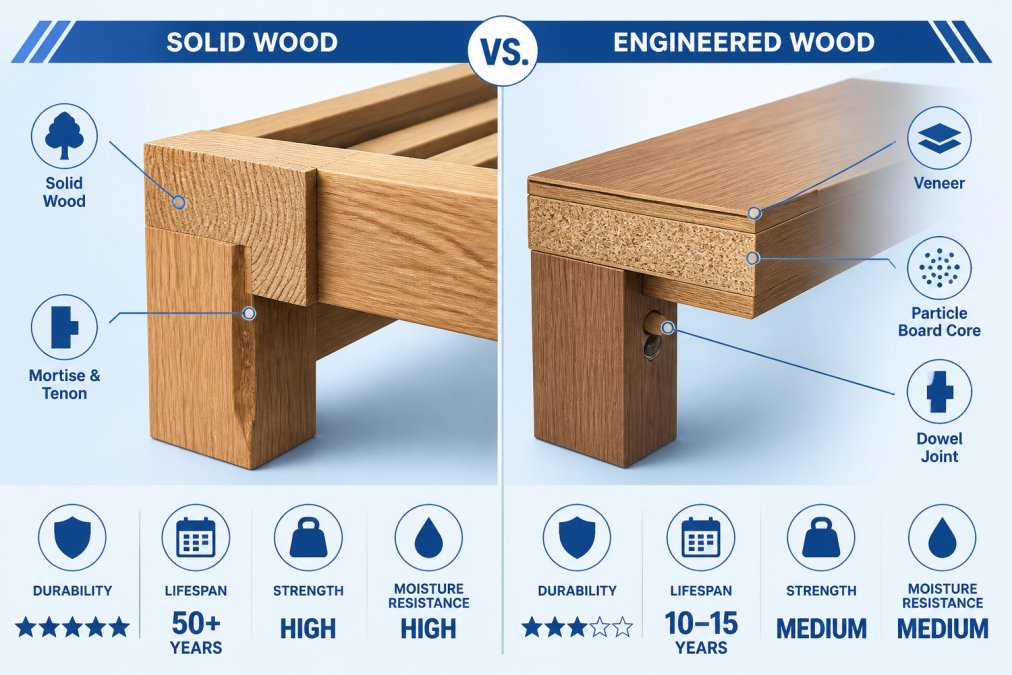
Solid wood furniture typically lasts longer than engineered wood alternatives. Solid hardwoods like oak, maple, and walnut can last 20+ years with proper care. Engineered wood (plywood or particleboard cores with veneer surfaces) generally lasts 8-15 years before the core degrades or veneer separates.
The durability advantage of solid wood comes from its structural integrity. Solid wood can be refinished, repaired, and rebuilt. However, solid wood is vulnerable to moisture, temperature fluctuations, and wood-boring insects, environmental factors that engineered wood resists better due to its sealed construction.
Frame Construction and Structural Integrity
Frame construction determines durability. A sofa with a solid hardwood frame will support your weight and resist sagging far longer than one with a softwood or engineered wood frame. Look for frames made from kiln-dried hardwood, wood heated in a kiln to remove moisture and stabilize the grain. This process prevents warping and cracking.
Joinery method, how pieces are connected, affects durability significantly. Mortise-and-tenon joints, where a protruding piece fits into a hollow cavity and is glued, are stronger than simple butt joints held only with nails or staples. Eight-way hand-tied springs or sinuous wire springs in seating provide better support and longevity than simple webbing alone. These construction details determine whether a piece remains comfortable and structurally sound after five years of daily use.
Engineered wood frames cost less but deteriorate faster because the core materials break down when exposed to moisture or weight stress. A sofa with a particleboard frame may start sagging within 3-5 years, while a solid wood frame maintains support for 15+ years.
Kiln-Dried Hardwood and Moisture Stability
Kiln-dried hardwood is essential for furniture durability because it removes moisture that would otherwise cause wood to warp, split, or cup. Kiln drying reduces moisture to 8-12%, a level that remains stable in typical home environments. The best furniture makers specify kiln-dried hardwood in their frame construction. When evaluating furniture, ask whether frames are kiln-dried hardwood. If a retailer can't confirm this, the frame is likely engineered wood or improperly dried solid wood.
How to Test Furniture Quality Before Buying
Testing furniture quality requires examining frame construction, cushion support, fabric durability, and joinery strength. Start by flipping the furniture or lifting cushions to inspect the frame. Solid hardwood should be visible and feel substantial. Push on the frame from different angles; it should feel rigid with no flex or creaking. Sit on upholstered pieces and bounce gently; quality cushioning won't bottom out, and the frame shouldn't shift or make noise. Check underneath for webbing (should be tight and evenly spaced), springs (should be numerous and properly secured), and joinery (should use mortise-and-tenon or dowel connections, not just staples).
Martindale and Wyzenbeek Testing Standards
The Martindale test measures fabric abrasion resistance by rubbing a fabric sample with a standardized abrasive surface under controlled pressure. A Martindale rating of 15,000+ cycles indicates light residential use; 30,000+ cycles suggests medium-use durability; 50,000+ cycles means heavy-use durability. The Wyzenbeek test measures similar abrasion resistance using a different method, with results expressed in double rubs. Both tests allow you to compare fabrics objectively.
When shopping for upholstered furniture, ask about Martindale or Wyzenbeek ratings. High-quality performance fabrics typically exceed 50,000 cycles. Budget fabrics may rate only 10,000-15,000, meaning they'll show visible wear within a year or two in active households.
Inspecting Cushion Support and High-Density Foam
Cushion quality determines comfort longevity. High-density foam (1.8+ pounds per cubic foot) resists compression and maintains support far longer than low-density foam (1.2-1.5 pounds per cubic foot). Press on cushions firmly; they should compress under pressure but spring back quickly when you release. Cushions that don't rebound are already degrading or were made with low-quality foam.
Wrapped cushions (where a layer of softer material surrounds a dense core) typically outlast single-density cushions because the outer layer protects the core from direct friction and compression. This construction is common in high-end furniture but rare in budget pieces.
Best Furniture Materials for Pets and Kids
Households with pets and children need furniture materials that resist staining, withstand rough use, and remain safe for the family.
Pet-Friendly Fabrics and Abrasion Resistance
Pet-friendly fabrics must resist both staining and abrasion from claws and constant movement. Olefin and polyester performance fabrics excel here because they're hydrophobic and have high abrasion resistance. Microfiber offers excellent stain resistance and is easy to clean, though it can pill under heavy claw stress.
Leather and leather-alternative materials are popular for pet owners because they're easy to wipe clean and don't absorb odors or stains. However, real leather scratches easily under claws. If you choose leather for a pet household, expect visible claw marks; if that bothers you, performance fabric is a better choice.
Avoid light-colored fabrics, delicate weaves, and natural fibers like linen or cotton in pet households. Dark performance fabrics with high Martindale ratings (50,000+ cycles) are your best bet for maintaining appearance in active pet homes.
Child-Safe Materials and Maintenance
Child-safe furniture requires materials free from harmful chemicals and finishes that withstand spills and cleaning. Avoid furniture treated with chemical flame retardants; look for pieces with natural fire resistance or safer alternatives. Solid wood furniture is inherently safer than engineered wood and easier to clean without chemical damage.
Performance fabrics are ideal for children because they resist staining from juice, food, and dirt, and they withstand frequent cleaning with mild soap and water. Choose materials that tolerate frequent, simple cleaning methods, vacuuming and damp cloth wiping, rather than specialized treatments.
Climate-Specific Material Performance and Longevity
Climate significantly affects how long furniture materials last. High humidity promotes mold, mildew, and wood rot. Dry climates cause wood to crack and leather to become brittle.
In humid climates (coastal areas, tropical regions), prioritize materials resistant to moisture damage. Engineered wood actually performs better than solid wood in these environments because its sealed construction resists moisture penetration. Synthetic fabrics and leather alternatives resist mildew better than natural fibers. Metal frames resist rust better than untreated wood.
In dry climates, solid wood furniture fares better than engineered wood because moisture loss is less dramatic. However, wood still needs protective finishes to prevent checking and cracking. Leather becomes more brittle in dry climates; conditioning becomes essential.
Climate-specific durability also depends on sun exposure. UV light fades fabrics and degrades finishes. In sunny climates, choose fade-resistant performance fabrics and protect furniture from direct sunlight when possible.
Repairability and Modularity: Extending Furniture Life
Durable furniture isn't just about materials, it's about whether you can repair and update pieces as they age. Solid wood furniture can be refinished, repaired, and modified. Upholstered pieces with replaceable cushions and covers extend life significantly. Modular furniture allows you to replace worn sections without discarding the entire piece.
Solid wood tables can be refinished multiple times, extending life indefinitely. Upholstered furniture with removable covers can be reupholstered when fabric wears. These repair options aren't available with engineered wood or low-quality construction. A sofa with a particleboard frame cannot be meaningfully repaired; once it fails, replacement is the only option.
Modularity matters for families whose needs change. Modular sofas allow you to reconfigure sections, replace worn cushions individually, and adapt the piece to different spaces. Viva homeStore offers modular options that let you customize and update pieces as your household evolves, maximizing both durability and long-term value.
When evaluating furniture for durability, ask about repairability. Can cushions be replaced? Can fabric be reupholstered? Can frame damage be repaired? If the answer is no to most of these questions, the piece isn't truly durable.
Maintenance and Cleaning Requirements for Different Materials
Proper maintenance extends furniture life significantly. Different materials require different care approaches.
Performance fabrics require vacuuming regularly (weekly in high-traffic areas) to remove dust and debris. Spot cleaning with mild soap and water handles most spills. The maintenance burden is minimal, making performance fabrics practical for busy households.
Natural fibers like cotton and linen require similar vacuuming but are vulnerable to water-based stains. Spills must be addressed immediately, and professional cleaning is often necessary for set-in stains. This higher maintenance requirement makes natural fibers less practical for households with kids or pets unless you're willing to invest in frequent professional cleaning.
Leather requires conditioning every 6-12 months to maintain suppleness and prevent cracking. Spills should be wiped immediately. Professional cleaning is recommended for deep cleaning. This maintenance commitment is significant; if you're not willing to condition leather regularly, choose alternative materials.
Wood furniture requires dusting and occasional polish to maintain finish. Solid wood exposed to temperature and humidity fluctuations may need refinishing every 5-10 years. Engineered wood cannot be refinished; once the finish deteriorates, replacement is necessary.
| Material | Durability Rating | Best For | Maintenance Level | Lifespan |
|---|---|---|---|---|
| Olefin Performance Fabric | Excellent | Pets, kids, high-traffic | Low | 10-15 years |
| Polyester Performance Fabric | Excellent | General residential | Low | 10-15 years |
| Microfiber | Very Good | Pets, stain resistance | Low-Medium | 8-12 years |
| Wool | Excellent | Upscale residential | Medium-High | 15+ years |
| Cotton/Linen | Good | Low-traffic, aesthetic priority | Medium-High | 5-10 years |
| Solid Hardwood Frame | Excellent | All applications | Low | 20+ years |
| Engineered Wood Frame | Good | Budget-conscious | Low | 8-15 years |
| Leather | Very Good | Upscale, easy-clean preference | Medium | 10-15 years |
Choosing durable furniture materials requires balancing aesthetics, budget, and household needs. The most durable pieces combine solid hardwood frames, high-density cushioning, and performance fabrics rated 50,000+ Martindale cycles. Durability also depends on maintenance commitment and climate compatibility. At Viva homeStore, we help families navigate these choices by offering furniture selections that prioritize longevity without sacrificing style. Explore our curated collection of durable home essentials designed for families seeking both quality and functionality. Consumer Reports furniture durability ratings provide independent assessments of specific brands and models. The Textile Exchange sustainability standards offer guidance on environmentally responsible material choices. American Furniture Manufacturers Association durability guidelines detail industry standards for frame construction and cushioning quality.
Frequently Asked Questions
What makes durable furniture materials different from standard options?
Durable furniture materials are engineered or selected for resistance to wear, staining, and structural failure. High-density foam maintains shape after years of use, performance fabrics pass rigorous Martindale or Wyzenbeek tests (measuring abrasion resistance), and kiln-dried hardwood resists warping. These materials cost more upfront but reduce replacement frequency and long-term maintenance costs.
Which upholstery fabrics are most resistant to stains and wear?
Performance fabrics like olefin and solution-dyed polyester offer the highest stain and abrasion resistance, often rated 100,000+ cycles on the Wyzenbeek test. Microfiber provides excellent durability for high-traffic homes. Leather, particularly grain leather, resists stains naturally but requires regular sealing. For families with pets and children, synthetic performance fabrics outperform natural fibers in both stain resistance and colorfastness.
What are the pros and cons of solid wood versus engineered wood for furniture?
Solid wood (kiln-dried hardwood) offers superior longevity, repairability, and structural integrity; it can be refinished multiple times. Engineered wood costs less, resists moisture better, and works well for veneered pieces, but cannot be refinished and has limited lifespan. Solid wood frames with plywood backing balance durability and cost. For heirloom furniture, solid wood wins; for budget-conscious buyers in humid climates, engineered wood is practical.
How can you tell if furniture is high-quality before buying?
Inspect the frame for kiln-dried hardwood construction and mortise-and-tenon joints. Press cushions to feel high-density foam (should resist compression). Check fabric labels for Martindale or Wyzenbeek test ratings (higher is better). Examine seams for tight stitching and consistent thread tension. Ask about VOC emissions and sustainability certifications. Quality furniture typically has warranty coverage of 5+ years, signaling manufacturer confidence.
What furniture materials work best for homes with pets and young children?
Performance fabrics like solution-dyed olefin and microfiber resist claws, spills, and stains while remaining easy to clean. Leather develops character with wear and resists pet damage when sealed. Avoid light natural fibers that show dirt and stain easily. Look for kiln-dried hardwood frames that withstand rough handling. Choose removable, washable cushion covers when possible. High-density foam withstands jumping and active use better than low-density alternatives.
How does furniture material choice impact long-term maintenance and cost?
Premium durable materials reduce maintenance frequency and cost over time. Performance fabrics need only vacuuming and spot-cleaning; natural fibers require professional cleaning. Solid wood may need refinishing every 10-15 years but lasts 30+ years; engineered wood lasts 10-15 years with minimal maintenance. Sealed leather requires periodic conditioning. Initial investment in durable materials typically saves 30-50% on replacement and repair costs over 20 years.
What is the 2-3 rule for furniture, and how does it apply to durability?
The 2-3 rule suggests furniture should last 2-3 times longer than the warranty period, indicating quality construction. For a 5-year warranty, expect 10-15 years of functional use. This principle applies when materials meet durability standards: kiln-dried hardwood frames, high-density foam cushions, and performance fabrics all support this extended lifespan. Cheaper furniture often fails within the warranty period, making durable material choices essential for long-term value.
This article was written using GrandRanker