

How to Organize a Chaotic Family Kitchen: 7 Steps
Table of Contents
- Step 1: Declutter and Purge Your Kitchen Cabinets
- Step 2: Categorize and Create Kitchen Zones
- Step 3: Implement Kitchen Storage Solutions for Families
- Step 4: Kid-Friendly Kitchen Organization Systems
- Step 5: Build Daily Habits to Prevent Clutter Buildup
- Step 6: Set Up a Maintenance System for Maintaining an Organized Family Kitchen
- Step 7: Avoid Common Mistakes When Organizing How to Organize a Chaotic Family Kitchen
- Conclusion: Sustain Your Organized Family Kitchen Long-Term
Last Updated: July 26, 2026
Learning how to organize a chaotic family kitchen might feel impossible when you're juggling meal prep, kids' schedules, and endless gadgets nobody uses. But it's one of the most impactful changes you can make for your household's daily rhythm. At Viva homeStore, we've helped countless families transform cluttered kitchens into functional spaces where cooking feels manageable. Below, we'll walk you through a seven-step system that addresses real chaos: not just clutter, but the habits and systems that let it rebuild.
The difference between a kitchen that stays organized and one that reverts to chaos within weeks comes down to redesigning your family's kitchen workflow, not just decluttering. This guide covers exactly how to organize a chaotic family kitchen so it works for how your family actually lives.
Step 1: Declutter and Purge Your Kitchen Cabinets
Before you buy a single drawer divider or storage tote, you need to know what you're actually keeping. Most chaotic kitchens aren't chaotic because of too much organization, they're chaotic because you're storing things you don't use, duplicates you forgot about, and gadgets that seemed like good ideas years ago.
Identify items to keep, donate, or discard
Start with one cabinet or drawer at a time. Pull everything out and sort into three piles: keep, donate, and discard. Be ruthless. If you haven't used that panini press in 18 months, it's not going back in. Ask yourself three questions for each item: Do I use this regularly? Does it work properly? Do I have a better alternative? If you answer "no" to any of these, it goes.
Most families can cut their kitchen items by 30-40% without losing anything they actually use. Set a timer for 30 minutes per session, kitchen purging is mentally exhausting, and you'll make better decisions when fresh. You'll likely need 3-4 sessions to complete your entire kitchen.
Step 2: Categorize and Create Kitchen Zones
Once you know what you're keeping, figure out where everything should live. A chaotic family kitchen usually has items scattered randomly, not where they're actually used. Creating zones means grouping related items together and placing them near where you use them.
Define high-traffic areas and workflow zones
Think about how your family actually moves through the kitchen. The coffee station should be near the coffee maker and mugs. Breakfast items should be accessible to whoever's making breakfast. Cooking prep should be near the stove and cutting board. Snack items should be at kid height if you have children.
High-traffic zones are where people spend the most time or grab things most frequently. For most families, this is the area between the refrigerator and the stove. Make these zones count, don't waste prime real estate on items you use once a year.
Assign categories to specific locations
Assign categories to each zone: baking supplies in one cabinet, cooking oils and spices in another, food storage containers together, snacks in an accessible drawer. The goal is that anyone in your family can find something without asking. If your 12-year-old can't locate the cereal bowls, your system isn't working. Visibility and accessibility matter more than aesthetics.
Step 3: Implement Kitchen Storage Solutions for Families
Now that you know what you're keeping and where it should go, it's time to organize it. The right storage solutions make the difference between a system that holds up and one that collapses after two weeks.
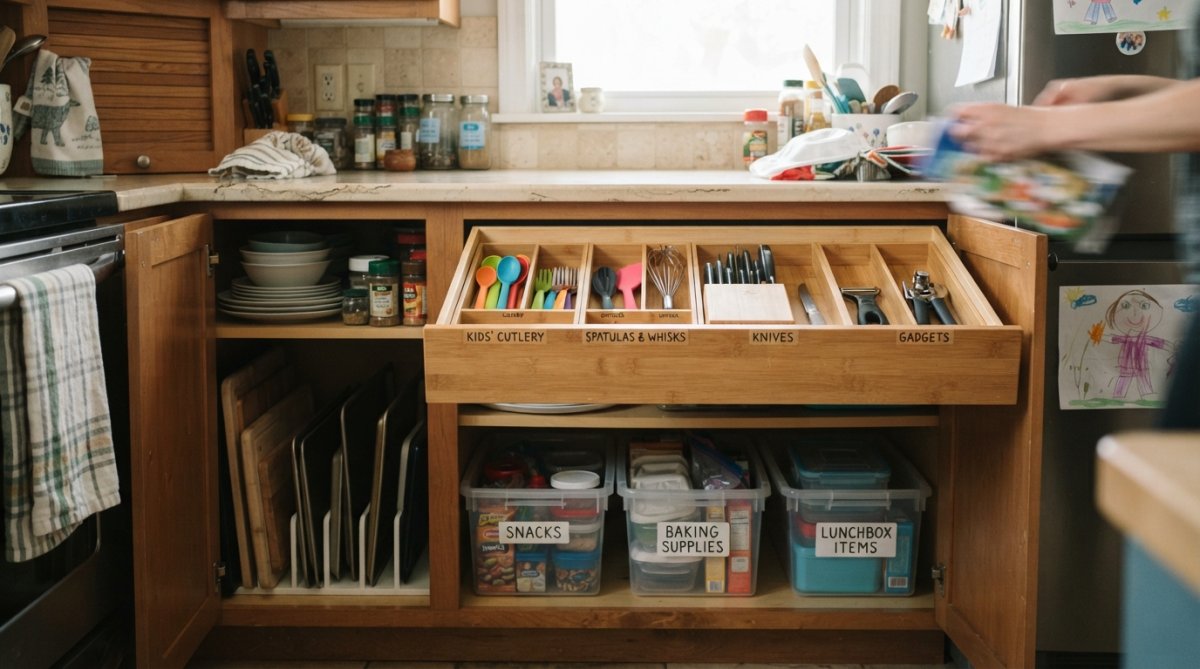
Maximize vertical space and cabinet organization
Most family kitchens waste vertical space. The inside of cabinet doors can hold spice racks or small shelves. Shelf risers create a second level inside deep cabinets, doubling your storage capacity. Tension rods can organize baking sheets or cutting boards vertically. Vertical organization is especially important in small kitchens where horizontal space is limited.
Use drawer dividers and storage totes effectively
Drawer dividers keep items from sliding around and getting lost. Simple bamboo dividers or repurposed cardboard boxes work perfectly. Clear storage totes let you see what's inside without opening them. Label everything, even if it seems obvious. When items are labeled, family members can actually return things to the right place.
Step 4: Kid-Friendly Kitchen Organization Systems
If you have children, your organization system needs to work for them too. Kids who can find their own snacks, grab their own breakfast items, and return things to the right place reduce your daily friction significantly and build independence.
Create accessible storage for children
Lower shelves and drawers should contain items kids use regularly. If your children make their own breakfast, cereal, bowls, milk, and spoons should all be at kid height. Use smaller containers for kid-height storage, a large box of crackers takes up too much space on a low shelf.
Label systems and visual cues for easy identification
Labels are non-negotiable in a family kitchen. Use large, clear labels with both words and pictures if you have pre-readers. Color-coding works well too, you might assign each family member a color for their snack preferences. Visual cues help everyone understand the system without needing constant reminders.
Step 5: Build Daily Habits to Prevent Clutter Buildup
The difference between a kitchen that stays organized and one that reverts to chaos is daily maintenance. You can spend a weekend organizing perfectly, but without habits to support it, clutter rebuilds within days. The goal is to make staying organized easier than becoming chaotic.
Establish a 15-minute daily reset routine
Set a timer for 15 minutes each evening. During this time, clear countertops, return items to their zones, and wipe down surfaces. This is not a deep clean, it's a reset that prevents the kitchen from becoming a dumping ground overnight. Make this routine non-negotiable and assign different family members different tasks.
Create a family command center for schedules and lists
A command center, a designated space for meal plans, shopping lists, and family schedules, prevents the kitchen from becoming a paper dumping ground. A magnetic whiteboard, corkboard, or simple clipboard keeps important information visible without cluttering your cabinets. When everyone knows what's for dinner and what groceries you need, fewer random items end up in your pantry.
Step 6: Set Up a Maintenance System for Maintaining an Organized Family Kitchen
Organization isn't a one-time project. It requires ongoing maintenance to prevent clutter from rebuilding. A maintenance system keeps your kitchen functional without requiring constant effort.
Weekly inventory checks and restocking
Once a week, do a quick inventory of your pantry and refrigerator. Check what you're running low on and what needs to be used soon. This prevents buying duplicates because you forgot you already had something, or items expiring because they're hidden in the back of a cabinet. Weekly checks also help you catch when items are accumulating in the wrong places.
Monthly deep-clean and reassessment schedule
Once a month, spend 30 minutes reassessing your organization. Are items in the right zones? Is anything accumulating that shouldn't be? Do you need to adjust labels or containers? This monthly check prevents small problems from becoming big ones. Also do a quick purge to remove expired items and make adjustments based on how your family actually lives.
Step 7: Avoid Common Mistakes When Organizing How to Organize a Chaotic Family Kitchen
Most families make the same organizational mistakes repeatedly. Understanding these pitfalls helps you build a system that actually lasts.
Neurodivergent-friendly organization approaches
If anyone in your household has ADHD, autism, or other neurodivergent traits, traditional organization systems often fail because they require too much working memory. Instead, design systems that don't require remembering. Use visual cues instead of mental notes. Create "landing zones" where items naturally accumulate, then process them weekly. Label everything with pictures, not just words. Keep the number of categories small, too many choices overwhelm.
Many neurodivergent people find that clear, closed containers work better than open shelving. Closed containers hide the mess and reduce visual overwhelm.
Budget-friendly DIY storage alternatives
You don't need expensive custom organizers. Mason jars hold dry goods and cost less than a dollar each. Cardboard boxes from online deliveries can be repurposed as drawer dividers. Tension rods from the dollar store organize baking sheets. The most expensive organizational systems fail because they don't match your family's actual habits. A five-dollar solution you'll actually use beats a fifty-dollar system that sits unused.
Viva homeStore offers practical storage solutions designed for real family kitchens, from drawer organizers to pantry containers that work with your space rather than against it. Their curated selection focuses on functionality over complexity, making it easier to build a system that your family will actually maintain.
A chaotic family kitchen stays organized through systems simple enough to maintain and habits strong enough to sustain them. The seven steps in this guide address both the physical organization and the behavioral patterns that let clutter rebuild. Start with Step 1, purge ruthlessly, then move through the remaining steps at whatever pace works for your family. A kitchen that's 80% organized and actually maintained beats a perfectly organized kitchen that reverts to chaos within weeks. According to The Home Organization Institute, families who implement systems gradually see better long-term success than those who attempt total overhauls. The goal isn't perfection, it's a kitchen that works for your family's actual life. Shop now at Viva homeStore to find the storage solutions and organizing tools that fit your kitchen's unique needs.
| Maintenance Task | Frequency | Time Required | Purpose |
|---|---|---|---|
| Daily reset | Every evening | 15 minutes | Prevent countertop clutter |
| Weekly inventory check | Once per week | 10 minutes | Track pantry items and expiration dates |
| Monthly reassessment | Once per month | 30 minutes | Adjust zones and catch accumulating items |
| Seasonal purge | Quarterly | 1-2 hours | Remove seasonal items and donate unused goods |
Research from The Journal of Environmental Psychology shows that organized spaces reduce decision fatigue and stress, particularly in high-traffic areas like kitchens. When your family can find what they need without searching, you save time and mental energy every single day. The National Association of Professional Organizers emphasizes that successful organization requires systems matched to how people actually behave, not how they wish they would behave. This is why the maintenance habits outlined in Steps 5 and 6 matter as much as the physical organization in Steps 1-4.
Frequently Asked Questions
How do I start organizing a messy family kitchen without feeling overwhelmed?
Begin with one cabinet or drawer at a time rather than tackling the entire kitchen. Set a 30-minute timer, purge items you no longer use, then categorize what remains. This incremental approach prevents burnout and builds momentum. Focus on high-traffic areas first, these have the biggest visual impact. Once you experience success in one zone, you'll feel motivated to continue organizing other areas.
What are the best storage solutions for a family kitchen with limited space?
Maximize vertical space by installing shelves or using wall-mounted magnetic boards for frequently used items. Drawer dividers organize utensils and tools efficiently. Storage totes work well for pantry organization and seasonal items. Under-sink organizers and over-the-door racks add hidden storage. Consider a kitchen island with built-in storage for additional workspace and accessibility. These solutions work in small kitchens by utilizing every available inch.
How can I keep my kitchen organized with kids and maintain it with a busy schedule?
Create kid-friendly zones with accessible, labeled storage so children can independently find and return items. Establish a 15-minute daily reset routine as part of your evening habit. Use a family command center with visual schedules and checklists. Assign age-appropriate responsibilities to family members. Digital integration, such as shared phone reminders or kitchen apps, helps busy families stay accountable without adding mental load to one person.
What's the fastest way to declutter a chaotic kitchen, and how do I maintain it?
Use a sorting system: keep, donate, discard. Process one category at a time (dishes, utensils, pantry items). Set weekly inventory checks to catch clutter early. Monthly reassessment prevents the kitchen from returning to chaos. For neurodivergent family members or those with ADHD, visual systems and fewer decision points work better than complex organizing methods. Maintenance checklists ensure consistency even during busy seasons.
This article was written using GrandRanker