

Minimalist Home Office Storage Ideas for 2026
Table of Contents
- Why Minimalist Home Office Storage Matters in 2026
- Small Home Office Organization Ideas That Actually Work
- How to Declutter Home Office Spaces Effectively
- Ergonomic Storage Placement for Productivity and Comfort
- Budget-Friendly Minimalist Storage Hacks
- Long-Term Durability and Maintenance for Storage Systems
- Building Your Minimalist Home Office Storage System
- Conclusion
Last Updated: August 6, 2026
Why Minimalist Home Office Storage Matters in 2026
The shift toward remote work has transformed how we think about home spaces. What started as a temporary setup has become permanent for millions of professionals, making the quality of your workspace directly impact your productivity and mental health. A cluttered desk creates cognitive load, your brain processes visual chaos before it processes work. Clear surfaces mean clearer thinking.
This is where minimalist home office storage becomes essential. At Viva homeStore, we've seen firsthand how the right storage systems transform not just how spaces look, but how people actually work. The difference isn't subtle. Teams with organized, clutter-free workspaces report better focus, fewer distractions, and measurably shorter task completion times.
The trend for 2026 goes deeper than aesthetics. It's about integrating storage into your workspace so seamlessly that organization becomes invisible, you're not managing systems, you're just working. Smart home integration, ergonomic placement, and hybrid digital-physical organization are reshaping what "minimalist storage" actually means.
Small Home Office Organization Ideas That Actually Work
Creating an organized home office starts with understanding that organization systems fail when they fight against how you actually work. The most beautiful filing system means nothing if it's inconvenient to use. Functional storage must match your workflow, not the other way around.
Vertical Storage Solutions
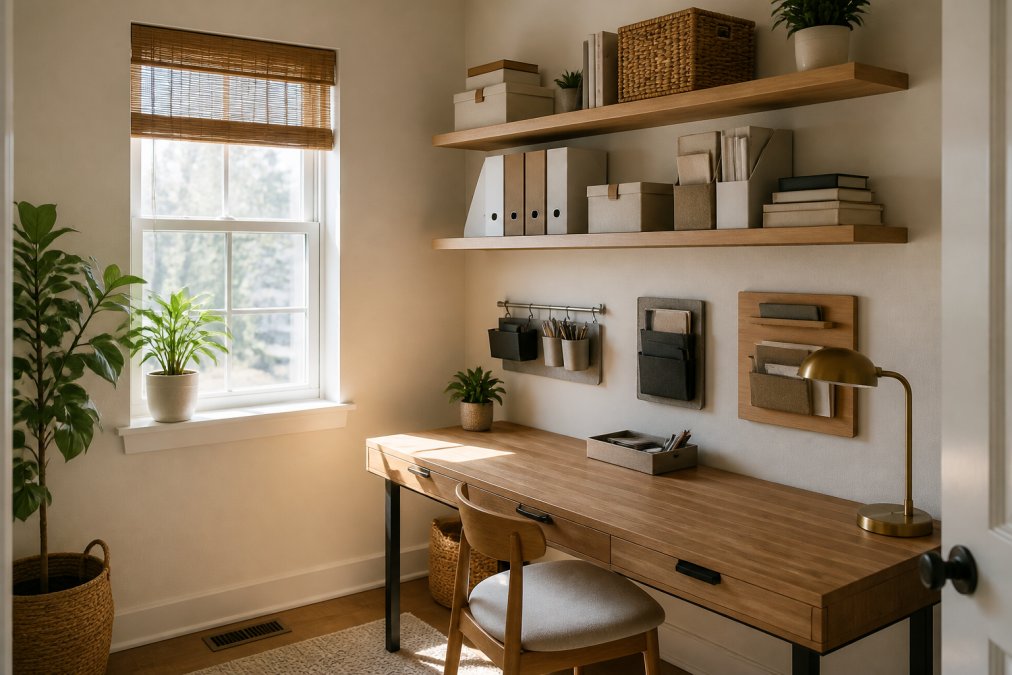
Stop thinking about floor space. Your walls are underutilized real estate in most home offices, and vertical storage solutions are the fastest way to reclaim your desk surface. Wall-mounted shelving, pegboards, and cabinet systems pull items off your work surface and into organized zones above or beside your desk.
The psychology here matters: items stored at eye level feel more accessible and less like "hidden storage." A well-designed pegboard with labeled hooks keeps frequently used tools visible and within arm's reach. Vertical file holders mounted to walls eliminate the need for a filing cabinet that consumes floor space. When you stack upward instead of outward, you create the illusion of more space while actually storing more.
Common implementation mistake: mounting shelves too high. Anything above shoulder height becomes hard to access daily. Mount primary storage at arm's reach height (roughly 24-48 inches from the desk surface), with less-used items higher up.
Floating Shelves and Wall-Mounted Systems
Floating shelves create the minimalist aesthetic while providing real storage capacity. Unlike traditional shelving with visible brackets, floating shelves appear to defy gravity, they anchor into wall studs with hidden hardware, creating clean lines that complement modern office design.
The Maja Metal Floating Shelf from AllModern (available starting around $49-$69) exemplifies this approach. These shelves mount directly to walls, freeing floor space entirely. The open design means you see what's stored, which creates natural accountability to keep items organized. A cluttered floating shelf becomes immediately obvious, which actually helps maintain minimalist discipline.
Combine floating shelves with wall-mounted cabinets for hidden storage. Cabinets handle items you don't need visible daily, archived files, backup supplies, equipment, while floating shelves display current projects and essential tools. This layered approach gives you both visual minimalism and functional capacity.
:::pro Mount floating shelves at slightly different heights (staggered, not uniform). This creates visual interest while accommodating items of different sizes, preventing the "library shelf" look that feels institutional rather than minimalist. :::
Hidden Desk Storage Solutions for Maximum Desk Clarity
Your desk surface should be nearly empty. Everything else, pens, documents, chargers, supplies, gets hidden in strategic locations that keep them accessible without cluttering your visual field.
Under-desk organizers solve this elegantly. The Onyx Under Desk Organizer by Safco (prices vary depending on the specific model and retailer, with some under-desk machine stands around $36) mounts beneath your desk and provides compartments for supplies, cables, and small items. You can reach down and grab what you need without it ever appearing on your work surface. This is particularly effective for home office setups where you lack a traditional filing cabinet.
Desk drawers themselves are hidden storage, but most people overstuff them. The Fully Jarvis Bamboo Desk Drawer (with exterior dimensions of 14.25" x 13" x 4.5") adds dedicated hidden storage to desks that lack built-in drawers. Bamboo construction keeps the aesthetic warm and natural while maintaining minimalist principles.
The Grovemade Desk Shelf System (starting around $240) takes this further by elevating your monitor while creating integrated storage compartments underneath. This solves two problems simultaneously: improving ergonomics and creating storage space that would otherwise sit empty.
How to Declutter Home Office Spaces Effectively
Decluttering isn't a one-time project, it's a system. The most common failure point is clearing clutter without establishing rules for what stays, what goes, and what gets stored. Within weeks, the clutter returns because the underlying system was never fixed.
The Digital-Physical Hybrid Organization Method
Modern work blends digital and physical. You have files on your computer, documents in drawers, cables behind your desk, and digital tools scattered across subscriptions. A minimalist system must organize both simultaneously.
Start by auditing what actually exists in physical form. Most people accumulate printed documents they'll never reference again. Scan important papers, shred the rest. For ongoing documents, establish a simple rule: if it's not referenced within six months, it gets archived to external storage or destroyed.
Then create a parallel digital organization system. Your physical file labels should match your digital folder structure. When you need a document, you should be able to find it in either system without confusion. This redundancy prevents the common problem where physical and digital systems diverge, leaving you unsure where information actually lives.
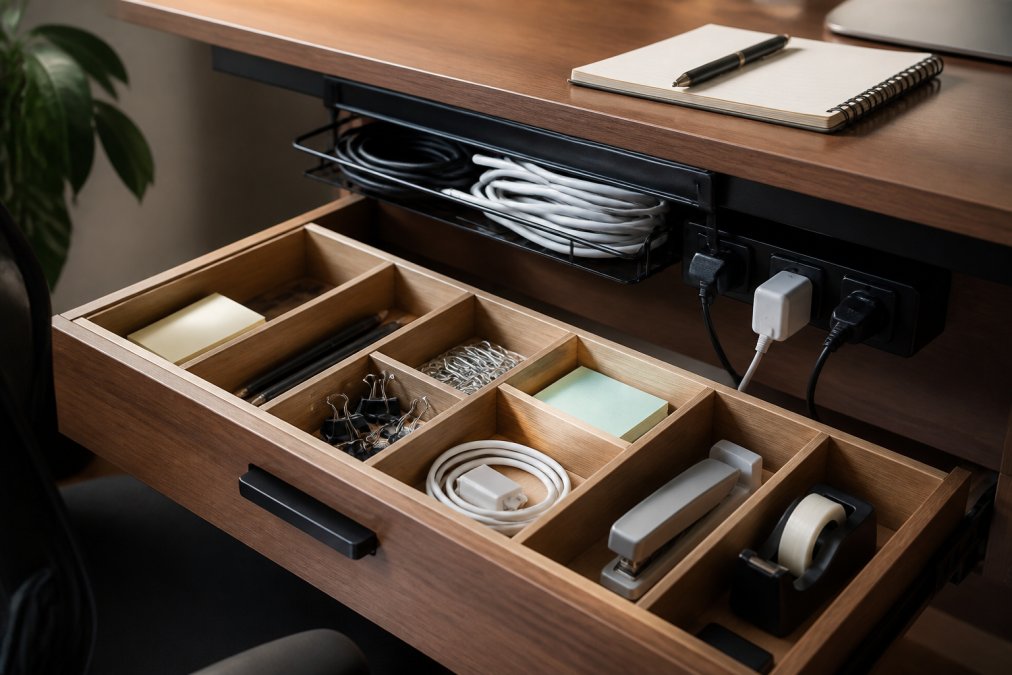
For cables and chargers, label everything. A cable management box hides the tangle, but without labels, you'll pull the wrong cord and create mess. Use a label maker (even basic ones cost under $20) and tag every cable at both ends.
Cable Management and Cord Concealment
Visible cables are the single biggest visual clutter problem in home offices. A modern workspace might have 8-12 cables: monitor, keyboard, mouse, printer, phone charger, desk lamp, standing desk power, and various backup chargers. Unmanaged, they create visual chaos.
The Ultimate Cable Management Box (roughly $15) solves this by housing power strips and excess cabling in a contained, hidden space. Route cables through the back of your desk into the box, and your desk back appears clean. Cable trays mounted under desks organize cables horizontally, keeping them off the floor where they collect dust.
Color-coding cables is underrated. Use small colored tape or clips to mark cables by device. This takes five minutes and saves hours of frustration when you need to unplug something specific.
Ergonomic Storage Placement for Productivity and Comfort
Storage location affects your physical comfort as much as your desk chair does. Items stored too high force you to reach and strain your shoulders. Items stored too low force you to bend. The goal is keeping frequently accessed items in your "comfort zone", roughly between your elbows and shoulders when seated.
Frequently used supplies should be within arm's reach at desk height. Less-used items can go higher or lower. Reference materials you check occasionally can go on higher shelves. Archived documents can go in lower cabinets. This creates a natural hierarchy that matches your actual usage patterns.
Monitor placement is part of this equation. Your screen should be at eye level, with the top of the screen roughly at your eye height when sitting upright. This prevents neck strain. A monitor riser or shelf system (like the Grovemade Desk Shelf) accomplishes this while creating storage underneath for keyboards, documents, or supplies.
Lighting also affects how organized a space feels. Shadows create visual clutter and make it harder to find items. Layered lighting, overhead plus task lighting at your desk, illuminates storage areas and makes organization easier to maintain.
Budget-Friendly Minimalist Storage Hacks
Minimalist storage doesn't require expensive systems. The Deco Brothers Desk Organizer (around $10-$20) provides eight compartments for small items. It's not glamorous, but it works. Metal construction gives it a minimalist aesthetic without the premium price tag of designer systems.
Repurpose containers you already own. Mason jars hold pens and small supplies. Cardboard boxes lined with fabric create drawer dividers. A pegboard and hooks (total cost under $30) creates customizable wall storage that rivals systems costing ten times more.
The key is starting small and building incrementally. Buy one storage solution, use it for two weeks, and only add more if you've actually filled the first one. This prevents the common mistake of buying storage systems that sit partially empty because you overestimated your needs.
Viva homeStore offers curated selections of practical storage solutions at various price points, focusing on items that deliver real organizational value rather than decorative pieces that add cost without function.
Long-Term Durability and Maintenance for Storage Systems
Storage systems fail when materials degrade or mounting hardware loosens. Metal components rust if not treated. Wood warps in humid environments. Shelves sag if mounted improperly or overloaded.
Floating shelves require proper installation into wall studs. A shelf mounted only to drywall will eventually fail under weight. Verify stud location with a stud finder before installation. This takes ten minutes and prevents expensive wall damage later.
For metal storage, choose powder-coated finishes over bare metal. Powder coating resists rust and fingerprints. Steel components should be rated for the weight you're storing, most floating shelves support 25-50 pounds, which is adequate for most office items but not for heavy books or equipment.
Wooden storage benefits from occasional maintenance. Dust with a microfiber cloth monthly. If the wood is finished (not raw), wipe spills immediately to prevent water damage. Unfinished wood should be sealed or stained to resist moisture and staining.
Cable management systems degrade when cables are pinched or bent sharply. Use cable trays and organizers that allow natural cable routing without tight angles. Replace cable ties annually if you're adding or removing cables frequently.
Building Your Minimalist Home Office Storage System
Approach this as a system, not isolated purchases. Start with your desk surface: what lives there daily, and what can move to storage? Clear everything except your monitor, keyboard, and one current project.
Next, identify your storage zones. Wall space above and beside your desk is premium real estate. Floor space under your desk is secondary. Vertical wall space away from your desk is for archived or rarely accessed items.
Choose storage types that match your items. Documents need filing solutions. Small supplies need compartmentalized organizers. Cables need management systems. Trying to force all three into one generic shelf system creates problems.
Install one system at a time and live with it for at least two weeks before adding more. This reveals whether your organizational choices actually match your workflow. A system that seemed perfect in theory might not work when you're actually using it daily.
Finally, establish maintenance habits. Spend five minutes daily returning items to their designated spots. Spend fifteen minutes weekly reviewing whether items are stored logically. This prevents the slow creep of clutter that eventually overwhelms any system.
Creating a minimalist home office storage system transforms more than just your workspace, it changes how you work. When everything has a place and your desk surface is clear, your mind follows. You eliminate decision fatigue about where items are and focus entirely on the work itself. Viva homeStore's curated selection of practical storage solutions helps you build a system that actually works for your space and workflow, delivering the time savings and functional comfort that make remote work genuinely sustainable. Shop now to start with one storage solution that addresses your biggest clutter point, and build from there.
Frequently Asked Questions
What's the best way to organize a minimalist home office in a small space?
Focus on vertical storage using floating shelves and wall-mounted cabinets to free up floor space. Keep your desk surface clear by using hidden storage solutions like under-desk organizers and filing cabinets. Combine these with cable management systems to maintain a clutter-free aesthetic. The key is choosing pieces that serve multiple functions, a desk with integrated storage or shelving systems that combine workspace and organization in one unit maximizes every inch.
How can I hide office clutter while maintaining a minimalist aesthetic?
Use closed storage solutions like filing cabinets, desk drawers, and cable management boxes to keep supplies and cords out of sight. Choose neutral colors and materials that match your workspace. Implement a digital filing system to reduce paper clutter, and use drawer dividers to organize small items. Pegboards and modular shelving allow you to display only what you need while keeping everything else concealed. The goal is visual breathing room, if it's not essential to your workflow, it should be hidden.
What storage solutions work best for small home offices?
Prioritize vertical storage, floating shelves, and compact filing cabinets that fit under desks or in corners. Look for multi-tiered shelving and wall-mounted systems designed for limited floor space. Under-desk organizers maximize unused space without taking up room. Modular storage allows you to customize your setup as needs change. For items you use daily, keep them within arm's reach using desk organizers or shallow shelving; store less-used items higher up or in closed cabinets.
How do I maintain minimalist storage long-term without clutter returning?
Establish a regular review schedule, monthly for your desk, quarterly for files and storage. Use the one-in-one-out rule: when you bring something new in, remove something similar. Label everything clearly so items return to their designated spots. Invest in durable storage solutions that will last years, reducing the need to replace or reorganize frequently. Create zones for different functions (work, filing, supplies) and stick to them. Periodically assess what you actually use; donate or recycle items that haven't been touched in 6 months.
This article was written using GrandRanker