

Modern Lighting Ideas for Small Rooms: 7 Smart Solutions
Table of Contents
- Why Modern Lighting Ideas for Small Rooms Matter
- Small Space Lighting Solutions: The Layering Framework
- Space-Saving Lighting Fixtures That Maximize Vertical Space
- Bedroom Lighting Ideas for Small Rooms
- Smart Lighting for Small Apartments: Renter-Friendly and Connected
- Color Temperature and Lumens: Choosing the Right Light
- Modern Lighting Ideas for Small Rooms: Multi-Functional Spaces
- Common Mistakes to Avoid When Lighting Small Rooms
Modern Lighting Ideas for Small Rooms: 7 Smart Solutions
Last Updated: July 31, 2026
When working with limited square footage, every design choice matters, and lighting is no exception. Modern lighting for small rooms creates the illusion of space while serving multiple functions. At Viva homeStore, we offer a curated selection of practical and innovative home essentials to help transform living spaces by rethinking how light moves through them.
The challenge isn't finding light sources, it's choosing fixtures that don't consume precious floor or wall space, layering light strategically to add depth, and using color temperature to make rooms feel larger. Research shows that proper lighting design can increase perceived spaciousness.
Below are seven smart lighting strategies that work in studios, small bedrooms, and compact living areas.
Why Modern Lighting Ideas for Small Rooms Matter
Small rooms have unique lighting challenges. A fixture proportional in a 400-square-foot loft may overwhelm a 150-square-foot bedroom. Shadows from single overhead lights make walls feel closer. Warm lighting that feels cozy in large rooms can make small spaces feel cramped.
The right modern lighting solves three problems simultaneously: it maximizes visual space, reduces shadows and dead zones, and adapts to how you use the room throughout the day. Strategic layering is essential. Instead of relying on a single ceiling fixture, distribute light across multiple sources at different heights and intensities. This layered lighting approach creates visual depth and prevents the flat, institutional feeling of overhead-only illumination.
Small Space Lighting Solutions: The Layering Framework
Layered lighting combines three types: ambient, task, and accent light to create flexible, multifunctional environments.
Ambient Lighting as Your Foundation
Ambient lighting provides overall room illumination without harsh shadows. In small spaces, this can be diffused light from wall sconces, recessed downlights, or a floor lamp with a fabric shade.
For renters, plug-in options like uplighting floor lamps or wall-mounted track lights provide ambient light without hardwired commitments. Choose fixtures with warm color temperature around 2700K (kelvin), which creates a serene, expansive mood rather than the cold, clinical feeling of 4000K or higher.
Task Lighting for Function
Task lighting focuses light where you need it most: at your desk, bedside table, or kitchen counter. Wall-mounted swing arm lamps are ideal because they provide focused illumination without consuming floor space. LED strip lighting hidden under shelving or along desk edges provides subtle task light that feels less intrusive than traditional lamps.
Accent Lighting for Visual Depth
Accent lighting highlights architectural features, artwork, or decorative elements. A bookshelf lit by LED strip lighting becomes a focal point. Artwork illuminated by a picture light adds visual interest. Keep accent lighting roughly one-third the brightness of ambient lighting. Dimmable fixtures let you adjust based on time of day and desired mood.
(https://bys-store-3095366-288625.myshopify.com/blogs/news/best-space-saving-furniture-for-apartments): The Layering Framework]Space-Saving Lighting Fixtures That Maximize Vertical Space
The golden rule of small-room lighting: go vertical. When you can't expand outward, build upward. Wall-mounted and ceiling-mounted fixtures consume zero floor space while delivering light exactly where needed.
Wall Sconces and Swing Arm Fixtures
Wall sconces are the workhorse of small-space lighting. They mount directly to the wall, leaving floor and furniture arrangement completely unobstructed. A pair flanking a bed creates balanced ambient light and visual symmetry. Swing arm fixtures add flexibility, extending when you need light and retracting when you don't. A swing arm above your bed positions light exactly where you're reading without mounting multiple fixtures. Plug-in models work for renters.
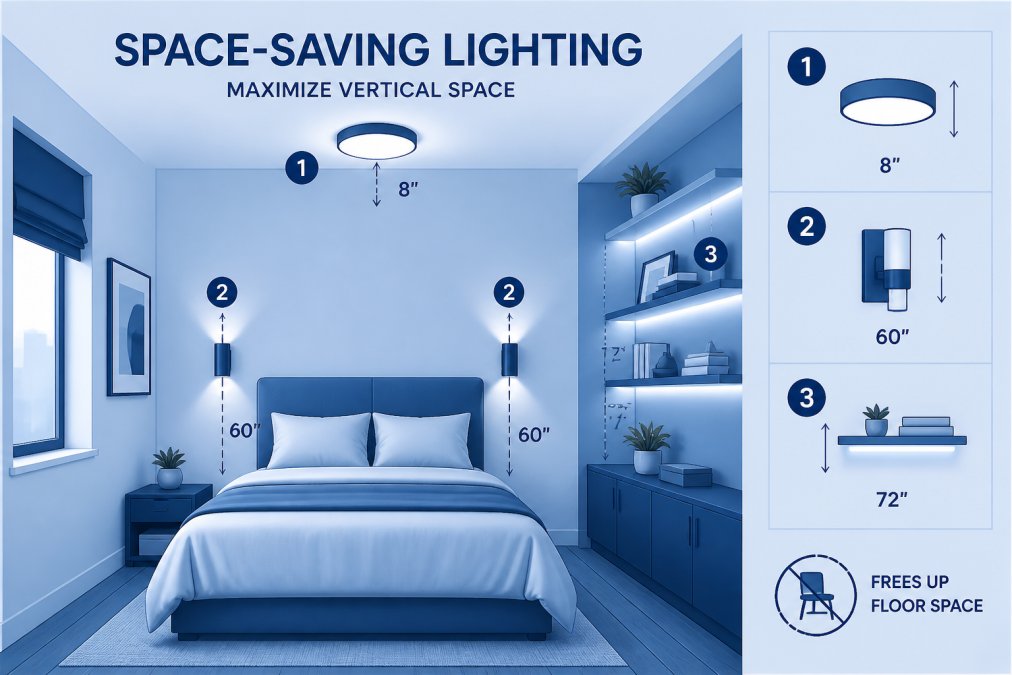
Select sconces with minimal wall projection, less than 6 inches works best in tight spaces. Look for designs with upward-facing elements that bounce light off the ceiling, creating ambient illumination that feels less localized. Warm white sconces (2700K) create an inviting atmosphere and make walls recede.
Flush Mounts and Ceiling-Mounted Fixtures
Flush mount fixtures sit nearly flat against the ceiling, ideal for low ceilings or limited clearance. Modern flush mount designs, simple geometric shapes, thin metal frames, frosted glass, feel less bulky than ornate fixtures. Recessed lighting (downlights) offers even more subtlety, with fixtures mounted inside the ceiling cavity and only a small trim ring visible. Dimmable ceiling fixtures give you control over light intensity throughout the day.
LED Strip Lighting for Hidden Accents
LED strip lighting is the modern small-room game-changer. Thin, flexible strips provide light without visible fixtures. They're affordable, easy to install (no hardwired installation required), and available in warm and cool color temperatures.
Hidden behind floating shelves, LED strips illuminate the wall below while making shelves appear to float. Strips along kitchen cabinet tops bounce light off the ceiling, adding ambient illumination. Many LED strips are dimmable and color-changing, letting you adjust mood from energetic (cool white, full brightness) to relaxing (warm white, dimmed). Installation is straightforward: clean the surface, peel the adhesive backing, and press the strip into place. For renters, this is ideal.
Bedroom Lighting Ideas for Small Rooms
Bedrooms need bright light for getting dressed and finding things, plus dim, warm light for winding down. Small bedrooms amplify these challenges because every fixture is visible and contributes to overall visual weight.
Dimmable Fixtures for Serene Moods
Dimmability is essential in small bedrooms. A single dimmable fixture shifts from 100% brightness (getting ready) to 20% brightness (bedtime) without changing fixtures or bulbs. Pair dimmable overhead lighting with dimmable bedside fixtures. Smart bulbs shift color temperature automatically: cool white in the morning (helping you wake), warm white in the evening (preparing you for sleep). Warm light (2700K) signals your body to produce melatonin and prepare for sleep.
Pendant Lights as Focal Points
A single pendant light above a small bedroom's focal point, the bed, reading nook, or vanity, creates visual interest and draws attention to the room's best feature. A well-chosen pendant tells visitors the room is intentionally designed. Pendant lights work best paired with bedside task lighting. The pendant provides ambient light and visual interest. Bedside sconces or lamps provide reading light.
Smart Lighting for Small Apartments: Renter-Friendly and Connected
If you rent, traditional lighting upgrades are off-limits. Smart, plug-in lighting options let you create sophisticated design without touching the building's infrastructure.
Plug-In Smart Bulbs and Fixtures
Smart bulbs screw into existing fixtures and connect to your phone or voice assistant. They're dimmable, color-adjustable, and programmable without installation beyond changing a bulb. Plug-in smart fixtures like table lamps, floor lamps, and swing arm sconces come pre-wired and ready to use. Smart lighting systems let you create scenes: a "morning" scene with bright, cool light; a "work" scene with focused task light; an "evening" scene with warm, dimmed light. Most systems work with Alexa, Google Home, and Apple Siri.
Voice Control and Automation
Voice control transforms how you interact with lighting in small spaces. Instead of fumbling for a switch in the dark, say "Alexa, dim the lights to 30%," and the room adjusts instantly. Automation goes further. Set lights to turn on at sunset and off at bedtime automatically. For multi-functional small rooms, automation is essential. Your studio's living area becomes a workspace at 9 a.m. A routine shifts lighting from ambient (living) to task-focused (work) with a single voice command.
Color Temperature and Lumens: Choosing the Right Light
Two technical specifications determine whether lighting feels right: color temperature (measured in kelvin) and brightness (measured in lumens).
Color temperature affects mood and perceived spaciousness. Warm white (2700K) feels intimate and cozy, ideal for bedrooms and living areas. Neutral white (3000-4000K) is versatile for kitchens, offices, and living areas. Cool white (5000K+) feels energizing and clinical, good for task work but harsh for relaxation. In small rooms, resist using cool white throughout. Reserve cool white for task areas and use warm white for ambient lighting.
Lumens measure brightness. Small rooms need the right light, not less light. Proper illumination actually makes small rooms feel larger by eliminating shadows and dark corners. Small bedrooms need 10-20 lumens per square foot for ambient lighting. LED bulbs provide excellent lumens-per-watt efficiency. A 9-watt LED bulb produces roughly 800 lumens, equivalent to a 60-watt incandescent bulb.
| Light Type | Color Temperature | Best Use | Lumens Range |
|---|---|---|---|
| Warm White | 2700K | Bedrooms, living areas, ambient | 400-1000 per bulb |
| Neutral White | 3000-4000K | Kitchens, bathrooms, versatile | 600-1200 per bulb |
| Cool White | 5000K+ | Task work, offices, detail work | 800-1400 per bulb |
Modern Lighting Ideas for Small Rooms: Multi-Functional Spaces
Many small apartments and studios serve multiple purposes. Your bedroom might be your office. Your living room might be your dining room and guest bedroom. Lighting must adapt to these shifting functions.
Combining Work, Sleep, and Living in One Space
A studio or small one-bedroom functioning as home office, bedroom, and living space needs flexible lighting supporting all three activities. Layering and dimmability are essential. Create distinct lighting zones using different fixture types. A bright desk lamp illuminates your workspace during work hours. Overhead ambient lighting provides general illumination for living activities. Bedside task lighting supports sleep and relaxation.
Position your desk away from your bed, even if just a few feet. This creates a psychological boundary between work and rest zones. Lighting that's bright at the desk and warm at the bed reinforces this separation.
Energy-Efficient Choices That Reduce Heat Output
Small rooms heat up quickly, especially in summer. Incandescent and halogen bulbs generate significant heat, making already-warm spaces uncomfortably hot. LED bulbs solve this: they're 75-80% more efficient than incandescent and produce minimal heat. LED bulbs last 25,000 to 50,000 hours versus 1,000 hours for incandescent. Though LED bulbs cost more upfront, total cost of ownership is lower when factoring in energy savings and replacement frequency.
Common Mistakes to Avoid When Lighting Small Rooms
Mistake 1: Relying solely on overhead lighting. A single ceiling fixture creates harsh shadows and makes small rooms feel smaller. Always layer: combine overhead, task, and accent lighting.
Mistake 2: Choosing fixtures that are too large. A chandelier designed for a 20-foot ceiling looks absurd in an 8-foot bedroom. Select fixtures proportional to the room.
Mistake 3: Using cool white throughout. Bright, cool light makes small spaces feel clinical and cramped. Reserve cool white for task areas and use warm white for ambient lighting.
Mistake 4: Underestimating accent lighting. A shelf lit by hidden LED strips or a wall lit by subtle accent light makes small rooms feel intentional and designed.
Mistake 5: Ignoring dimmability. Non-dimmable fixtures lock you into a single brightness level. Dimmable fixtures or smart bulbs let you adjust light based on time of day and activity.
Mistake 6: Placing task lighting in the wrong spot. Position task lights to the side or above, directing light onto your work surface rather than toward your face.
Mistake 7: Forgetting about color rendering. Look for bulbs with a high CRI (color rendering index) of 90 or higher. They cost slightly more but make colors look natural and spaces feel more inviting.
Mistake 8: Overlooking renter-friendly options. If you rent, don't assume you're stuck with bad lighting. Plug-in fixtures, smart bulbs, adhesive LED strips, and swing arm lamps provide sophisticated lighting without permanent modifications.
Small spaces demand intentional design choices, and lighting is where that intention shows most clearly. Modern lighting ideas for small rooms aren't about buying expensive fixtures, they're about understanding how light moves through space, layering different sources strategically, and choosing fixtures that maximize function without consuming precious square footage.
Viva homeStore offers a curated selection of space-saving lighting solutions, from dimmable smart bulbs and plug-in swing arm sconces to LED strip lighting and modern flush mounts. Explore our lighting collection and discover how the right fixtures can make your small room feel larger, brighter, and more intentional. Shop now and start creating the lighting design your space deserves.
Frequently Asked Questions
What lighting makes a small room look bigger?
Layered lighting with multiple light sources creates visual depth and makes small rooms feel more spacious. Use ambient lighting from flush mounts or ceiling fixtures as your base, add task lighting with wall sconces or pendant lights, and accent lighting with LED strips to draw the eye upward. Warm color temperatures (2700K) create a serene mood while cool white light (4000K+) feels more open. Avoid single overhead fixtures, which flatten the space and create harsh shadows.
How many light sources should a small room have?
Aim for at least three light sources in a small room to create effective layering: one ambient fixture (ceiling-mounted or flush mount), one task light (wall sconce or adjustable arm lamp), and one accent light (LED strip or pendant). This combination provides functional illumination while preventing the room from feeling either too dark or washed out. More sources are fine if your footprint allows, just ensure they're vertically oriented to preserve floor space.
What color temperature is best for small spaces?
Warm white light (2700K Kelvin) creates an inviting, atmospheric feel in small bedrooms and living areas. Cool white (4000K-5000K) works better in small home offices or kitchens where task lighting and shadow reduction matter. For multi-functional small rooms, use dimmable fixtures so you can adjust the color temperature and intensity: warm for evening relaxation, cooler for daytime work. This flexibility maximizes how the space functions throughout the day.
Are smart lighting options good for renters in small apartments?
Yes, smart lighting for small apartments is ideal for renters because most solutions use plug-in smart bulbs or portable fixtures that require no hardwired installation. You can control dimmable lights via smartphone or voice commands without altering your apartment. This approach lets you customize your lighting footprint without landlord approval and take your fixtures when you move. Look for energy-efficient LED smart bulbs to reduce heat output and lower electricity costs.
This article was written using GrandRanker