

Refrigerator Organization Tips for Fresh Produce
Table of Contents
- Refrigerator Temperature Zones for Produce
- How to Store Fruits and Vegetables to Prevent Spoilage
- Best Refrigerator Storage Containers for Produce
- Crisper Drawer Humidity Settings Explained
- Refrigerator Organization Tips to Prevent Cross-Contamination
- Seasonal Storage Adjustments for Fresh Produce
- Cleaning and Maintenance for Long-Lasting Freshness
- Frequently Asked Questions
Last Updated: September 25, 2026
Refrigerator Temperature Zones for Produce
Your fridge is a set of distinct climate zones, and where you park a head of lettuce decides whether it lasts three days or ten. This is the foundation of any good refrigerator organization plan for fresh produce.
Here is how the zones break down:
| Zone | Typical Temp | Best For |
|---|---|---|
| Bottom shelf | Coldest | Meat, dairy, hardy root vegetables |
| Middle shelves | Moderate | Cooked leftovers, eggs, berries |
| Crisper drawers | Adjustable | Fruits and vegetables by humidity need |
| Door bins | Warmest | Condiments, not produce |
Where Each Zone Belongs in Your Fridge
Most people treat the crisper drawer as a black hole for anything green, a mistake.
How to Store Fruits and Vegetables to Prevent Spoilage
How to store fruits and vegetables to prevent spoilage comes down to two things: moisture and ethylene gas.
Ethylene Gas Compatibility: What to Keep Apart
Ethylene producers and ethylene-sensitive items should never share a drawer. This single habit prevents a lot of food waste.
High ethylene producers:
- Apples
- Bananas
- Avocados
- Tomatoes
- Peaches and nectarines
- Pears
- Melons (cantaloupe, honeydew)
- Stone fruit in general
Ethylene-sensitive items:
- Leafy greens (lettuce, spinach, kale)
- Broccoli and cauliflower
- Cucumbers
- Carrots
- Berries
- Asparagus
- Watermelon
Items that are both producers and sensitive (store alone):
- Avocados
- Tomatoes
- Pears
The Compatibility Matrix: What Never to Store Together
Most guides stop at 'keep producers away from sensitive items,' which is not enough when your crisper has only two compartments. Use this matrix to decide what shares space.
| Pair | Verdict | Why |
|---|---|---|
| Apples + leafy greens | Never together | Apples are heavy ethylene producers; greens yellow and wilt fast |
| Bananas + anything | Keep isolated | Bananas are the strongest common producer and speed up ripening in nearly everything |
| Tomatoes + cucumbers | Never together | Tomatoes produce ethylene; cucumbers are highly sensitive and turn yellow |
| Onions + potatoes | Never together | Onions off-gas and accelerate potato sprouting; both prefer cool, dark, dry storage outside the fridge |
| Berries + apples | Keep apart | Apples shorten berry shelf life by days |
| Carrots + apples | Keep apart | Carrots develop a bitter flavor when exposed to ethylene |
| Broccoli + tomatoes | Keep apart | Broccoli yellows and loses texture quickly |
| Melons + leafy greens | Keep apart | Melons produce ethylene; greens are sensitive |
Safe to store together:
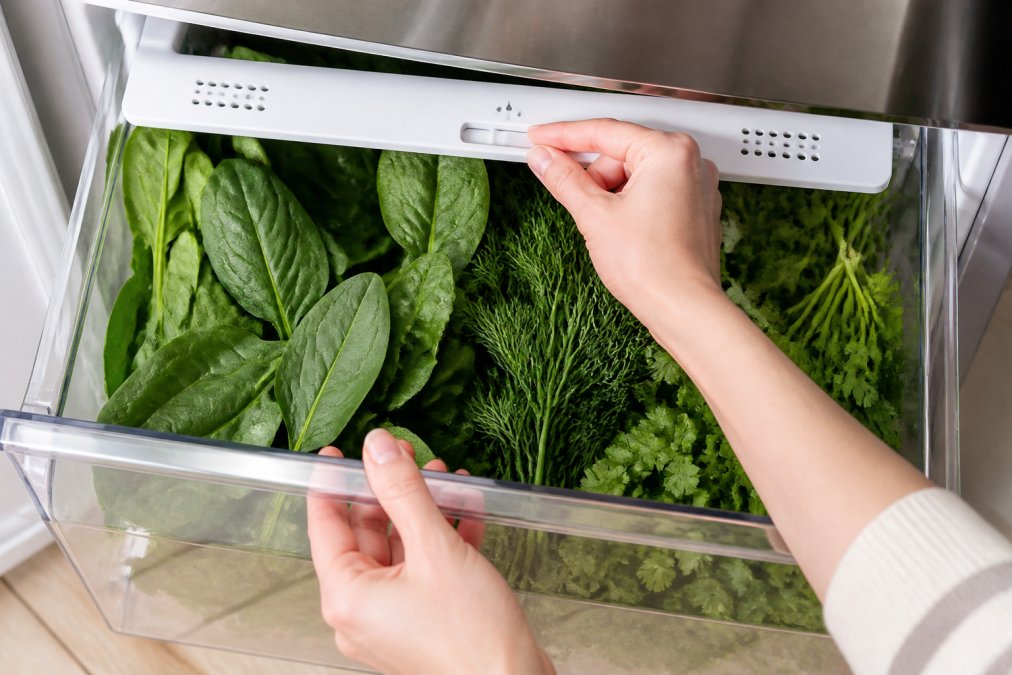
- Leafy greens + herbs (both sensitive, both high-humidity)
- Berries + cherries (both sensitive, both low-humidity)
- Root vegetables + hardy greens (both tolerate cold, low ethylene interaction)
Practical Workarounds When Space Is Tight
- Seal the producers. A lidded glass or BPA-free plastic container traps most of the ethylene the fruit releases, the single most effective fix in a small fridge.
- Use an ethylene absorber. Activated-carbon or potassium permanganate sachets sit in the crisper and pull ethylene out of the air. Replace them every one to three months.
- Vent the drawer. Moving the humidity slider toward low humidity increases airflow, diluting ethylene concentration.
- Rotate daily. Ripe fruit releases far more ethylene than unripe fruit. Eat or move ripe items first, and the gas problem shrinks on its own.
- Keep bananas out of the fridge entirely unless already fully ripe. A ripe banana in a drawer will ripen everything around it within a day or two.
A common mistake is storing onions and potatoes together. Both last longer apart, in a cool, dark, dry spot outside the fridge. The same applies to garlic and onions, keep them separated so their odors do not migrate.
USDA FoodData Central produce storage guidance
Best Refrigerator Storage Containers for Produce
The best refrigerator storage containers for produce are clear, airtight, and sized to your shelf. Clear matters because you see what you have, cutting down on forgotten food.
Sustainable Storage Alternatives
You do not need a full new set of containers. Several low-waste options work just as well.
- Beeswax wraps replace plastic wrap for covering cut produce
- Reusable silicone bags stand in for single-use zip bags
- Cotton produce bags let greens breathe in the crisper
- Glass jars reuse what you already have in the pantry
Crisper Drawer Humidity Settings Explained
The humidity slider is the most ignored control in the kitchen. Set it right and leafy greens stop wilting overnight. Most fridges have two settings: high humidity and low humidity, controlled by a small vent.
Refrigerator Organization Tips to Prevent Cross-Contamination
Cross-contamination is the food safety risk hiding in a crowded fridge. Raw meat juices drip onto produce below, and that is how a stomach bug starts.
FIFO Rotation and Visual Inventory Tracking
FIFO stands for first in, first out: move older items to the front, newer ones to the back.
- Put older produce at eye level
- Use a "use first" bin for items nearing the end
- Check the bin before every grocery run
Seasonal Storage Adjustments for Fresh Produce
Your fridge setup should shift with the seasons. Summer and winter produce have different needs, and the biggest mistake is running the same drawer configuration year-round.
Summer: Berries, Stone Fruit, and Tender Greens
Summer produce arrives ripe and warm, already producing ethylene at full tilt. Your job is to slow it down.
What changes in summer:
- Berries go in the low-humidity drawer, unwashed, in a single layer if possible. Wash only right before eating, moisture on berries invites mold within a day.
- Stone fruit (peaches, nectarines, plums, apricots) ripens on the counter first, then moves to the fridge once it gives to gentle pressure. Cold before ripening turns the flesh mealy.
- Cherries go straight to the fridge in the low-humidity drawer. They do not improve after picking.
- Corn should be eaten within a day or two. Its sugar converts to starch fast, and refrigeration only slows that slightly.
- Tomatoes stay on the counter until fully ripe, then move to the fridge if you cannot eat them in time. Refrigeration dulls flavor, so this is a trade-off, not a rule.
- Melons go in the low-humidity drawer once cut. Whole melons can sit on the counter until ripe.
Summer drawer settings:
- High-humidity drawer: herbs, leafy greens, broccoli, cucumbers
- Low-humidity drawer: berries, cherries, cut melon, stone fruit
Winter: Root Vegetables, Citrus, and Hardy Greens
Winter produce is built to last, so your job shifts from slowing ripening to preventing moisture loss and sprouting.
What changes in winter:
- Root vegetables (carrots, beets, turnips, parsnips) go in the high-humidity drawer, greens trimmed off. The greens pull moisture from the root and cause it to soften.
- Potatoes, onions, and garlic stay out of the fridge entirely, in a cool, dark, dry spot. Cold converts potato starch to sugar, which makes them taste oddly sweet and fry dark.
- Citrus holds well in the low-humidity drawer for two to four weeks. Do not seal it in plastic, it needs airflow to avoid mold.
- Hardy greens (kale, collards, cabbage) tolerate the colder bottom shelf and high humidity better than tender summer greens.
- Winter squash (butternut, acorn, delicata) stays on the counter or in a cool pantry, not the fridge, unless cut.
- Apples and pears are at their peak and are heavy ethylene producers. Keep them isolated from everything else.
Winter drawer settings:
- High-humidity drawer: root vegetables, hardy greens, cabbage, Brussels sprouts
- Low-humidity drawer: citrus, apples, pears
Shoulder Seasons: Spring and Fall
Spring and fall are transition months, so run a hybrid setup.
- Spring: Asparagus, peas, radishes, and early greens. Asparagus does best standing upright in a jar with an inch of water, covered loosely. Radishes go in the high-humidity drawer with greens removed.
- Fall: Apples, pears, squash, and the first root vegetables. Switch the low-humidity drawer from berries to apples and pears, and start moving hardy items to the bottom shelf.
A Simple Seasonal Reset Routine
Four times a year, do a five-minute reset:
- Empty both crisper drawers and wipe them down.
- Re-read the humidity slider and set it for the season.
- Move the ethylene producers to their own drawer or shelf.
- Check the bottom shelf for anything that should have moved out of the fridge (potatoes, onions, winter squash).
- Restock with the season's produce in the right zones.
Cleaning and Maintenance for Long-Lasting Freshness
A clean fridge keeps produce fresh longer. Spills and crumbs feed bacteria and mold, which spread to nearby food.
- Clear expired items before each grocery trip
- Wipe up spills right away
- Keep a small box of baking soda on a shelf to absorb odors
- Check door seals so cold air stays in
Frequently Asked Questions
How should I organize vegetables in my refrigerator?
Place leafy greens and herbs in the high-humidity crisper drawer, root vegetables like carrots and beets in the low-humidity drawer, and ethylene-sensitive items such as broccoli and cucumbers away from ripening fruits. Keep produce in separate containers or bags to maintain proper air circulation and prevent cross-contamination. Use the middle shelves for items that need consistent temperatures, and always follow FIFO rotation by moving older produce to the front.
What fruits should not be stored together in the fridge?
Apples, bananas, pears, and stone fruits release ethylene gas, which speeds up ripening in nearby produce. Keep these away from ethylene-sensitive items like leafy greens, broccoli, cucumbers, and berries. Store ethylene producers in a separate container or on a different shelf. If space is tight, use airtight containers to limit gas exposure. This simple separation can extend produce longevity by several days and reduce food waste.
What are some common mistakes to avoid when organizing a fridge?
Overcrowding shelves blocks air circulation and creates temperature fluctuations. Washing produce before storage adds moisture that encourages mold growth. Storing everything in the crisper drawer without checking humidity settings leads to wilting or rot. Placing milk or eggs in the door exposes them to temperature swings. Finally, skipping a weekly inventory rotation means forgotten items spoil in the back. Avoid these habits to keep produce fresh longer.
How do I keep produce fresh longer in the refrigerator?
Start by setting your crisper drawers correctly: high humidity for leafy greens and low humidity for fruits and root vegetables. Use airtight storage containers or reusable produce bags to control moisture. Separate ethylene-producing fruits from sensitive vegetables. Keep the fridge at or below 40°F. Follow a FIFO rotation routine and do a quick visual inventory check every few days. These refrigerator organization tips help retain freshness and cut food waste.
Keeping produce fresh is a daily habit, not a one-time project. The right zones, the right containers, and a quick weekly reset do most of the work.
At Viva homeStore, we carry practical storage containers, clear bins, and organization essentials built to fit real kitchens and real routines. Our curated selection focuses on function first, so your fridge works as hard as you do.
Get started with Viva homeStore and turn a messy fridge into a system that saves you time and money every week.