

Sustainable Kitchen Organization Products for Families
Table of Contents
- Why Families Are Switching to Sustainable Kitchen Organization
- Eco-Friendly Food Storage Containers That Actually Hold Up
- Non-Toxic Kitchen Storage Solutions for Every Cabinet
- Sustainable Pantry Organization Tips for Busy Families
- Bamboo, Cotton, and Ceramic: Comparing Sustainable Materials
- Cleaning and Maintaining Your Sustainable Kitchen Products
- What Happens When These Products Reach End of Life
- Conclusion
- Frequently Asked Questions
Last Updated: September 26, 2026
Why Families Are Switching to Sustainable Kitchen Organization
Families are moving toward sustainable kitchen organization products for families because they want storage that lasts, keeps food fresh, and cuts down on constant replacement. This guide from Viva homeStore breaks down what actually works in a busy household. The shift is practical, not just ethical. A glass jar that seals properly does the same job as a plastic tub, and it does not stain, warp, or hold onto last week's leftovers.
Eco-Friendly Food Storage Containers That Actually Hold Up
The best eco-friendly food storage containers for families are glass and stainless steel for everyday use, with beeswax wraps and silicone lids handling lighter jobs. These materials resist heat, do not absorb food odors, and last through thousands of wash cycles.
Glass and Stainless Steel: The Family Workhorses
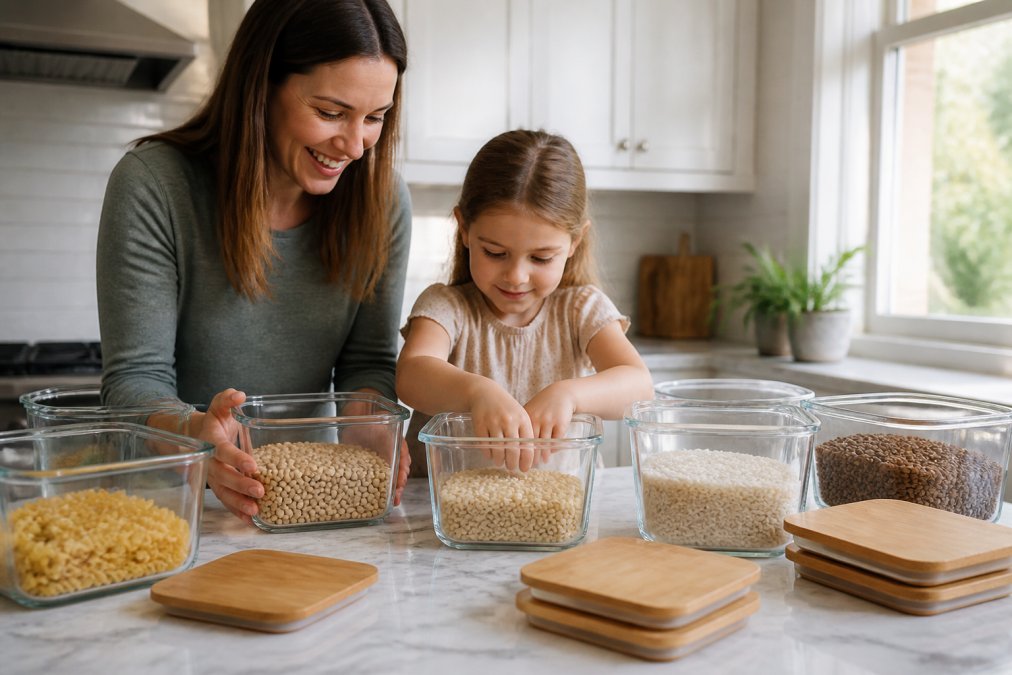
Glass canisters with airtight bamboo lids keep pantry staples like pasta, rice, and spices fresh and visible. Look for borosilicate glass, which handles temperature changes better than standard glass. Stainless steel fridge bins work well for produce because the open design allows airflow, and the metal does not absorb smells the way plastic does.
Beeswax Wraps and Silicone Lids for Everyday Use
Beeswax wraps cover bowls and wrap sandwiches without plastic. They mold to the shape of the container with the warmth of your hands and rinse clean under cool water. Food-grade silicone lids stretch over bowls and mugs, replacing cling film for short-term storage. Neither is ideal for long freezing, but for daily leftovers and lunch prep, they cut a surprising amount of waste.
Non-Toxic Kitchen Storage Solutions for Every Cabinet
Non-toxic kitchen storage solutions avoid BPA, phthalates, and lead-based glazes, focusing instead on glass, stainless steel, bamboo, and food-grade silicone. These materials do not leach chemicals into food, especially when heated.
| Material | Best For | Watch Out For |
|---|---|---|
| Glass | Pantry staples, leftovers | Breakable, heavy when full |
| Stainless steel | Fridge produce bins | Opaque, harder to see contents |
| Bamboo | Drawers, spice racks, drying racks | Stains if left in standing water |
| Food-grade silicone | Lids, wraps, bowl covers | Not for long freezing |
| Ceramic | Compost bins, countertop storage | Filters need replacing |
Sustainable Pantry Organization Tips for Busy Families
Most pantry guides organize for one adult who cooks for themselves. A family pantry has to survive three people reaching into it before 7 a.m., a lunchbox assembly line, and a weekend restock after a big grocery run. That changes the layout, the containers, and the routine.
Build Zones Around Family Workflows, Not Categories
Instead of grouping by food type, group by who uses it and when:
- Kid-reach snack zone (lowest shelf, 24-36 inches): cotton mesh bags of apples and carrots, a clear bin of granola bars, small stainless steel cups. If a five-year-old can grab a snack without a stool, you stop the "I'm hungry" negotiation before it starts.
- Lunchbox assembly zone (counter-adjacent shelf): stackable glass jars of crackers, dried fruit, and nuts, plus a bin of reusable silicone pouches and stainless steel bento boxes. Keeping the containers next to the food they hold means packing lunch is one motion, not a scavenger hunt across three cabinets.
- Batch-cook zone (mid shelf): quart and half-gallon mason jars of rice, oats, pasta, and beans, sized so a full jar equals roughly one family meal. Label with a marker or reusable sticker so anyone can restock.
- Spice zone (tiered bamboo rack): labels facing out, alphabetical or by cuisine. A tiered rack with non-slip feet keeps seasonings visible and stops the whole thing sliding when cabinet doors close.
- Bulk and backup zone (top and bottom shelves): heavier mason jars of flour and sugar down low, paper goods and rarely used items up top.
The Sunday Reset That Actually Sticks
A pantry stays organized because of a 10-minute weekly routine, not because of the containers. A common pattern in busy households:
- Sunday evening: pull everything forward, wipe shelves, refill the lunchbox and snack bins from bulk jars.
- Mid-week check: restock the kid-reach zone only. This is the shelf that empties fastest.
- Monthly: rotate bulk jars, check for expired items, and refill spice jars from larger containers.
Sizing and Labeling Rules That Prevent Reorganization
- Measure shelf height before buying. Tall canisters that do not fit get stacked awkwardly, which defeats the point. Standard upper cabinets run about 12 inches deep and 30-36 inches tall; leave two inches of clearance above the tallest jar.
- Match jar size to consumption. A half-gallon jar of a spice you use twice a year wastes space; a pint jar of rice you cook weekly runs out mid-week.
- Label the lid, not just the front. When jars are stacked or turned, the lid is what you see.
- Use clear containers for anything a child needs to identify. Opaque stainless steel is great for produce bins in the fridge, but kids cannot tell oats from sugar through metal.
What to Skip
Do not buy a matching set of containers before you know your shelf dimensions and your family's actual consumption. The most common mistake is buying a beautiful 12-piece glass set that fits nowhere and gets shoved in a closet. Buy three or four pieces, live with them for a month, then expand.
Bamboo, Cotton, and Ceramic: Comparing Sustainable Materials
Each sustainable material has a clear best use, and matching the material to the job is what makes a kitchen last. Bamboo is fast-growing and sturdy, which makes it ideal for drawer dividers, spice racks, and collapsible drying racks. Cotton mesh produce bags replace plastic bags at the market and rinse clean in the washing machine.
Cleaning and Maintaining Your Sustainable Kitchen Products
Maintenance is what separates products that last a decade from ones that fail in a year. Glass and stainless steel are the easiest: both go in the dishwasher, and neither needs special care beyond checking that silicone seals stay clean. Bamboo is the one that trips people up. Hand-wash it, dry it immediately, and rub in a food-safe oil every few months to keep the surface sealed.
What Happens When These Products Reach End of Life
A product is only as sustainable as its exit. Most buying guides stop at the purchase, which is why so many "eco-friendly" kitchen items end up in a landfill anyway. Here is what actually happens to each material once it wears out, and what a family can realistically do about it.
Glass and Stainless Steel: The Easy Exits
Both are widely accepted in curbside recycling programs and hold real scrap value. A chipped mason jar can often be repurposed as a pen cup, a propagation vase, or a small-batch spice container before it ever hits the bin. Stainless steel bins and bento boxes that dent but still seal can be handed down or donated.
Bamboo and Untreated Wood: Compost, With a Caveat
Bamboo and untreated wood break down in a home compost pile, but only if they are free of glue, varnish, or laminate. Many bamboo drawer dividers and cutting boards use food-safe adhesives that slow decomposition. If the item is a single solid piece, compost it. If it is laminated or coated, check whether your municipal yard-waste program accepts it, many do not.
Cotton and Natural Fiber: Rags First, Compost Second
Cotton mesh produce bags and cotton towels have a clear second life as cleaning rags. Once they are too thin to use, natural, undyed cotton can go in a compost pile. Blended fabrics with synthetic fibers should go to textile recycling instead, which many municipalities and retailers now offer.
Silicone and Beeswax: The Hard Cases
Food-grade silicone is not widely recyclable in curbside bins. Some specialty programs accept it, but the more practical move is to use it until it fails completely, silicone lids and wraps last for years with cool-water washing. Beeswax wraps can be refreshed rather than replaced: rewaxing a tired wrap with a beeswax bar extends its life by another year or more.
Ceramic: Break It, Don't Bin It
Ceramic is almost never accepted in curbside recycling. The practical exit is to break it into drainage material for the bottom of plant pots, use shards as garden markers, or take intact pieces to a local garden center or community garden that accepts donations. A cracked ceramic compost bin can sometimes be repaired with food-safe epoxy before it is retired.
The Family-Scale Disposal Routine
Rather than treating disposal as a one-off event, build it into the household rhythm:
- Keep a "retire bin" in the garage or utility closet for items that have failed but are not yet sorted.
- Once a season, sort the bin into recycling, compost, textile recycling, and donation piles.
- Before replacing anything, ask whether it can be repaired. A loose silicone seal, a rewaxed wrap, or a re-oiled bamboo board often costs less to fix than to replace.
Why This Matters More for Families
A household with kids cycles through storage containers faster than a single adult: lunchboxes get lost, jars get dropped, silicone lids get stretched. That higher turnover is exactly why end-of-life planning pays off at family scale. A kitchen that recycles, composts, and repairs its way through a decade of family use keeps far more material out of the landfill than one that simply buys the same plastic bins over and over.
Conclusion
Keeping a family kitchen organized without falling back on plastic takes a little planning up front, but the payoff is storage that lasts and food that stays fresh. Viva homeStore carries a curated selection of practical home essentials built around organization and functionality, from storage accessories to lighting and furniture that help you use every inch of your space.
Frequently Asked Questions
What are some sustainable kitchen products for families?
Sustainable kitchen products for families include glass storage containers with bamboo lids, stainless steel fridge bins, cotton mesh produce bags, and ceramic compost bins. These items replace single-use plastic and are built to last. Look for BPA-free, non-toxic materials like borosilicate glass and food-grade silicone. Bamboo organizers and wooden dish racks are also good options because bamboo grows quickly and biodegrades at end of life. Start with one or two swaps and build from there.
What is a good replacement for Tupperware?
Glass containers with airtight bamboo or silicone lids are the most popular replacement for plastic Tupperware. They are non-toxic, BPA-free, and do not absorb food odors or stain. Stainless steel containers work well for lunches and dry snacks. Beeswax wraps cover bowls and half-cut produce without any plastic. For families doing meal prep, a mix of stackable glass containers and stainless steel bins covers most storage needs and holds up to daily use.
How can families reduce plastic waste in the kitchen?
Switch to reusable cotton mesh produce bags for grocery runs, store leftovers in glass or stainless steel instead of plastic wrap, and use a countertop compost bin for food scraps. Buying pantry staples in bulk and storing them in glass jars cuts packaging waste further. Keep a set of beeswax wraps handy for covering bowls. These changes are low-effort and save money over time because you stop repurchasing disposable items.
Are bamboo kitchen organizers better than plastic?
Bamboo organizers are a renewable, biodegradable alternative to plastic. They are sturdy enough for drawer dividers, spice racks, and dish drying racks. Bamboo does need regular drying to prevent mold, and it can stain if left in standing water. Plastic is cheaper upfront but cracks over time and rarely gets recycled. For families who want durable, non-toxic storage that looks good on the counter, bamboo is the stronger long-term choice.