

Bed Frame Alternatives for Small Rooms: 7 Space-Saving Solutions
Table of Contents
- Why Bed Frame Alternatives Matter for Small Spaces
- Storage-Integrated Bed Solutions: Platform and Ottoman Frames
- DIY Bed Frame Ideas for Small Rooms
- Multi-Functional Furniture: Daybeds and Futons
- Vertical Space Solutions: Murphy Beds and Foldable Options
- How to Organize Small Studio Apartments with Smart Bed Choices
- Comparison: Weight Capacity and Structural Integrity
- Conclusion
Last Updated: August 27, 2026
Why Bed Frame Alternatives Matter for Small Spaces
A standard bed frame consumes roughly 40-50 square feet of floor space when accounting for nightstands and clearance (the FDA). The real challenge is choosing one that doesn't make a small room feel cramped while delivering comfort and storage. At Viva homeStore, we understand that small-space living demands smarter furniture choices. The right bed frame alternative transforms a cramped bedroom into one that actually works for your lifestyle.
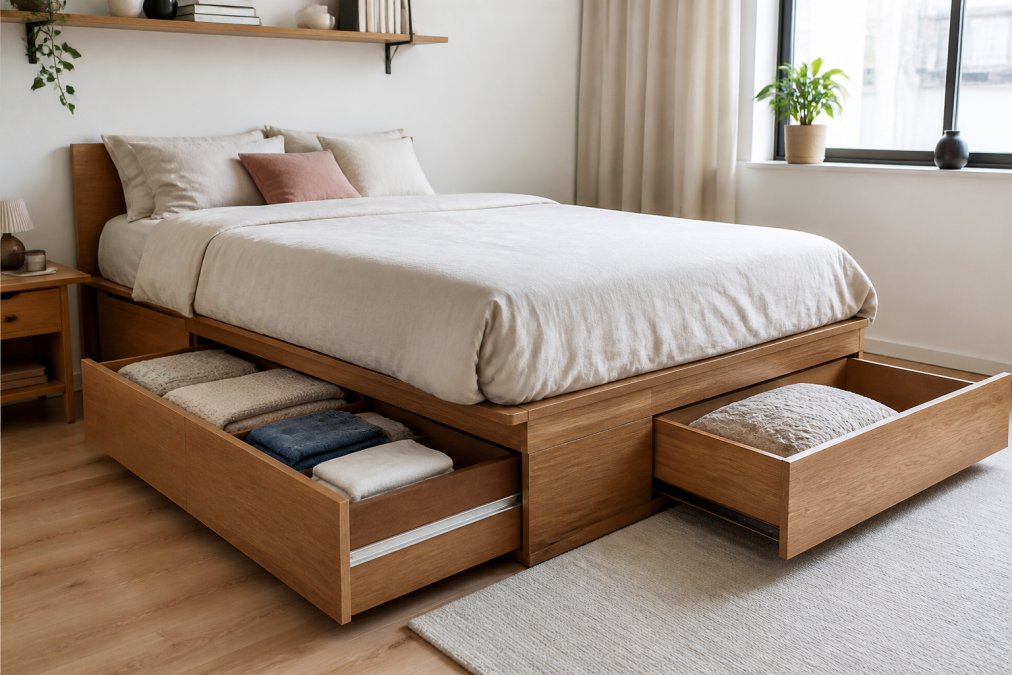
This guide covers seven proven alternatives to standard bed frames for small rooms. Each solves a different problem: some maximize hidden storage, others free up floor space entirely, and a few serve dual purposes. We'll also address practical concerns most guides overlook: mattress ventilation, accessibility, weight capacity, and rental compatibility.
Storage-Integrated Bed Solutions: Platform and Ottoman Frames
Storage Bed Frames with Drawers
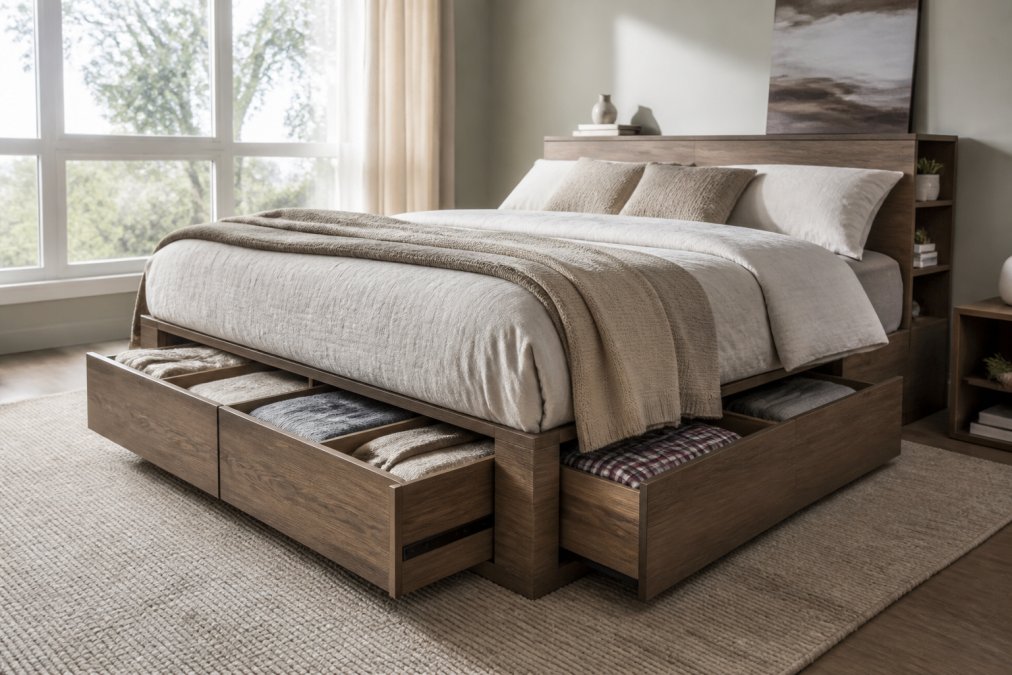
A storage bed frame with built-in drawers reclaims floor space without sacrificing functionality. Unlike a standard frame, the platform uses the space underneath for linens, seasonal clothing, or other items you'd normally stash in a dresser. Most models eliminate the need for a box spring, saving height and another furniture purchase. The platform design distributes weight evenly, which matters in rentals or older buildings.
What makes this practical is accessibility. Drawers pull out smoothly at waist height, making everyday storage genuinely usable. The trade-off: drawers require clearance to open. If your bed sits against walls on both sides, you'll lose access to at least one side. These frames are also heavier than standard beds, which matters if you move frequently.
Ottoman Beds with Hydraulic Lift Storage
An ottoman bed lifts upward via a gas-hydraulic mechanism, revealing a cavernous storage compartment underneath. The storage capacity is dramatic because there's no internal frame structure taking up room. The hydraulic lift is smooth and effortless, making it accessible for anyone with limited upper body strength.
The downsides are real: ottoman beds cost more than storage frames with drawers, are heavier and harder to move, and become substantially heavier once filled. They're better suited to permanent installations than rentals.
DIY Bed Frame Ideas for Small Rooms
Platform Bed Construction from Pallets or Wood
Building your own platform bed from reclaimed wood or pallets is one of the cheapest ways to get a functional frame that fits your exact space. A pallet bed is the budget option, though not all pallets are equal, some are treated with chemicals or warped. A better DIY approach uses dimensional lumber (2x10s or 2x12s for the frame, 2x4s for the slats), giving you control over dimensions, finish, and structural integrity.
The skill level required is moderate. You need a drill, saw, and basic carpentry knowledge. YouTube has thousands of detailed tutorials. The real advantage for small rooms is customization: a DIY platform can be lower profile than commercial frames, making the room feel taller. The downside: you own the structural responsibility, and a DIY bed is harder to move in rentals.
Floor-Level Sleeping Arrangements
The most space-efficient bed frame is no frame at all. A floor bed eliminates the furniture piece entirely and creates a minimalist aesthetic that actually makes small spaces feel larger. It's popular in Japanese and Scandinavian design for exactly this reason.
Practically, a floor bed requires ventilation. A mattress sitting directly on carpet or hardwood needs air circulation underneath to prevent mold and mildew. Using a thin slatted platform (even 2-3 inches high) solves this. Floor beds are also harder to access as you age or if you have mobility issues, and cleaning underneath is difficult. If your space is damp or prone to moisture, a floor bed is a mold risk.
Multi-Functional Furniture: Daybeds and Futons
Daybeds with Built-In Storage
A daybed functions as both a sofa and a bed, giving you two pieces of furniture in one footprint. Many daybeds include storage drawers underneath, adding a third function. The design typically features a mattress on a frame with a backrest and side railings, so it looks like a sofa during the day.
The trade-off is comfort: daybed mattresses are usually thinner (4-6 inches instead of 8-10 inches), affecting long-term sleeping comfort. They're not ideal if you sleep with a partner, as the backrest and railings reduce usable sleeping surface. Daybeds work best as guest beds or for single sleepers who don't mind a firmer mattress.
Futon Sofa Beds for Dual-Purpose Rooms
A futon is a sofa that folds flat into a bed, offering a full-size sleeping surface when opened. During the day it's a sofa; at night, it's a bed. For studios or multipurpose rooms, this is genuinely useful. Comfort depends on the futon pad quality. Cheap futons with thin foam are uncomfortable for sleeping; better quality futons with 8-10 inches of high-density foam are genuinely sleepable, though firmer than traditional mattresses.
The practical issue: futons are heavy and awkward to fold. If you're folding it daily, that gets old quickly. For small rooms, a futon works best as an occasional guest bed rather than your primary sleeping surface.
Vertical Space Solutions: Murphy Beds and Foldable Options
Wall-Mounted Murphy Beds
A Murphy bed folds vertically into a wall, closet, or cabinet, freeing up the entire floor space when not in use. Modern Murphy beds use gas-assist springs or pneumatic cylinders that make opening and closing smooth. A 10x12 bedroom with a Murphy bed feels like a 10x12 office during the day.
The downsides are significant: Murphy beds are expensive, installation is complex and often requires professional help, and they're permanent installations, a problem if you rent. The sleeping experience is comparable to a standard bed, which is a major advantage. Murphy beds work best for homeowners planning to stay for years.
Foldable Tri-Fold Mattresses for Temporary Sleeping
A tri-fold mattress folds into thirds for storage, designed for flexibility: overnight guests, camping, dorms, or temporary arrangements. Price is low, making them accessible. Comfort depends on thickness and foam quality; a 4-inch version is noticeably thinner and firmer than a standard mattress, while a 6-inch version is better but still not ideal for nightly sleeping.
The advantage for small rooms is obvious: it takes up almost no space when folded. The limitation: it's not a long-term sleeping solution. It works for guests or occasional use.
How to Organize Small Studio Apartments with Smart Bed Choices
Mattress Health and Ventilation in Compact Layouts
When your bed sits in a small room, air circulation becomes critical for mattress longevity. A mattress needs to breathe; if it sits directly on carpet or a solid platform with no ventilation, moisture accumulates, leading to mold, mildew, and dust mites.
Ensure your bed platform has slats or gaps allowing air flow underneath. A slatted platform bed (with 2-4 inches between slats) provides adequate ventilation. A solid platform with no gaps does not. Floor beds without any platform are worst for ventilation. In small rooms, ventilation must be built into the design. A simple test: can you slide your hand under the mattress? If not, add a thin slatted platform (even 2 inches high) underneath.
Accessibility and Ergonomics for Seniors in Small Spaces
Bed height matters more than most realize, especially for older adults or anyone with mobility limitations. The standard bed height (mattress surface) is 24-26 inches (the American Academy of Dermatology). For seniors or people with knee or hip issues, 28-30 inches is more ergonomic (the NIH). Bed risers or elevated platform beds can make a dramatic difference in ease of use.
In small rooms, a raised platform bed (28-30 inches high) with storage underneath gains accessibility and storage without sacrificing floor space. Also ensure at least one side has clearance for getting in and out safely. A bed wedged between two walls is a safety hazard.
Rental-Friendly Modifications Without Permanent Installation
If you rent, your options are limited to what you can do without damaging walls or floors. This rules out Murphy beds and wall-mounted storage. The best options are freestanding pieces: platform beds, storage frames with drawers, daybeds, futons, and bed risers.
For maximizing small rental spaces, focus on freestanding storage solutions. Bed risers under an existing frame create storage space without modification. A daybed or futon replaces both seating and sleeping furniture. A freestanding platform bed with drawers provides storage and style without wall damage. Before moving in, measure your space and ensure your bed fits through doorways and hallways.
Comparison: Weight Capacity and Structural Integrity
| Bed Frame Type | Weight Capacity | Structural Durability | Best For | Installation |
|---|---|---|---|---|
| Platform Bed (Wood) | 800-1200 lbs | High (solid construction) | Most sleepers | No tools required |
| Storage Frame (Drawers) | 600-1000 lbs | Medium (weight distributed) | Single-medium sleepers | Basic assembly |
| Ottoman Bed | 700-1100 lbs | High (reinforced frame) | Heavy storage needs | Professional recommended |
| Daybed with Storage | 400-600 lbs | Medium (lighter frame) | Single sleepers, guests | Basic assembly |
| Futon Frame | 500-800 lbs | Medium (folding stress) | Occasional sleepers | Basic assembly |
| Murphy Bed | 800-1200 lbs | High (wall-anchored) | Permanent installations | Professional required |
| Foldable Mattress | 200-400 lbs | Low (temporary use) | Guests, temporary | No installation |
| Floor Bed (No Frame) | Mattress-dependent | Low (no support) | Light sleepers | No installation |
Weight capacity matters in small rooms because the bed is often the heaviest furniture piece. If you're a heavier sleeper or share the bed with a partner, ensure your frame supports both of you comfortably. Solid wood or reinforced metal frames last longer than particle board or thin metal frames. For small rooms, a sturdy frame is especially important because you can't easily replace it without disrupting your entire space.
Small-space living doesn't mean compromising on comfort or functionality. The right bed frame alternative transforms a cramped bedroom into a space that actually works for your daily life. Whether you choose a storage-integrated platform bed, a space-saving futon, or a DIY pallet frame, your decision should balance three priorities: how the bed serves your sleep needs, how much storage you need, and what your space allows.
At Viva homeStore, we've helped customers find bed frame solutions that fit their small spaces and budgets. Our curated selection of platform beds, storage frames, and space-saving furniture is designed specifically for people optimizing compact living. Shop now to explore options that turn your small room into a functional, comfortable space you actually enjoy.
Frequently Asked Questions
What type of bed frame is best for a small room?
Storage bed frames and platform beds work best for small rooms because they eliminate the need for a box spring and provide integrated storage. Murphy beds maximize floor space by folding vertically into walls. Daybeds serve double duty as seating and sleeping surfaces. Choose based on your room layout and whether you need additional storage, storage bed frames with drawers offer storage capacity, while platform designs improve ventilation and mattress longevity compared to traditional box springs.
Can I put a mattress directly on the floor in a small room?
Yes, floor-level sleeping arrangements work in small rooms and save vertical space. However, placing a mattress directly on the floor reduces air circulation underneath, increasing mold and dust mite risk over time. Improve ventilation by using a thin platform base, tilting the mattress occasionally, or placing the mattress on a slatted base. Floor beds also present accessibility challenges for seniors or those with mobility issues, consider bed risers to elevate the mattress for easier access.
What are DIY bed frame ideas for small rooms that don't require permanent installation?
Pallet platform beds are affordable and rental-friendly, simply stack pallets and place your mattress on top. Wood slat frames built from lumber create low-profile platforms without tools. Foldable tri-fold mattresses store flat when not in use, perfect for studio apartments needing flexible space. Bed risers elevate existing frames to create under-bed storage without modification. All these options avoid permanent wall damage and work for renters.
How do storage bed frame alternatives compare to standard bed frames in terms of weight capacity?
Storage bed frames with drawers typically support significant weight when properly assembled, similar to standard frames. Ottoman beds with hydraulic lifts handle substantial weight depending on the mechanism quality. Platform beds made from solid wood support a high weight capacity, while DIY pallet platforms vary based on pallet quality and construction. Always check manufacturer specifications before purchasing, weight distribution matters more in small rooms where the bed takes up significant floor space.
This article was written using GrandRanker