

How to Maximize Storage in Small Apartments
Table of Contents
- Assess Your Space and Identify Storage Gaps
- Small Apartment Organization Hacks That Actually Work
- Use Vertical Storage to Reclaim Floor Space
- Multi-Functional Furniture for Small Apartments
- How to Organize a Small Closet for Maximum Capacity
- Declutter and Purge to Create Room for What Matters
- Hidden Storage Solutions and Under-Bed Organization
- Conclusion: Building Your Small-Space Storage System
Last Updated: August 17, 2026
Small apartments demand strategy. Most people buy storage solutions randomly and wonder why their spaces still feel cramped. But maximizing storage in small apartments isn't about buying more, it's about working smarter with what you have. This guide walks you through a framework to help reclaim space, reduce visual clutter, and create apartments that actually work for how you live.
Assess Your Space and Identify Storage Gaps
Before you buy a single organizer, understand what you're working with. Measure your square footage and take an honest inventory of what you actually own. Walk through each room and document wall dimensions, the amount of items you need to store, and where they currently sit. Are books stacked on the floor? Clothes overflowing your closet? Kitchen tools scattered across counters? These pain points tell you exactly where to focus.
Next, identify dead zones: the space above doorframes, under your bed, the backs of closet doors, awkward corners. Small apartments have more usable storage than most people realize; it's just not obvious. Once you map these gaps, you can plan solutions that actually fit your space.
Finally, assess your lifestyle. If you cook frequently, your kitchen storage needs differ from someone who eats out most nights. If you work from home, you need accessible desk space and filing solutions. Your storage system should match how you actually live.
Small Apartment Organization Hacks That Actually Work
The best small apartment organization hacks focus on density without creating visual chaos:
Use drawer dividers and stackable containers. Dividers create dedicated zones so you can stack vertically and see everything at a glance. Clear plastic bins let you see what's inside without opening them.
Invest in slim hangers. Slim hangers reduce the width of each garment by roughly 40%, letting you fit significantly more clothing in the same linear inches.
Label everything. When items aren't labeled, people forget what's stored where and bins become dumping grounds. Labels force accountability and make it easy for anyone in your household to find what they need.
Create zones within rooms. Use furniture placement, rugs, or mental boundaries to create distinct zones. This helps your brain organize the space more efficiently.
Use vertical space aggressively. Wall-mounted shelves, over-the-door organizers, and tall narrow bookcases pull storage off the floor. The higher you go, the more you can store without the space feeling cramped.
Keep frequently used items at arm's reach. Items you use daily should be stored between waist and eye height. Seasonal or rarely-used items can go higher or lower.
Use Vertical Storage to Reclaim Floor Space
Vertical storage is the foundation of small apartment organization. Floor space is precious; every square foot occupied by furniture is space you can't move through. Vertical storage flips this equation.
Floating shelves work in nearly any room and hold weight without taking up floor space. Install them above desks, beside beds, or in corners. Open shelving can make a small space feel larger if organized: store books spine-out, group like items together, and leave negative space.
Wall-mounted organizers extend storage into wasted space. Over-the-door shoe racks, pegboards in home offices, and hanging magazine holders add capacity without consuming floor footprint. Adhesive-backed options and damage-free mounting strips let renters maximize vertical storage without losing security deposits.
Corner spaces often go unused. A tall, narrow corner shelf or tension rod transforms these dead zones into functional storage, particularly in small bedrooms and living rooms.
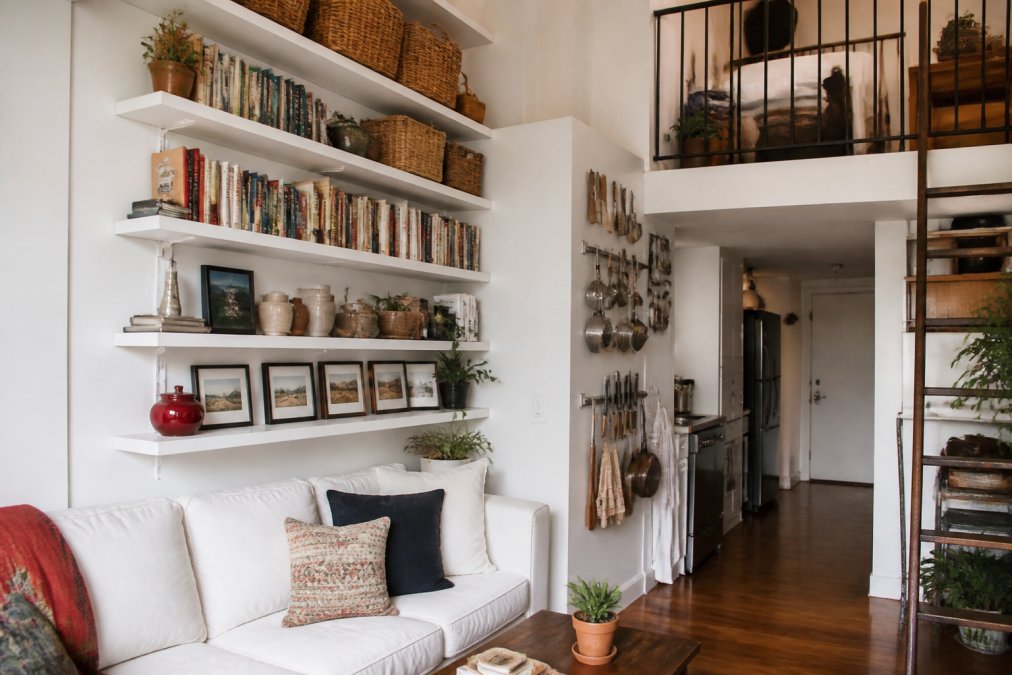
If you're not using your walls, you're wasting the most valuable real estate in your apartment. Vertical storage doesn't just add capacity; it fundamentally changes how a small space feels and functions.
Multi-Functional Furniture for Small Apartments
Multi-functional furniture does the heavy lifting in small apartments. Each piece should serve at least two purposes, reducing the total number of items you need while increasing functionality.
Storage ottomans provide seating, a footrest, and hidden storage in one footprint. Look for ottomans with lift-top lids that reveal compartments inside. These work beautifully at the foot of a bed or beside a sofa.
Bed frames with built-in drawers underneath transform your largest piece of furniture into a storage powerhouse. Under-bed storage typically holds seasonal clothing, extra linens, or rarely-accessed items while keeping the room clean and organized.
Shelving units that double as room dividers create distinct zones while providing storage on both sides. A tall, open bookcase between your bedroom and living area creates visual separation without requiring a wall.
Nesting tables and stackable furniture solve the problem of needing multiple surfaces without consuming constant floor space. When not in use, they stack together; when needed, they expand quickly.
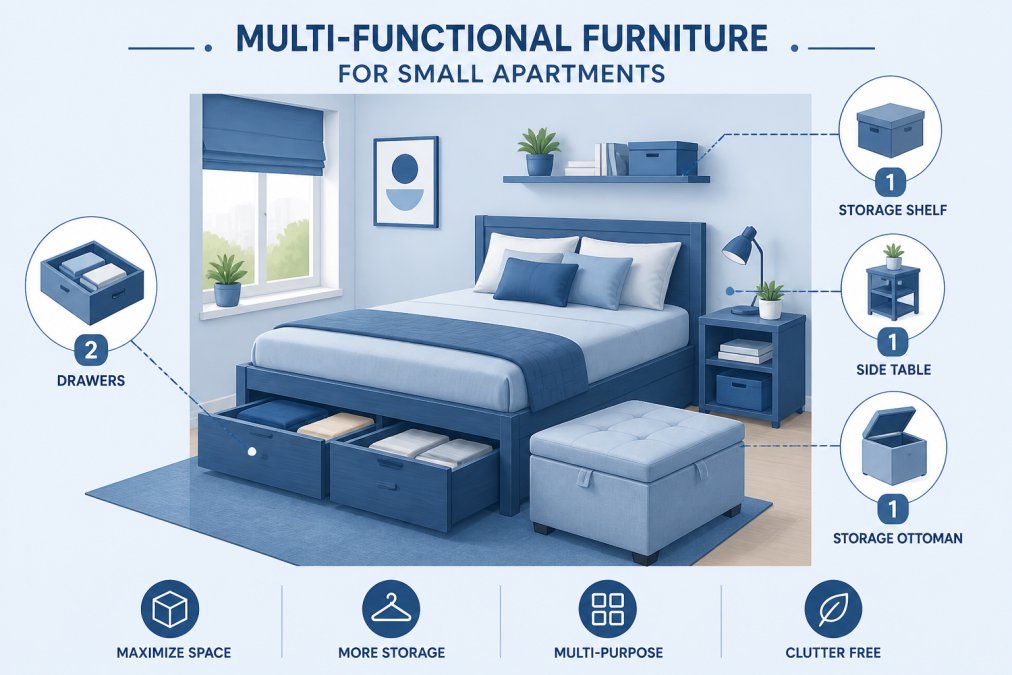
Before buying any furniture, ask what else it could do. A desk with shelves above provides work surface and storage. A sofa with a chaise and hidden storage handles seating, lounging, and storage in one piece.
How to Organize a Small Closet for Maximum Capacity
Closets are where most small apartment storage fails. A well-organized small closet can hold nearly as much as a larger one if you use the space strategically.
Start by removing everything and sorting into three piles: keep, donate, and sell. Be honest about what you actually wear. If you haven't worn something in a year, it's taking up valuable space.
Once pared down, organize by category: tops, bottoms, dresses, jackets. Within each category, arrange by color or frequency of use. This makes getting dressed faster and prevents chaos.
Use vertical space aggressively. Double hanging rods instantly double your hanging capacity. Shelf dividers keep folded items from toppling over. Slim hangers are non-negotiable. Hooks on the inside of closet doors hold scarves, belts, and bags without taking up shelf or rod space.
The top shelf is typically wasted space. Use it for off-season items in clear storage boxes or items you rarely access. Label the boxes so you know what's inside without opening them.
Over-the-door organizers on the inside of your closet door add shoe storage, accessory pockets, or additional hanging space. The back of the door is usually empty and perfect for frequently accessed items.
Declutter and Purge to Create Room for What Matters
Decluttering isn't a one-time event in a small apartment; it's an ongoing practice. Small spaces have no tolerance for excess. Every item you own takes up real estate, and when that real estate is limited, you must be intentional about what earns a spot.
When your apartment feels crowded, you feel stressed. When it feels organized, you feel calm. A cluttered small apartment becomes harder to use because you're constantly moving things to access other things. Decluttering keeps your space functional.
Start with the easiest categories: expired food, broken items, duplicates. Once you've removed obvious waste, move to harder categories. Ask yourself: Do I use this? Do I love this? Would I buy it again today?
One practical approach: establish a "maybe box." Items you're unsure about go in a box. If you don't use or think about them within three months, donate them. This removes decision paralysis.
Create a donation system that works for you. The method doesn't matter as long as you follow through. Clutter accumulates when the process of getting rid of things is too difficult.
Finally, establish a rule for new purchases: one in, one out. When you bring something new into a small apartment, something old leaves. This prevents the slow creep of clutter.
Hidden Storage Solutions and Under-Bed Organization
Under-bed storage is one of the most underutilized solutions in small apartments. Your bed is often the largest piece of furniture, and the space underneath is typically empty.
Invest in low-profile under-bed storage containers that slide easily. Clear containers let you see what's inside, which is crucial for actually using the space. Group items by category: seasonal clothing in one container, extra bedding in another, out-of-season shoes in a third.
The key to under-bed storage working is accessibility. If reaching items requires moving three other containers, you'll stop using the system. Keep frequently accessed items toward the front and rarely-used items toward the back.
Hidden storage compartments keep visual clutter to a minimum. Storage benches at the foot of your bed, ottomans with hidden interiors, and decorative boxes that slide under furniture all work.
Closet shelving above hanging rods is hidden storage for items you don't access daily. Off-season items, extra linens, and specialty equipment belong up there.
Behind-the-door storage (hooks, organizers, shelves) is technically visible but out of the main sightline, so it doesn't contribute to visual clutter. This is perfect for everyday items like coats, bags, and frequently-used tools.
Building a small-space storage system takes planning, but the payoff is significant. You'll spend less time searching for things, less money replacing forgotten items, and more time enjoying your home rather than managing clutter. The approach we've outlined, assessing your space, using vertical storage strategically, choosing multi-functional furniture, and ruthlessly decluttering, works because it addresses the root problem: small apartments need systems, not just containers.
At Viva homeStore, we specialize in helping families and individuals create these systems with practical, innovative home essentials designed specifically for space-constrained living. Our curated selection of storage solutions, organizational accessories, and multi-functional furniture gives you real options for maximizing every square foot. Whether you're in a studio apartment or a one-bedroom, the right combination of vertical storage, smart furniture, and intentional organization transforms how your space works. Start with assessing what you have, be ruthless about what you keep, and invest in solutions that earn their place by doing more than one job. Your small apartment can work beautifully, it just requires a different approach than larger spaces.
Frequently Asked Questions
What are the best ways to maximize storage in a tiny apartment?
Start by measuring your space and identifying unused areas like vertical walls, under-bed zones, and closet depth. Combine vertical storage solutions, multi-functional furniture, and hidden compartments. Use stackable bins, drawer dividers, and wall-mounted shelves to reclaim floor space. The key is thinking upward rather than outward, most small apartments have more wall space than floor space available for storage.
How can I organize a small closet to maximize space?
Use slim hangers to reduce width, install double hanging rods for shirts and pants, and add shelves above the existing rod for seasonal items. Implement drawer dividers for accessories and use over-the-door organizers for shoes or belts. Group clothing by category and color, and store off-season items in under-bed containers. This approach typically increases closet capacity by 30-40% without requiring renovation.
What multi-functional furniture works best for small apartments?
Look for pieces that serve dual purposes: ottomans with hidden storage, bed frames with built-in drawers, nesting tables, and murphy desks. Wall-mounted drop-down tables save space when not in use. Storage benches at the foot of beds work for both seating and item storage. These pieces reduce clutter while maintaining functionality, making your apartment feel larger and more organized.
How do I organize a small apartment without it feeling cluttered?
Declutter first by removing items you don't use regularly. Invest in stackable and modular storage solutions that grow with your needs. Use clear containers so you can see contents without opening them. Implement a 'one in, one out' rule to prevent accumulation. Keep frequently used items accessible and store seasonal or rarely used items in hidden compartments or under-bed storage to maintain a clean visual appearance.
This article was written using GrandRanker