

Custom Kitchen Cabinet Storage Ideas for Homeowners
Table of Contents
- 1. Pull-Out Cabinet Organizers: The Easiest Upgrade
- 2. Corner Cabinet Storage Ideas That End the Dead Zone
- 3. Vertical Dividers for Bakeware and Trays
- 4. Spice Racks, Toe Kick Drawers, and Small-Space Wins
- 5. Kitchen Cabinet Organization Systems That Scale
- 6. What Most Guides Skip: Accessibility, Durability, and Materials
- Frequently Asked Questions
Last Updated: September 10, 2026
1. Pull-Out Cabinet Organizers: The Easiest Upgrade
Custom kitchen cabinet storage ideas for homeowners usually start with the same problem: a deep base cabinet that swallows everything past the front row. This guide from Viva homeStore walks through the upgrades that actually change how a kitchen works, not just how it looks. Pull-out cabinet organizers are the single highest-return fix, because they turn a dark 60-centimeter-deep box into a drawer that comes to you.
Full-Extension Glides and Soft-Close Hinges
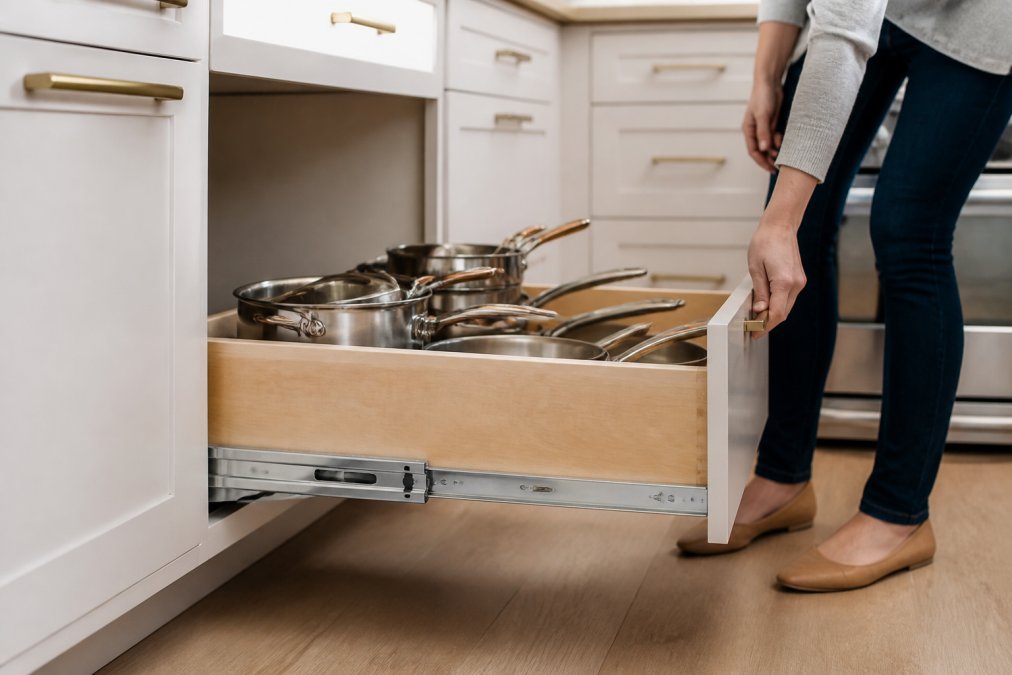
Pull-out cabinet organizers are trays or baskets mounted on sliding hardware that bring the full depth of a cabinet within reach. Full-extension glides let the tray clear the cabinet face completely, so you can see and grab the back row without crouching. Soft-close hinges and dampers stop doors and drawers from slamming, which matters more than most people expect: hardware failure usually starts with repeated impact, not weight.
Retrofitting Pull-Outs Into Existing Cabinets
Retrofitting is the practical route for most homeowners, and it is easier than a full remodel. A common mistake is buying a pull-out before measuring the cabinet's interior width at the narrowest point, including the hinge plates. Measure interior width, depth, and door clearance first. In practice, a single base cabinet conversion takes an afternoon with basic tools.
2. Corner Cabinet Storage Ideas That End the Dead Zone
Corner cabinet storage ideas solve the one space every kitchen wastes. The two families of solutions are carousel-style (Lazy Susan) and pull-out-style (blind-corner). Which one you pick depends less on preference and more on your cabinet's geometry, your reach, and whether you are retrofitting an existing box or planning a new build.
Carousel Solutions: Full-Circle vs. Kidney
A Lazy Susan is a rotating tray, either a single full-circle platform or a two-tier "kidney" shape, that spins items from the back corner to the front. Full-circle models maximize the diameter of the rotating platform but leave the square corners of the cabinet empty. Kidney two-tier carousels trade capacity per tier for a shape that clears a corner door and lets you reach both levels without removing the top tray. Pie-cut and D-shaped variants exist for the same reason: they follow the swing of the door rather than the shape of the box.
Pull-Out Solutions: Blind-Corner and Corner Drawer Stacks
Blind-corner pull-outs go further than a carousel: the whole shelf slides out and pivots, so nothing is trapped behind a fixed panel. They are the right answer for deep, hard-to-reach corners, but they demand precise installation, the pivot point has to be square to the cabinet face or the tray binds against the frame on the way out. Corner drawer stacks are the opposite trade: shallow, easy to install, and ideal for utensils, liners, and small tools, but they cannot hold a stand mixer or a stockpot.
| Corner Solution | Best For | Trade-Off |
|---|---|---|
| Full-circle Lazy Susan | Wide corner base cabinets | Wasted space at the square edges |
| Kidney two-tier carousel | Standard corner bases with a corner door | Smaller capacity per tier |
| Pie-cut / D-shaped carousel | Narrow corner doors | Least capacity of any carousel |
| Blind-corner pull-out | Deep, hard-to-reach corners | Needs precise installation; heaviest hardware load |
| Corner drawer stack | Utensils and small tools | Limited to shallow depths |
Retrofitting a Corner vs. Planning One Into a New Build
This is the fork most guides skip. In a retrofit, you are working inside a fixed box with a fixed door opening, so the carousel diameter is capped by the smallest interior dimension and the door swing. Measure the interior width at the back wall, the depth to the door frame, and the clear opening with the door fully open, the smallest of those three numbers is your real limit. In a new build or full remodel, you can specify a corner cabinet with a wider door, a frameless box, or a dedicated blind-corner mechanism from the start, which is why the same storage idea can feel generous in one kitchen and cramped in another.
Hardware Load and Long-Term Reliability
Heavy-duty slides matter here more than anywhere else in the kitchen. A corner pull-out loaded with cast iron or small appliances puts real strain on the mechanism, and undersized glides sag at the pivot, the failure mode is usually a tray that droops and then drags on the cabinet floor. Look for load ratings that match what you actually plan to store, and prefer mechanisms with adjustable mounting so you can re-square the tray after the cabinet settles. According to [the Kitchen Cabinet(/blogs/news/maximize-kitchen-cabinet-space) Manufacturers Association | kcma.org], independent certification programs test cabinet components for structural performance, which is why certified hardware is worth asking about before you buy.
Ergonomics: Who Has to Reach Into That Corner?
A corner is the hardest place in the kitchen to reach, which makes it the first place to apply universal-design thinking. A carousel that spins the back items to the front is more accessible than a fixed shelf, and a pull-out that brings the whole tray into the aisle is better still. If anyone in the household has limited reach or grip, put the everyday items in the corner and reserve the deep back for occasional-use pieces, or skip the corner entirely for daily storage and use it for holiday platters and small appliances.
3. Vertical Dividers for Bakeware and Trays
Vertical tray dividers are the fix for the cabinet where sheet pans, cutting boards, and muffin tins pile into an unstackable heap. Vertical storage converts that pile into a filing system: each tray stands on its edge in its own slot, and you pull out exactly what you need.
The rule of thumb is to size slots to your tallest and widest items, then add a little clearance so nothing binds. Adjustable dividers beat fixed ones if your bakeware collection changes over time, which it usually does. This is one of the cheapest cabinet accessories you can add, and it typically delivers more usable capacity than any other single insert.
4. Spice Racks, Toe Kick Drawers, and Small-Space Wins
Small-space storage is where custom kitchen cabinet storage ideas earn their keep, because the gains come from places you forgot you had.
Spice Rack and Seasoning Storage
A pull-out spice rack keeps seasonings visible and grouped, which cuts the time you spend hunting mid-recipe. Narrow pull-out racks fit the wasted strip beside a range, and two-tier inserts double capacity in the same footprint. Keep spices away from direct heat above the stove; heat degrades flavor faster than most people realize.
Toe Kick Drawers and Under-Sink Storage
A toe kick drawer is a shallow drawer built into the recessed space at the base of the cabinet, the strip you normally only see when mopping. It is ideal for flat items: baking sheets, serving platters, step stools. Under-sink storage needs a different approach, since pipes interrupt the space. A common mistake is stacking cleaners directly under the trap, where a slow leak ruins everything. Use a pull-out caddy that wraps around the plumbing instead.
5. Kitchen Cabinet Organization Systems That Scale
Kitchen cabinet organization systems work best when they grow with your household rather than locking you into one layout.
Drawer Organizers and Inserts
Drawer dividers and inserts stop the drift that turns a tidy drawer into a junk pile within weeks. Expandable dividers, pegboard inserts, and molded cutlery trays each suit different contents. The one drawback of molded inserts is inflexibility: if your utensil set changes, the insert does not.
Pantry Pull-Outs and Door-Mounted Racks
Pantry pull-outs bring deep shelving forward, so you stop losing cans at the back. Door-mounted racks use the inside of cabinet and pantry doors, space that otherwise sits empty. Together they add meaningful capacity without expanding the room.
6. What Most Guides Skip: Accessibility, Durability, and Materials
Most storage roundups stop at the product list. The three topics below are what separate a kitchen that still works in ten years from one that needs reworking in three, and almost no competing guide covers them.
Universal Design and Kitchen Ergonomics
Universal design means planning storage so it works for every body in the house, including children, older adults, and anyone with limited reach or grip. The practical version is simple and specific:
- Work zones, not walls. Put everyday items between roughly knee and shoulder height. Reserve above-shoulder and below-knee zones for occasional-use pieces.
- Pull-outs over deep fixed shelves. A drawer that comes to you beats a shelf you have to crouch into, every time.
- Hardware you can grip. D-shaped and bar pulls are easier to grasp than small knobs, and they work with a closed fist or a weak grip.
- Contrast, not camouflage. A light interior against a darker door frame helps low-vision users find the opening.
- Clear the landing zone. Leave counter space next to the appliance or cabinet the storage serves, so nothing has to be lifted over an obstacle.
Kitchen ergonomics is not a luxury feature. It is the difference between a kitchen that works for a decade and one that needs reworking when circumstances change. The same choices that help an older adult also help a parent holding a toddler and a homeowner carrying a full stockpot.
Retrofitting vs. New Construction: Two Different Playbooks
A retrofit lives inside the cabinet you already own. That means measuring the interior at its narrowest point, checking door swing and hinge type, and accepting that some mechanisms simply will not fit a frameless or face-frame box the same way. A new build or full remodel is the opposite: you can specify interior dimensions, door width, and mounting points before the box is assembled, which is why planning storage at the design stage usually costs less than retrofitting it later.
The practical rule: if you are retrofitting, buy hardware that adjusts; if you are building new, design the cabinet around the mechanism you want, not the other way around.
Maintaining Slides, Glides, and Hinges
Maintenance is short and unglamorous, but it is what keeps soft-close and full-extension hardware working:
- Wipe glide tracks with a dry cloth every few months. Crumbs and flour are the most common cause of a gritty-feeling drawer.
- Clear the rollers. A vacuum brush attachment reaches into the track without disassembly.
- Tighten mounting screws once a year. Wood moves with humidity, and a screw that was snug in winter can be loose by summer.
- Do not overload. Every glide has a load rating; exceeding it is the fastest path to sagging and premature failure.
- Check the dampers. If a soft-close drawer starts slamming, the damper or its adjustment is usually the culprit, not the whole hinge.
Soft-close hinges and heavy-duty glides fail from repeated impact and overload far more often than from age. Buying once and maintaining lightly beats replacing often.
Sustainable and Low-Emission Material Choices
Eco-conscious homeowners are looking for storage that is both durable and low-impact, and the two goals usually align. Look for:
- Responsibly sourced solid wood for frames and dividers, where the material is visible and long-lived.
- Low-emission engineered panels for cabinet boxes and shelves. The U.S. Environmental Protection Agency's guidance on indoor air quality explains why low-emitting materials matter in enclosed spaces like kitchens and pantries.
- Bamboo and recycled-content inserts for drawer organizers and dividers, which are lightweight and easy to replace without redoing the whole cabinet.
- Metal and glass over plastic where the insert will see daily use, since they hold up longer and can be recycled at end of life.
Durable hardware and sustainable materials tend to go together, because both reward buying once rather than replacing often. For homeowners planning upgrades room by room, the U.S. Department of Energy's home energy and remodeling resources is a useful starting point.
If you only apply one idea from this section, apply the ergonomic one: move everyday items into the knee-to-shoulder zone and put them on pull-outs. It is the single change that most improves how a kitchen feels to use, and it costs nothing extra if you are already buying hardware.
Frequently Asked Questions
What are some effective cabinet storage ideas for a small kitchen?
Focus on vertical and hidden space. Vertical tray dividers keep bakeware upright instead of stacked, toe kick drawers add storage in the unused strip below base cabinets, and door-mounted racks turn cabinet doors into usable storage. Pull-out cabinet organizers also help because you reach everything with one motion instead of digging through a deep shelf. Measure your cabinet depth and interior width before ordering so each insert fits your specific layout.
Are custom cabinet organizers worth the investment?
They usually are when they fix a daily frustration. A blind-corner pull-out, for example, converts dead space into usable storage, and full-extension glides mean you stop losing items at the back of deep cabinets. Off-the-shelf inserts cost less but may not match your cabinet dimensions. Custom or semi-custom options fit better and hold up longer, especially with heavy-duty slides rated for daily use. Start with the one or two cabinets that annoy you most.
What should not be stored in kitchen cabinets?
Skip cabinets above the stove or refrigerator for heat-sensitive items like spices, oils, and chocolate, since rising heat degrades them faster. Avoid storing cleaning chemicals next to food or dishware, and keep potatoes, onions, and garlic out of sealed cabinets because they need airflow. Heavy items like stand mixers belong in base cabinets with heavy-duty slides, not on high shelves where lifting them is awkward.
How do I choose between retrofitting and new construction for cabinet storage?
Retrofitting works when your cabinet boxes are solid and the interior dimensions fit standard inserts. You can add pull-out trays, drawer dividers, and door-mounted racks without replacing the frame. New construction makes sense during a full kitchen remodel, when you can plan corner cabinet solutions, custom pantry pull-outs, and toe kick drawers into the layout from the start. Retrofitting costs less and takes a weekend; new construction gives you more storage per square foot.