

How to Declutter Kids Toys Quickly and Efficiently
Table of Contents
- How to Declutter Kids Toys: The Fast-Track Method
- Step 1: Gather and Sort All Toys in One Space
- Step 2: Use a Toy Decluttering Checklist to Make Decisions
- Step 3: How to Get Kids to Help Declutter Without Meltdowns
- Step 4: Implement a Toy Rotation System for Long-Term Success
- Step 5: Handle Broken Items and Sentimental Toys
- Step 6: Sustainable Disposal and Donation Options
- Maintain Your System: Ongoing Toy Maintenance
Last Updated: August 28, 2026
How to Declutter Kids Toys: The Fast-Track Method
Toy clutter is a decision-making problem. Every toy your child doesn't play with is a decision you haven't made yet. This guide covers a practical, step-by-step approach to declutter kids toys without chaos or decision fatigue. The six-step method below is designed to be completed in a weekend, though you can spread it across a few weeks. The key difference between a decluttering project that lasts and one that fails is what happens after, a toy rotation system keeps clutter from creeping back in.
Step 1: Gather and Sort All Toys in One Space
Before you can make decisions, you need to see everything. Gather every toy in your home into one central location: bedrooms, closets, the playroom, the basement, the car, everything. Yes, it looks chaotic. That's the point. You can't evaluate your toy collection if you don't see it all at once.
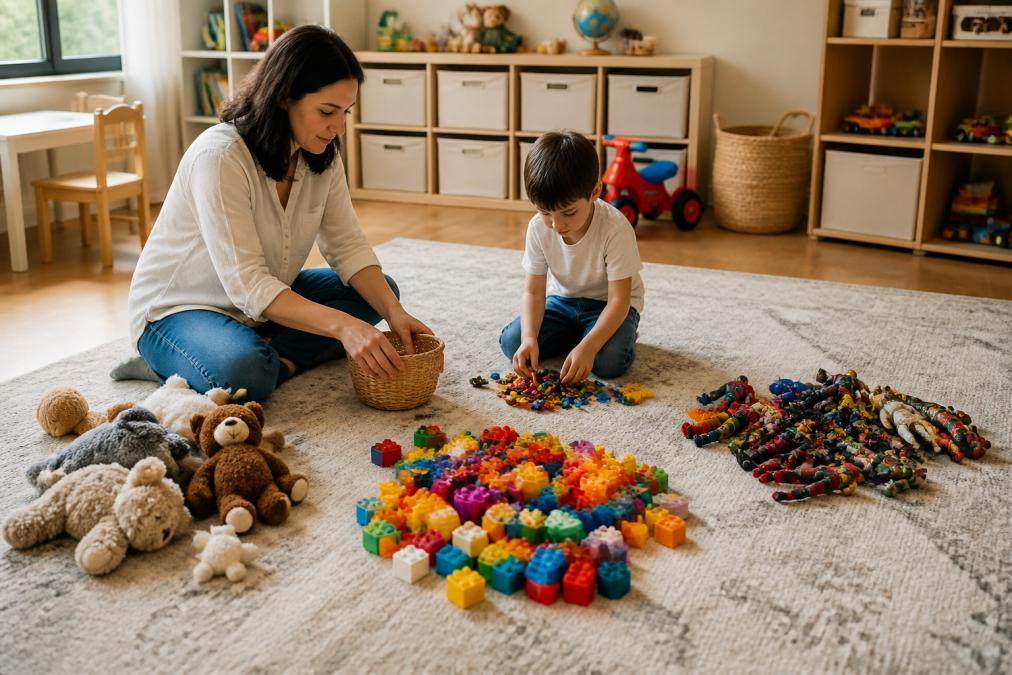
This process usually takes 2-3 hours depending on volume (peer-reviewed research). The visual impact of seeing everything piled together is often the wake-up call families need. Many parents are shocked at the sheer volume. As you gather, patterns emerge: duplicates become obvious, broken items stand out, and toys your kids genuinely play with versus toys that just take up space become clearer. Don't make decisions yet, just gather and observe.
Step 2: Use a Toy Decluttering Checklist to Make Decisions
Without a framework, you'll make decisions based on emotion, guilt, or sunk cost fallacy. A checklist removes the guesswork.
Categories to Evaluate
Sort toys into broad categories: action figures, building toys, stuffed animals, dolls, vehicles, pretend play items, puzzles and games, baby toys, sports equipment, and art supplies. Sorting by category takes about 30-45 minutes and immediately shows which categories have exploded in size.
The Keep, Donate, Discard Framework
For each toy, ask three questions:
-
Does my child actually play with this? If your child hasn't touched it in three months, it's not serving a purpose. Don't keep toys "for someday."
-
Is it in good condition? Toys with missing pieces, broken parts, or stains should go. Broken toys teach kids that non-functional items are acceptable.
-
Does it spark joy or serve a purpose? Educational toys your child loves stay. Toys that were gifts but never get touched can go.
Sort into three piles: Keep (toys your child plays with regularly, in good condition, matching current interests), Donate (toys in good condition that your child has outgrown, duplicates, toys they never bonded with), and Discard (broken toys, toys with missing pieces, unsafe items). Most families donate or discard 40-60% of their toys using this framework (peer-reviewed research).
Step 3: How to Get Kids to Help Declutter Without Meltdowns
Kids need clear boundaries and simple decision-making frameworks. Start with the oldest child first. Use a simple yes-or-no system: "Do you still play with this?" rather than "Do you want to keep this?" Let them choose 5-10 toys to donate to kids who need them, this reframes the process from "we're taking your stuff" to "we're helping other kids."
Expect one or two meltdowns and plan for them. Have a rule: if they want to save a toy, they have to play with it for one full week. If they don't touch it after a week, it goes. Don't declutter when kids are tired or hungry. Once toys are gone, celebrate the space afterward: "Look how much more room you have to build now!"
Step 4: Implement a Toy Rotation System for Long-Term Success
A toy rotation system keeps the playroom from feeling overwhelming while ensuring your kids always have novelty and engagement. It's the single most effective way to prevent toy accumulation over time.
How Rotation Works
Keep a core set of toys accessible and rotate in others every 2-4 weeks. This reduces visual clutter, makes play more engaging because toys feel "new" again, and naturally limits how many toys you can manage. Most families find that 2-3 rotation sets work well, keeping 30-50 toys accessible at any time with another 30-50 in rotation (apa.org).
Storage and Labeling Best Practices
Use clear plastic bins so you can see what's inside without opening them. Label each bin with the rotation set number or name. Include a photo of what's in the bin if you have young kids. Store rotation sets in a closet, under-bed storage, or a dedicated cabinet, out of sight but accessible.
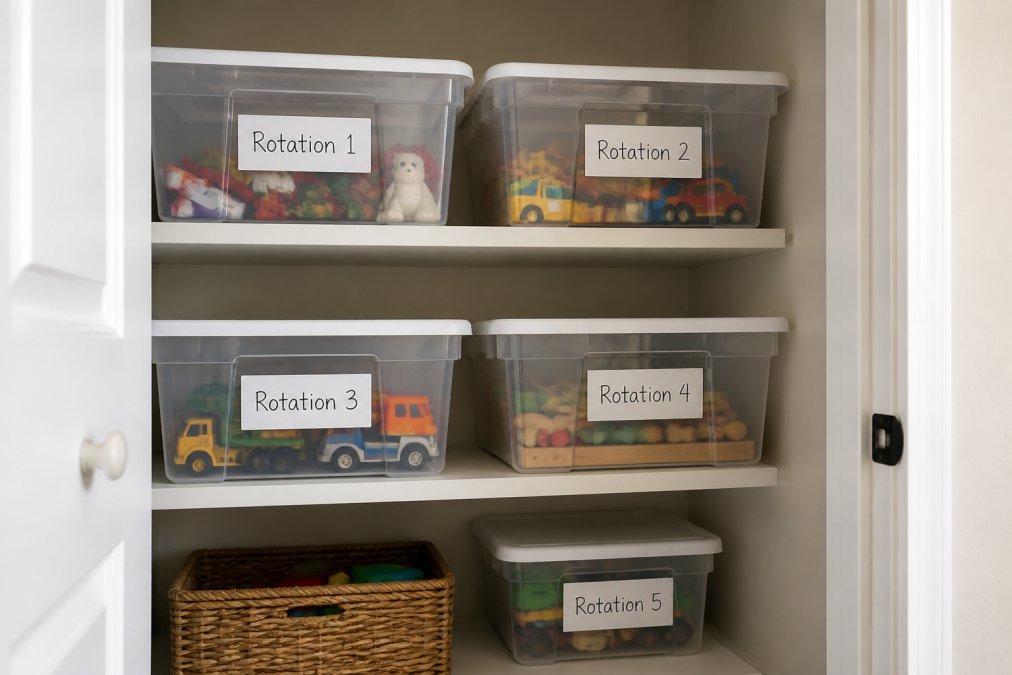
Establish one simple rule: every toy that comes into the house needs a home. If you buy a new toy, something old goes into donation or storage. This prevents the slow creep of accumulation that undoes your decluttering work.
Step 5: Handle Broken Items and Sentimental Toys
Broken toys are the easiest to address. If a toy is broken, it goes. Decide right now: can it be repaired in 15 minutes with tools you have on hand? If not, it gets discarded. The exception is a toy with significant sentimental value that can realistically be repaired quickly.
Sentimental toys are harder. Keep one or two sentimental toys per child, not ten. Choose the ones that genuinely represent a milestone or memory. Take a photo of the others before donating them. Store sentimental toys separately in a memory box so they're not mixed in with active toys.
Step 6: Sustainable Disposal and Donation Options
Donation options (toys in good condition):
Local charities like Goodwill and The Salvation Army accept toys. Schools and daycare centers often accept toy donations for classrooms. Churches, community centers, and youth organizations frequently run toy drives. Buy Nothing groups on Facebook connect you with families in your neighborhood. Little Free Libraries sometimes have toy-sharing sections.
Discard options (broken toys):
Regular trash is fine for most broken toys. Recycling centers sometimes accept plastic toys. Remove batteries from electronic toys first and recycle them separately. Hazardous toys should be disposed of as regular trash, not donated.
Maintain Your System: Ongoing Toy Maintenance
Establish a simple rule: one new toy in means one old toy out. This prevents slow accumulation. Do a monthly 15-minute toy audit and notice what's actually being played with. Review your rotation schedule every season as kids' interests change. When you buy storage solutions, choose containers that are easy to access and label.
The goal isn't perfection. It's a playroom where your kids can find what they want, where you're not tripping over toys, and where toys support play rather than creating stress. A well-maintained toy collection is smaller, more intentional, and significantly more useful than a massive pile of forgotten items.
Toy clutter builds slowly and invisibly, until one day you realize your playroom has become a storage unit. Decluttering kids toys quickly and efficiently is possible when you have a system, but the real win is preventing the clutter from returning. At Viva homeStore, we understand that organization is about more than storage containers. It's about creating spaces where your family can actually live comfortably. Our curated selection of storage solutions, organizational bins, and space-maximizing furniture is designed to support the systems you build, not replace them. Shop now and create a home where organization feels natural, not forced.
Frequently Asked Questions
How often should you rotate kids' toys?
Most experts recommend rotating toys every 4-6 weeks. This timeframe is long enough that toys feel fresh and exciting when they return, but frequent enough to prevent decision fatigue from having too many options available at once. Some families rotate monthly, while others do it seasonally. Start with monthly rotation and adjust based on your child's engagement level and your storage capacity. The goal is keeping play spaces manageable while maintaining interest in existing toys.
What is a good toy decluttering checklist to use?
A solid toy decluttering checklist evaluates each item on: Does it work? Is it age-appropriate? Has it been played with in the last 6 months? Is it broken or missing pieces? Does it duplicate another toy's function? Does your child actually enjoy it? Sort toys into Keep, Donate, Sell, and Discard piles based on these questions. Use organizational bins to group similar items, action figures, building toys, pretend play items, before deciding. This systematic approach reduces decision fatigue and makes the process faster.
How do you declutter toys without upsetting your child?
Involve your child in age-appropriate ways by letting them choose which toys to keep from each category, rather than you deciding alone. Frame it positively: 'We're making room for toys you actually love to play with.' Let them say goodbye to items they're releasing, which honors emotional attachments. For younger children, make it a game with a timer. Avoid decluttering when they're tired or hungry. For sentimental items, photograph them before donating so memories remain. This approach teaches decision-making skills while reducing power struggles.
What sustainable options exist for disposing of unwanted toys?
Donation is the most eco-friendly option: local nonprofits, schools, daycare centers, and shelters often accept gently used toys. Selling toys through online marketplaces extends their life and offsets costs. Toy swaps with other families reduce waste while providing variety. For broken items, check if manufacturers accept returns for recycling. Avoid landfills when possible. Some municipalities have e-waste or special collections for electronic toys. By choosing donation and resale first, you keep toys in circulation longer and model sustainable values for your children.
This article was written using GrandRanker