

Is Meal Prepping Worth It for Busy Parents?
Table of Contents
- The Real Verdict: Is Meal Prepping Worth It for Busy Parents?
- What Meal Prepping Actually Delivers (and What It Doesn't)
- Meal Prep Storage Containers for Families: Choosing What Works
- A Realistic Meal Prep Schedule for Working Parents
- Batch Cooking Tips for Busy Families That Actually Save Time
- The Anti-Meal Prep Reality Check: When It Doesn't Work
- Cost-Benefit Analysis: Pre-Cut vs. Whole Ingredients
- Conclusion
Last Updated: August 26, 2026
The Real Verdict: Is Meal Prepping Worth It for Busy Parents?
Every Sunday, millions of parents ask themselves the same question: Is spending three hours chopping vegetables and portioning chicken actually worth the promised weeknight peace? The answer depends entirely on your family's chaos level, your kitchen setup, and whether you're willing to embrace imperfect prep over Pinterest-perfect meals.
At Viva homeStore, we've watched families transform their relationship with weeknight dinners, not through Instagram-worthy meal prep, but through realistic systems that actually fit their lives. This guide cuts through the hype and gives you the unvarnished truth about whether meal prepping makes sense for your household.
The core tension is this: meal prepping saves time during the week but demands significant time upfront. For some families, that trade-off is transformational. For others, it creates stress instead of relieving it. Understanding which camp you're in, before you invest in storage containers and dedicate your weekend, is what separates families that stick with meal prep from those who abandon it by February.
What Meal Prepping Actually Delivers (and What It Doesn't)
Meal prepping isn't a single approach. It's a spectrum from full batch cooking (making entire dishes on Sunday) to component prepping (cooking proteins and chopping vegetables separately, then assembling meals throughout the week). Which you choose determines what actually happens in your life.
What meal prepping genuinely delivers: fewer weeknight decisions, reduced food waste when you're intentional about ingredients, and the psychological relief of knowing dinner isn't a last-minute scramble. Parents report that having prepped components eliminates the 5 p.m. panic when nobody's eaten, the fridge is a mystery, and takeout feels inevitable.
What it doesn't deliver: automatic healthy eating. A prepped meal is only healthy if you prepped healthy food. It doesn't eliminate picky eaters or suddenly make your kids love vegetables. And it doesn't save money unless you're deliberate about avoiding pre-cut ingredients and specialty items that cost 2-3 times more than whole foods.
The hidden cost most guides skip over: meal prepping adds a mental load. You're not just cooking; you're planning, shopping strategically, organizing containers, and managing storage space. For some brains, especially neurodivergent parents, that extra planning can feel like more burden than relief.
Meal Prep Storage Containers for Families: Choosing What Works
This is where most families fail at meal prepping: they buy cheap plastic containers that warp, stain, and make food taste like plastic. Or they go all-in on glass and discover that glass is heavy, fragile, and takes up half the fridge.
The best containers for families are glass with airtight lids. Pyrex Glass Food Storage Container Sets are the industry standard for a reason: they're microwave-safe, freezer-safe, dishwasher-safe, and they don't absorb stains or odors. A set typically includes multiple sizes, which matters because you're storing different components, a larger container for rice or pasta, smaller ones for proteins or vegetables. For example, the Pyrex Freshlock 10-piece Meal Prep Glass Storage Set is available for $38.99, and a Pyrex 10-piece Ultimate Glass Food Storage Set can be found for around $42.99.
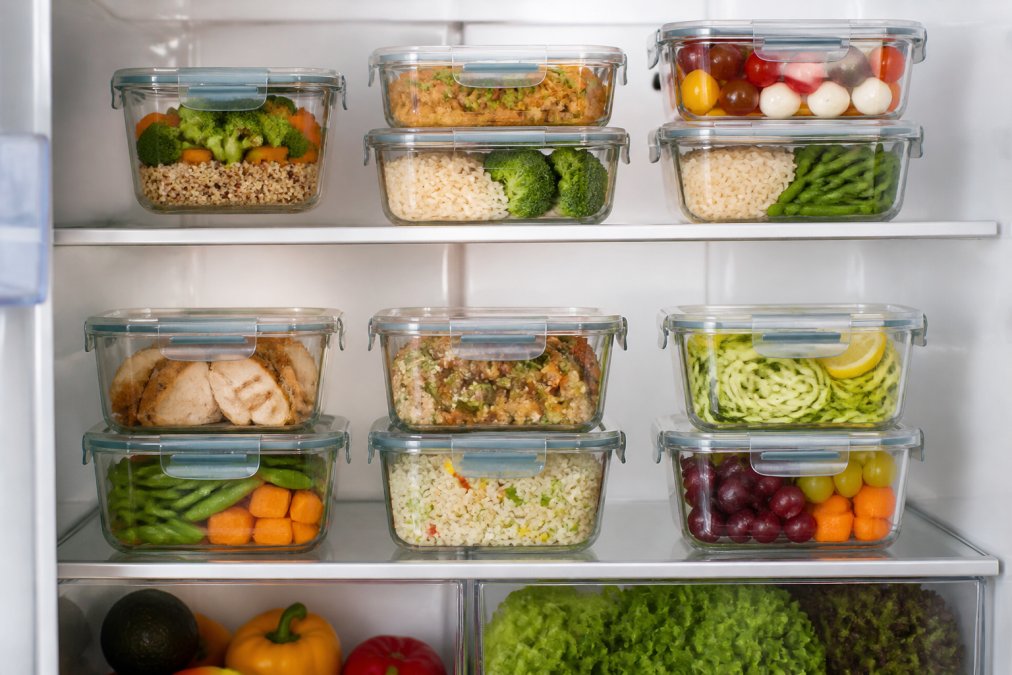
The practical advantage of glass: you can see what's inside without opening the container. This single feature reduces food waste significantly because you're not forgetting about that container of roasted broccoli buried in the back.
For families with space constraints, divided compartment containers are worth the investment. They let you store a complete meal (protein, vegetable, grain) in one container, which saves shelf space and makes grab-and-go breakfast or lunch faster. Viva homeStore carries practical storage solutions designed specifically for families managing multiple meals throughout the week.
Plastic containers have their place, they're lighter for packed lunches and less fragile, but reserve them for short-term storage (3-4 days maximum). For longer storage or frequent reheating, glass wins every time.
A Realistic Meal Prep Schedule for Working Parents
Here's where the fantasy meets reality: most meal prep guides suggest a three-hour Sunday marathon. That works for people with childcare, flexible schedules, or a partner who handles something else that day. For most working parents, it's fiction.
A realistic meal prep schedule for busy families looks more like this:
Friday evening (30 minutes): Plan next week's meals based on what's already in your pantry and what's on sale. Write a focused grocery list. This prevents the "I have nothing to cook" panic and keeps you from buying duplicate items.
Saturday morning (45 minutes): Grocery shopping. Yes, this counts as prep time because strategic shopping makes cooking faster.
Sunday afternoon (90 minutes): Cook proteins in bulk (chicken breasts, ground meat, or a slow cooker meal that's been running since morning). Chop vegetables for the week. Cook a batch of grains. That's it. You're not making complete meals, you're making components.
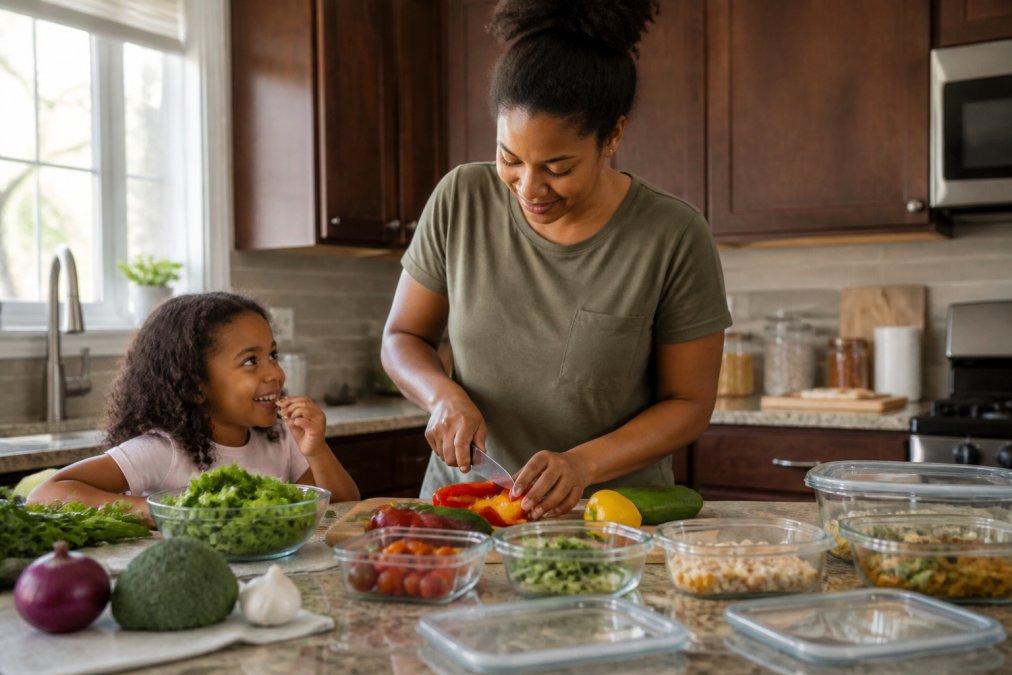
Wednesday evening (15 minutes): Mid-week refresh. Chop fresh vegetables or cook a second batch of grains if the first batch is running low. This prevents boredom and keeps meals from getting stale.
The key shift: stop thinking about "meal prep day" as a single event. Think of it as distributed prep throughout the week. This approach works better for families because it's flexible. If Sunday gets derailed by a sick kid or unexpected plans, you can shift prep to Wednesday without the entire week collapsing.
For working parents specifically, batch cooking in a slow cooker or Instant Pot Duo Plus during the morning (while you're getting ready or handling other tasks) means dinner components are ready by afternoon with minimal active time. The Instant Pot Duo Plus offers 9-in-1 functionality, handling tasks like pressure cooking, slow cooking, rice cooking, and more.
Batch Cooking Tips for Busy Families That Actually Save Time
Batch cooking saves time only if you're strategic. Random cooking wastes effort. Intentional batch cooking transforms your week.
Cook proteins in quantity. Roast six chicken breasts instead of two. Brown two pounds of ground meat instead of one. Use a slow cooker or Instant Pot to handle the cooking while you're doing something else. Proteins are the most time-consuming component, so maximizing this step pays dividends.
Cook grains once, use three ways. Make a large batch of rice or quinoa on Sunday. Use it as a base for Monday's bowls, Tuesday's side dish, and Wednesday's fried rice. Same ingredient, different meals.
Prep vegetables by type, not by meal. Chop all your bell peppers at once. Slice all your onions at once. Store each by type in separate containers. This approach means you can mix and match throughout the week instead of being locked into predetermined meals. It also reduces decision fatigue because you're not planning seven specific dinners, you're planning components that combine flexibly.
Use a food processor for volume. A Cuisinart 14-Cup Food Processor cuts prep time in half for chopping, slicing, and shredding. The 14-cup capacity means you can process a week's worth of vegetables in one session instead of hand-chopping in batches.
Cook double when you cook. On nights you're already cooking dinner, make twice as much. One portion goes on the table; the other goes into a container for later in the week. This spreads the cooking load across multiple days instead of concentrating it into one day.
Label everything with dates. Use a marker to write the prep date on containers. This prevents the mystery-container problem and helps you rotate through food in the right order. Most prepped components last 4-5 days in the refrigerator.
The honest truth about batch cooking for busy families: it's not about being more efficient than cooking fresh every night. It's about removing decisions and friction from weeknights. You're trading Sunday effort for Wednesday peace.
The Anti-Meal Prep Reality Check: When It Doesn't Work
Meal prepping is sold as the solution to every family's dinner problems. It's not. For some families, it creates more stress than it solves.
Meal prep doesn't work if you have unpredictable schedules. If your work requires irregular hours, your kids have activities that shift weekly, or your family's dinner time changes constantly, prepped meals sit in the fridge unused. The mental load of "I prepped this but we're not home to eat it" can feel worse than the original problem.
Meal prep doesn't work if your family's preferences are chaotic. Some families have picky eaters, food sensitivities that change, or kids who refuse anything they've had twice. Prepping meals assumes consistency that doesn't exist in their reality.
Meal prep doesn't work if your kitchen is genuinely tiny. Storing a week's worth of prepped meals requires refrigerator and cabinet space. If you have a dorm fridge and minimal counter space, the logistics of meal prep become a puzzle you're solving every day instead of a system that helps.
Meal prep doesn't work if you're neurodivergent and executive function is already maxed. The planning, shopping, organizing, and system management can feel like a second job. For some ADHD or autistic parents, the structure that helps neurotypical families actually increases overwhelm.
The alternative isn't failure. It's recognizing that your family might benefit more from batch cooking one or two components (proteins and grains) without the full meal prep infrastructure. Or using a meal planning app like Mealime or Ollie for Meals to handle the planning burden while you cook fresh. Mealime offers a free tier with basic features, and a Pro upgrade for $2.99/month or around $6/month for additional features. Ollie for Meals offers a free trial that converts into an auto-renewing subscription, with pricing details available in the app. Or accepting that your family's dinner solution looks different from Instagram's version, and that's perfectly fine.
Cost-Benefit Analysis: Pre-Cut vs. Whole Ingredients
This decision shapes whether meal prepping actually saves money.
Pre-cut vegetables (chopped onions, sliced bell peppers, pre-portioned salad mixes) cost 2-3 times more than whole vegetables (usda.gov). For a family prepping meals, that difference compounds across a week. You're spending significantly more for convenience that defeats the purpose of meal prepping.
Whole ingredients cost less but demand your time. You're buying the raw materials and doing the labor. The math works in your favor only if you actually do the work. If pre-cut vegetables sit in your fridge because you didn't prep them, you're wasting both money and food.
The practical middle ground: buy some ingredients whole (carrots, celery, onions) and some pre-cut (bagged salad mixes, pre-sliced mushrooms) based on what you'll actually use. If pre-cut broccoli gets eaten and whole broccoli rots, buy pre-cut. The money you "save" by buying whole ingredients doesn't matter if you throw it away.
For families using meal planning apps like Mealime or Ollie for Meals, the cost equation shifts. These services automate the planning and sometimes integrate with grocery delivery, which changes the convenience-to-cost ratio. You're paying for planning and delivery efficiency, not just raw ingredients.
Viva homeStore's storage containers reduce waste by helping you see and use what you've prepped. Better visibility means less food ends up in the trash, which directly impacts your cost-benefit calculation. A set of quality containers that prevents wasted food over a season pays for itself immediately.
The honest math: meal prepping saves money only if you're disciplined about using what you prep and avoiding pre-cut convenience items. For families that struggle with either, the cost savings evaporate.
Conclusion
Is meal prepping worth it for busy parents? The answer is: it depends on whether the structure helps or hinders your specific family.
Meal prepping works when you have relatively predictable schedules, kitchen space, and the mental bandwidth to plan and execute a system. It works when your family's preferences are stable enough to prep for. It works when you're willing to embrace imperfect prep as a tool for reducing weeknight stress.
Meal prepping doesn't work when your life is genuinely chaotic, when your kitchen is too small to store prepped meals, or when the planning burden itself becomes overwhelming.
The families that stick with meal prepping long-term aren't the ones following a perfect system. They're the ones who've adapted meal prep to fit their actual lives, sometimes that's full batch cooking, sometimes it's components only, sometimes it's a hybrid approach that shifts week to week.
Start small. Prep one component (proteins) for one week. Invest in quality storage containers from Viva homeStore that actually work for your space. Measure whether the weeknight relief is real for your family. If it is, expand the system gradually. If it isn't, stop and try something else. Your family's dinner solution doesn't need to match anyone else's.
=== FAQ ANSWERS (audit these too, same rules) ===
[1] Q: How much time does meal prepping actually save busy parents each week? A: Time savings depend on your approach. A realistic meal prep schedule for working parents typically involves 2-3 hours on one day, which can save 30-60 minutes on 4-5 weeknights by eliminating decision-making and prep work. The real value isn't just cooking time saved, it's the mental relief of knowing dinner is ready. However, if you're chopping vegetables from scratch, you may only save 15-20 minutes per meal compared to cooking fresh each night.
[2] Q: What's the best way to keep meal-prepped food fresh throughout the week? A: Glass food storage containers with airtight lids are your best option, they're freezer-safe, microwave-safe, and won't absorb odors or stains. Store prepped meals on the coldest shelf of your refrigerator (usually the back of the lower shelves) at 40°F or below (the FDA). Most cooked meals stay fresh for 3-4 days; freeze portions you won't eat by day 3 (the CDC). Keep raw prepped ingredients (cut vegetables, marinated proteins) separate and consume within 2-3 days for food safety.
[3] Q: Is meal prepping cheaper than buying groceries as you go? A: Meal prepping can save 20-30% on groceries when you plan strategically and buy whole ingredients in bulk. The savings come from reducing food waste, avoiding impulse purchases, and buying pantry staples at better prices. However, if you opt for pre-cut vegetables or meal kit services, costs rise significantly. The real savings appear over time, families who meal prep consistently report lower monthly food budgets and less wasted food.
[4] Q: Can neurodivergent parents successfully meal prep, or is it too rigid? A: Meal prepping works for neurodivergent parents when you ditch the all-or-nothing Sunday approach. Instead, try component prepping: cook grains and proteins one day, chop vegetables another, and assemble meals throughout the week. This breaks the task into smaller, less overwhelming steps. Some neurodivergent parents find success with slow cooker or Instant Pot batch cooking (set it and forget it), which requires less active attention than traditional meal prep.
Frequently Asked Questions
How much time does meal prepping actually save busy parents each week?
Time savings depend on your approach. A realistic meal prep schedule for working parents typically involves 2-3 hours on one day, which can save 30-60 minutes on 4-5 weeknights by eliminating decision-making and prep work. The real value isn't just cooking time saved, it's the mental relief of knowing dinner is ready. However, if you're chopping vegetables from scratch, you may only save 15-20 minutes per meal compared to cooking fresh each night.
What's the best way to keep meal-prepped food fresh throughout the week?
Glass food storage containers with airtight lids are your best option, they're freezer-safe, microwave-safe, and won't absorb odors or stains. Store prepped meals on the coldest shelf of your refrigerator (usually the back of the lower shelves) at 40°F or below. Most cooked meals stay fresh for 3-4 days; freeze portions you won't eat by day 3. Keep raw prepped ingredients (cut vegetables, marinated proteins) separate and consume within 2-3 days for food safety.
Is meal prepping cheaper than buying groceries as you go?
Meal prepping can save 20-30% on groceries when you plan strategically and buy whole ingredients in bulk. The savings come from reducing food waste, avoiding impulse purchases, and buying pantry staples at better prices. However, if you opt for pre-cut vegetables or meal kit services, costs rise significantly. The real savings appear over time, families who meal prep consistently report lower monthly food budgets and less wasted food.
Can neurodivergent parents successfully meal prep, or is it too rigid?
Meal prepping works for neurodivergent parents when you ditch the all-or-nothing Sunday approach. Instead, try component prepping: cook grains and proteins one day, chop vegetables another, and assemble meals throughout the week. This breaks the task into smaller, less overwhelming steps. Some neurodivergent parents find success with slow cooker or Instant Pot batch cooking (set it and forget it), which requires less active attention than traditional meal prep.
Ready to organize your meal prep system? Shop functional storage solutions at Viva homeStore and create the kitchen setup that actually works for your family's rhythm.
This article was written using GrandRanker