

Is Modular Shelving Worth It for Apartment Living
Table of Contents
- Modular Shelving for Apartment Living: Does the Investment Pay Off
- Renter-Friendly Wall Storage Solutions That Work
- Best Modular Shelving Systems for Small Spaces
- Modular vs Fixed Shelving: Pros and Cons
- Space Optimization and Room Divider Functionality
- Durability and Long-Term Maintenance for Frequent Movers
- The Real Cost: Installation, Moving, and Hardware Fatigue
- Conclusion
Last Updated: August 29, 2026
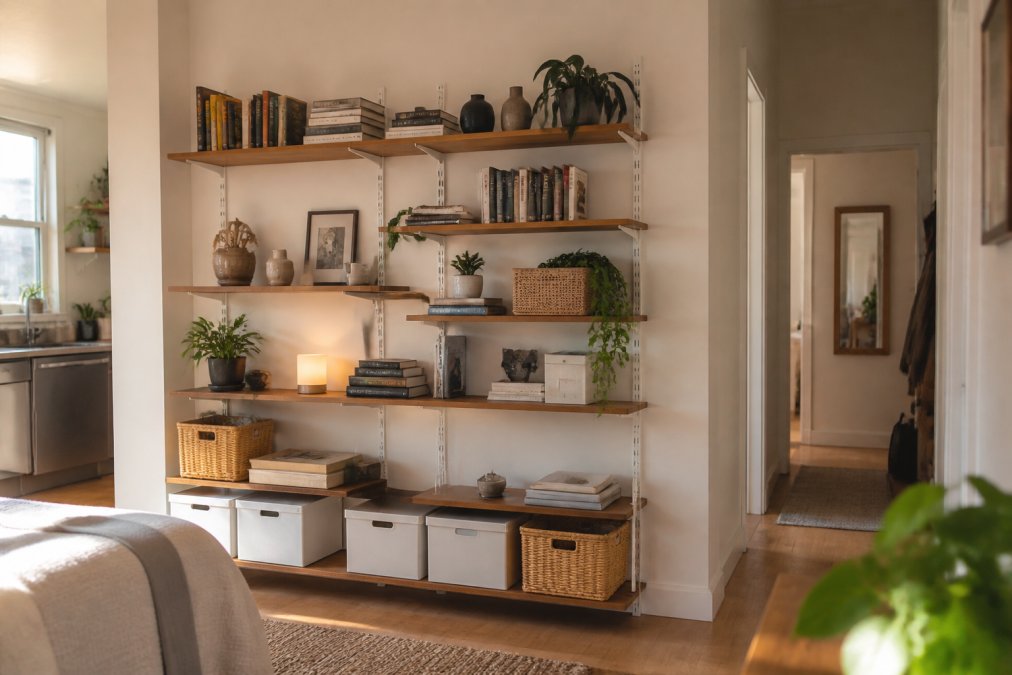
Modular Shelving for Apartment Living: Does the Investment Pay Off
When you're renting, every square inch matters. Storage becomes the difference between a functional home and one that feels cramped. Modular shelving systems promise flexibility and adaptability without permanent wall damage. But the real question is whether modular shelving is worth it for apartment living when you factor in cost, durability, and moving logistics.
Modular shelving can be worth it, but only if you understand what you're buying. Some systems survive a decade of moves and reconfiguration. Others show stress after the second disassembly. Installation methods, wall type, moving frequency, and upfront cost all matter. Below, we'll walk through the real tradeoffs: which systems justify their price tags, where renters actually struggle, and how to know if modular shelving fits your situation.
Renter-Friendly Wall Storage Solutions That Work
Renters have constraints homeowners don't. You can't drill into load-bearing walls or install permanent fixtures. You need solutions that work in spaces with varying wall conditions and come off cleanly.
The best renter-friendly wall storage falls into two categories: adhesive-based systems and damage-free hardware.
Adhesive-based solutions like 3M Command strips work on most wall surfaces without drilling. They're genuinely damage-free when removed correctly. The downside: weight capacity is limited (typically 7-16 lbs per strip). They work for light decorative shelving and organizational systems, but not for heavy items.
Damage-free hardware systems use specialized anchors designed to hold weight without leaving holes. Toggle bolts and hollow-wall anchors can support 25-50 lbs per anchor, depending on the system and wall type. Small holes remain when you move, standard for security deposits.
Freestanding modular systems sit on the floor and require zero wall mounting or landlord approval. They're reconfigurable and move easily. The trade-off is that they take up floor space and can be tipping hazards without proper anchoring.
For apartment dwellers, the most practical approach combines elements: a freestanding modular base for heavy storage, lightweight wall-mounted shelves for decor, and adhesive solutions for temporary organization.
Best Modular Shelving Systems for Small Spaces
When space is limited, every shelving choice ripples through your entire floor plan. The right system becomes invisible; it just works.
Budget-Friendly Options
IKEA KALLAX Shelving Unit is the entry point for most renters. Starting at $34.99 for single-cube units, it works horizontally or vertically, wall-mounted or freestanding. You can customize with inserts and storage boxes.
KALLAX is useful for basic organization. Particleboard holds up fine for stationary setups. But if you move every 2-3 years, repeated assembly-disassembly becomes a problem. Shelf pins loosen. Joints weaken. By the third move, you're dealing with wobbly shelves and stripped screw holes. For a first apartment or a stable 3+ year stay, KALLAX delivers value. For frequent movers, it's a short-term solution.
Target Room Essentials Cube Storage offers similar logic at lower price points, starting around $20.80. These are minimal systems designed for dorms and first apartments where you expect replacement in a year or two.
Ebern Designs Modular Shelving (available through Wayfair) splits the difference at around $69.99. These units offer more durability than Target basics but cost less than premium systems. Some include tipover restraint devices, which matters with kids or pets. The limitation: manufactured wood isn't as resilient through multiple moves as solid wood or metal systems.
Mid-Range Systems
The Container Store Elfa Classic Shelving starts around $199.99 for a 2-foot kit. It's built to last through multiple moves with 100 lbs per linear foot load capacity. Shelves adjust without tools. Ventilated shelves prevent dust accumulation. Wall-mounted or freestanding options give flexibility. Hardware doesn't loosen. Shelves don't sag. When you move, disassembly is clean and reassembly straightforward. You're paying more upfront, but buying something that survives 5+ moves without degradation.
Muuto Stacked Shelving System starts around $139 for small modules. You build configurations by stacking and connecting individual units. This modular approach means you can start small and expand, or reconfigure completely when needs change. The appeal is aesthetic flexibility in various colors and finishes. The reality: Muuto requires planning. Larger configurations need careful thought about weight distribution and connection points.
Premium Long-Term Investments
String System by String Furniture starts around $137 for floor panels. Full systems cost more, but the investment buys you a system that evolves with your life. Minimalist design with thin metal side panels and adjustable shelves. Manufactured since 1949, it's been proven durable. You can reconfigure it infinitely. When you move, it disassembles completely and reassembles identically.
Vitsoe 606 Universal Shelving System starts around $170 per shelf component. A full system costs more than most furniture pieces, but it's engineered for infinite adaptability. Aluminum E-Tracks hold shelves without tools. Shelves rotate into three orientations. You can add desks, cabinets, and integrated storage. This is shelving for people who view it as a long-term investment. It survives moves, reconfiguration, and changing needs across decades.
West Elm Industrial Storage System starts around $599 for storage consoles. It combines solid mango wood with blackened steel frames. The appeal is visual and durability, solid wood improves with age. The constraint: weight and delivery. Solid wood systems are heavy and require professional delivery and assembly. This works for 3+ year stays, not for frequent movers.
Modular vs Fixed Shelving: Pros and Cons
The choice between modular and fixed shelving shapes your entire storage strategy. For renters, you can't install truly fixed shelving without landlord approval.
Modular Shelving Pros:
- Reconfigurable design adapts to changing needs and spaces
- Freestanding options require zero wall installation
- Most systems are portable enough to move between apartments
- Customizable design mixes open and closed storage
- Vertical storage maximizes small space living
Modular Shelving Cons:
- Hardware fatigue accelerates with repeated disassembly
- Some systems develop wobble after 2-3 moves
- Installation can be time-consuming
- Weight capacity varies significantly between budget and premium options
- Some systems require wall anchoring despite being "freestanding"
Fixed Shelving Pros:
- Permanent installation means no movement or instability
- Supports heavier loads than modular alternatives
- Doesn't require disassembly when moving
- Clean, integrated aesthetic
- No hardware maintenance
Fixed Shelving Cons:
- Requires landlord approval and often violates lease terms
- Leaves holes in walls (security deposit implications)
- Not adaptable to new spaces
- Doesn't transfer to your next apartment
- Installation requires drilling
For apartment living, the practical answer is hybrid: freestanding modular systems for major storage, lightweight wall-mounted shelves for decor, and adhesive solutions for temporary organization.
Space Optimization and Room Divider Functionality
Small apartments force creative thinking about space. A single room often serves multiple purposes. Modular shelving becomes more than storage; it becomes a tool for spatial efficiency and room divider functionality.
Well-designed modular systems create visual separation without walls. A tall shelving unit positioned strategically can divide a studio into distinct zones. This isn't just psychological; it actually changes how the space functions.
The key is choosing systems with enough depth and visual weight to feel like real dividers. You need shelves at least 8-10 inches deep and tall enough to create a visual barrier. Closed storage components amplify this effect.
String System and Vitsoe 606 excel at this because they offer both open and closed configurations. You can build a shelving wall that's opaque on one side and open on the other, creating separation while maintaining light flow.
Durability and Long-Term Maintenance for Frequent Movers
Modular shelving systems are not equally durable through repeated moves. Hardware fatigue is real and accumulates.
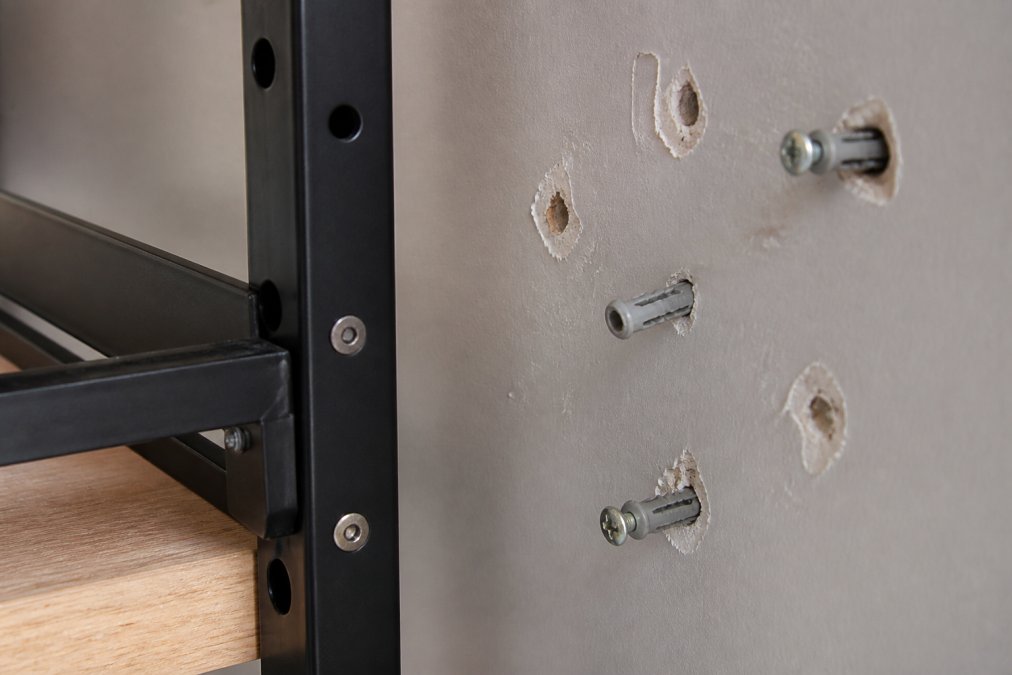
Every disassembly stresses the same connection points. Screw holes strip. Shelf pins loosen. Metal brackets weaken at stress points. Budget systems show wear by the second or third move. Mid-range systems handle 4-5 moves before problems emerge. Premium systems are engineered to survive 10+ moves without degradation.
The difference isn't just materials; it's engineering. Premium systems use precisely manufactured components that maintain tight tolerances through repeated assembly cycles.
Maintenance practices that extend durability:
Photograph each section before disassembly. Use original hardware whenever possible. Replace loose shelf pins rather than reusing damaged ones. Invest in quality anchors appropriate to your wall type. Cheap anchors fail repeatedly; good ones last through multiple installations.
For renters who move frequently, this matters enormously. A system costing $150 but requiring replacement after three moves costs more than a $400 system that survives eight moves.
The Real Cost: Installation, Moving, and Hardware Fatigue
Price tags tell an incomplete story. The real cost includes installation time, moving logistics, and gradual hardware degradation.
Installation time varies dramatically. Budget systems take 1-2 hours. Mid-range systems run 2-4 hours. Premium systems require professional installation or extensive planning. If you value your time at $25-50 per hour, installation labor adds $50-200 to the effective cost.
Moving logistics create hidden costs. Disassembly takes time. Packing shelving safely requires materials. Transportation costs money. Reassembly takes the same time as initial installation. For a $300 system, you might spend an additional $100-200 in moving-related costs every relocation.
Hardware fatigue is the sneaky cost. After the second move, you might need replacement shelf pins or tightened connections. After the fourth move, you're replacing damaged brackets. These repairs aren't expensive individually ($10-30 per fix), but accumulate. Over five moves, you might spend $50-100 on replacement hardware.
For someone planning to live in apartments for 10 years and move 4-5 times, the effective cost of a $150 KALLAX system is roughly $500-600 when factoring in installation, moving, and replacement hardware. The effective cost of a $400 String System is roughly $600-700 because of higher installation costs, but the system doesn't degrade, so you avoid replacement hardware costs.
Conclusion
Is modular shelving worth it for apartment living? The answer depends on your timeline, budget, and moving frequency.
If you're staying in one apartment for 3+ years and value adaptability, modular systems justify the investment. They solve real problems: space optimization, room divider functionality, and the ability to reconfigure as needs change. Viva homeStore offers a curated selection of practical home essentials, including modular solutions designed to maximize your space while remaining flexible enough to evolve with your life. Shop now to find the right configuration for your home, and enjoy the peace of mind that comes with storage that actually works with your living situation, not against it.
If you move every 1-2 years and budget is tight, cheaper systems like KALLAX work temporarily, but plan to replace them every 2-3 moves.
If you move frequently but want to keep the same furniture across apartments, invest in premium systems like String or Vitsoe. They cost more upfront, but their durability and adaptability make them genuinely economical over a decade of apartment living.
The real cost isn't the price tag. It's the total investment across all your apartment moves, plus the time and hassle of repeated assembly cycles. Modular shelving is worth it when you stop thinking about the purchase and start thinking about the decade.
| System | Best For | Price Range | Durability Through Moves |
|---|---|---|---|
| KALLAX / Target Basics | First apartment, tight budget | $20-$70 | 2-3 moves |
| Ebern Designs | Budget-conscious, mid-term stay | $70-$150 | 3-4 moves |
| Elfa Classic | Serious renters, adaptability focus | $200-$500 | 5-7 moves |
| Muuto Stacked | Design-forward, flexible configuration | $140-$400 | 4-6 moves |
| String System | Long-term investment, frequent movers | $400-$1,200 | 10+ moves |
| Vitsoe 606 | Premium, lifetime adaptability | $500-$2,000+ | 10+ moves |
Frequently Asked Questions
Is modular shelving worth the cost compared to standard bookcases?
Modular shelving justifies its cost if you plan to stay in your apartment for at least 3-5 years or move frequently and need reconfigurable storage. Standard bookcases are cheaper upfront but less adaptable to different spaces and floor plans. Modular systems offer better customization, vertical storage efficiency, and the ability to expand or reconfigure as your needs change, making them a solid investment for apartment dwellers who value flexibility and space optimization.
Can modular shelving systems be expanded as your living space changes?
Yes, most modular shelving systems are designed for expansion and reconfiguration. You can add shelves, adjust heights, change orientations from vertical to horizontal, and integrate additional components as your storage needs grow. This adaptability makes modular shelving ideal for renters and those who anticipate life changes. However, expansion costs and compatibility vary by system, so verify that your chosen shelving supports future additions before purchasing.
What is the best way to hang shelves in an apartment without damaging walls?
Use wall anchors rated for your shelf weight rather than drilling into studs when possible. For renter-friendly wall storage solutions, consider adhesive strips, magnetic systems, or freestanding modular units that require no wall installation. If you must drill, use toggle bolts or expansion anchors. Always check your lease first, many rentals prohibit permanent wall modifications. Removable options and freestanding modular shelving eliminate damage concerns entirely and remain portable when you move.
Are you allowed to install permanent shelving in a rental unit?
Lease agreements vary significantly. Many landlords prohibit permanent shelving or require written permission before installation. Some allow damage-free options like adhesive strips or freestanding units. Always review your lease and contact your landlord before drilling holes or making modifications. Renter-friendly wall storage solutions such as freestanding modular systems, tension rods, and removable shelving offer compliance without sacrificing functionality or the ability to reconfigure your space.
This article was written using GrandRanker