

How to Organize Chaotic Family Homes: A 2026 Guide
Table of Contents
- Why Chaotic Homes Drain Your Time and Energy
- Decluttering Tips for Families: The Foundation of Organization
- Best Storage Solutions for Chaotic Homes
- Creating Daily Habits for an Organized Home
- Managing Paperwork and Schedules as a Family
- Maintenance Systems That Work for Non-Linear Thinkers
- Budget-Friendly Organization Without Sacrificing Function
- Conclusion
Last Updated: August 19, 2026
Why Chaotic Homes Drain Your Time and Energy
A disorganized home doesn't just waste space, it drains mental energy every single day. When you're constantly searching for items, stepping over clutter, or managing piles of paperwork, you're burning cognitive resources that could go toward family time, work, or rest. The chaos compounds: kids can't find their shoes, you're late to school, stress ripples through the whole household.
This is why learning how to organize chaotic family homes isn't a luxury, it's a foundation for family well-being. The families who invest time in establishing clear systems report feeling less stressed, more in control, and genuinely enjoying their spaces.
The good news: you don't need a Pinterest-perfect home or a professional organizer's budget. You need a system that works for your family's actual lifestyle, not an idealized version of it. The following strategies address the real barriers that prevent families from maintaining organized homes: the mental load, the daily chaos of multiple schedules, and the challenge of involving kids without creating more work for yourself.
Decluttering Tips for Families: The Foundation of Organization
Before you can organize, you have to declutter. This is the step most families skip, and it's why their systems fail. You can't organize clutter effectively, you can only hide it better. Real organization starts by removing what doesn't serve your family.
Decluttering with kids in the house requires a different approach than solo decluttering. You're not aiming for minimalism; you're aiming for functional. Keep items that serve a purpose, get used regularly, or bring genuine joy. Everything else creates friction.
The 12-12-12 Rule: A Practical Starting Point
The 12-12-12 Rule is a straightforward decluttering framework that works well for families. You identify 12 items to donate, 12 items to throw away, and 12 items to relocate to their proper place. This creates immediate progress without overwhelming yourself, and you can repeat it weekly until your home reaches a baseline of functional.
Start with one room or zone rather than your entire home. A cluttered entryway or kitchen creates the most daily friction, so begin there. Set a timer for 30 minutes, apply the rule, and you'll see visible change quickly. This momentum matters, families who see results early are more likely to maintain the system.
The beauty of the 12-12-12 approach is that it's repeatable without being exhausting. You're not committing to a weekend-long purge; you're building a habit of regular sorting. Many families do this once weekly and find that their homes naturally stay functional without constant deep cleaning.
Involve Children in the Sorting Process
When kids help with decluttering, they learn to evaluate what they actually use and value. They also own the system you're building, which means they're more likely to maintain it. A 5-year-old can sort items into "keep," "donate," and "trash" piles. A 10-year-old can evaluate whether they've used something in the past six months.
Frame it as a decision-making task, not a chore. "Do you actually play with this?" lands differently than "Clean up your toys." Kids develop judgment about what matters to them, and you reduce the mental load of deciding for them.
Set clear rules: items must fit in the designated bins, or they go. Items not used in six months get donated. This removes endless negotiation and teaches practical prioritization. When children understand the system, they're more likely to follow it independently.
Best Storage Solutions for Chaotic Homes
Once you've decluttered, functional storage becomes the backbone of your organized home. The right storage solves the core problem: everything needs a home, and that home needs to be accessible enough that family members actually use it.
Cubbies and Labeled Bins for Shared Spaces
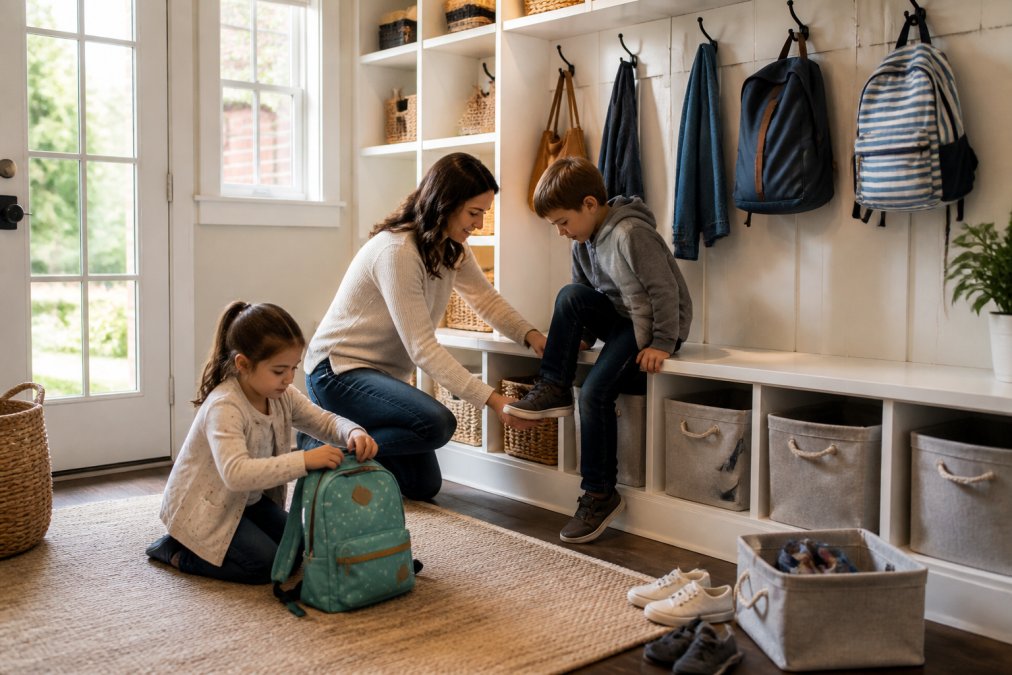
Cubbies and labeled bins are non-negotiable for chaotic family homes. A cubby system gives each family member a designated zone for their daily items: shoes, backpacks, sports gear, outerwear. Cubbies work because they're visual, accessible to kids, and they create accountability, if your stuff isn't in your cubby, it's visible.
Labels matter more than aesthetics. A label that says "Emma's Shoes" or "Soccer Gear" tells everyone exactly where items belong. Kids can read labels and follow the system without asking for help. Use picture labels for younger children who can't read yet.
Bins inside cubbies add another layer of organization. Clear bins let you see contents without opening them. Opaque bins hide mess but require labels to function. For families, a mix works best: clear bins for frequently accessed items, labeled opaque bins for seasonal or occasional gear.
The investment in a cubby system pays off immediately. Mornings become faster because everyone knows where their items are. The entryway stays functional because there's a designated place for everything. Viva homeStore offers cubbies and bin systems designed for family spaces, with durable materials that withstand daily use and easy-to-read labeling.
Entryway Organization to Stop the Clutter Spiral
The entryway is where chaos starts or stops. A functioning entryway catches items before they scatter through the house. This is your first line of defense against clutter spreading into living spaces.
An entryway system needs: hooks for coats and bags, a bin or cubby for shoes, a place for backpacks, and ideally a small shelf or command center. This takes 6-8 square feet of wall space. Even apartments can fit a slim organizer or wall-mounted system.
The key is accessibility. Hooks need to be low enough that kids can hang their own coats. Bins need to be easy to open. Shelves need to be at eye level so people actually use them. If your entryway system requires effort to use, people will bypass it, and clutter spreads immediately.
Make the entryway attractive enough that people want to use it. A well-organized entryway with labeled bins, clear hooks, and functioning shelves signals that the rest of the home is also organized. It sets the tone.
Creating Daily Habits for an Organized Home
Organization isn't a one-time project, it's a system you maintain through daily habits. The families who keep chaotic homes organized aren't doing massive cleanings; they're doing small, consistent actions that prevent clutter from accumulating.
Time Blocking and Zone Cleaning
Time blocking for household tasks prevents overwhelm and ensures consistency. Instead of trying to "stay organized all the time," you designate specific times for specific zones. Monday you focus on the kitchen, Tuesday on bedrooms, Wednesday on living spaces. Each zone gets 15-20 minutes of attention.
Zone cleaning works because it's manageable and predictable. Your kids know that Tuesday is bedroom day, so they can prepare. You're not trying to organize the entire house simultaneously; you're maintaining one zone at a time. This prevents the burnout that comes from attempting whole-house organization.
Time blocking also creates accountability. If you schedule "entryway reset" for Friday evening, it's less likely to get skipped. It becomes part of your weekly rhythm, like laundry or meal prep.
Building a Family Command Center
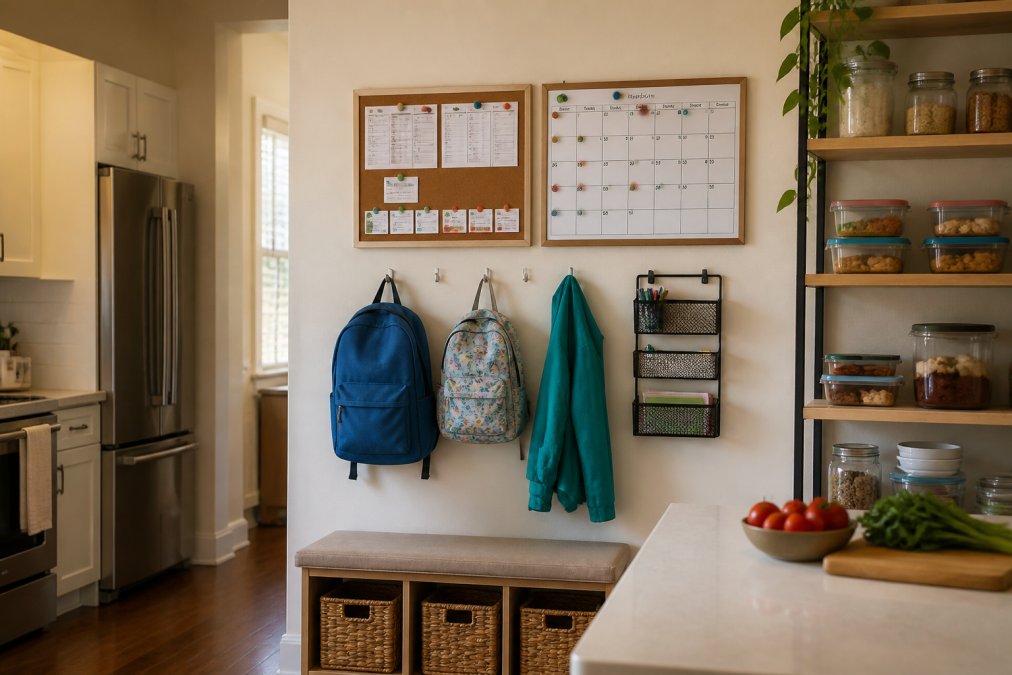
A command center is a physical location where your family's schedules, responsibilities, and information live. It's typically a wall or small bulletin board in a high-traffic area like the kitchen or entryway. It replaces the mental load of remembering who has soccer practice, what needs to be done, and whose turn it is for chores.
A functional command center includes: a calendar showing everyone's schedules, a chore chart, a meal plan for the week, and a to-do list for household tasks. This single location becomes the source of truth for your family's organization.
The command center works because it's visual and centralized. Instead of managing schedules in your head or across multiple devices, everything is visible to everyone. Kids can check the command center to see what they're responsible for. You reduce the constant reminding and negotiation.
Update your command center weekly, ideally on Sunday evening. This takes 15 minutes and prevents the chaos of forgotten commitments and unclear responsibilities.
Managing Paperwork and Schedules as a Family
Paperwork is where many organized homes fall apart. Permission slips, medical forms, bills, school documents, and receipts pile up without a system. Digital and physical paperwork need a clear process, or they become a source of stress.
Create a paperwork system with three zones: incoming (documents that need action), active (current bills, important documents), and archive (documents to keep for records). Process incoming paperwork weekly. Don't let it sit in piles.
For digital documents, use a folder structure that mirrors your physical system. Create folders for each family member, each bill, and each important category. When a document comes in digitally, it goes to its designated folder immediately. This prevents the chaos of searching for documents when you need them.
Schedules live in your command center and in a shared digital calendar. When a new commitment comes in, it goes to both places immediately. This redundancy ensures nothing gets lost between physical and digital systems.
Maintenance Systems That Work for Non-Linear Thinkers
Some people naturally maintain organized systems; others find them exhausting. If you're a non-linear thinker, someone who struggles with sequential tasks or maintaining consistency, you need a maintenance system that works with your brain, not against it.
For non-linear thinkers, the key is reducing decision-making. Assign specific items to specific locations and make those locations obvious. Use visual cues rather than relying on memory. Set phone reminders for weekly maintenance tasks rather than expecting yourself to remember.
Habit stacking works well for non-linear thinkers: attach your organizing task to something you already do daily. After dinner, do a 10-minute kitchen reset. After bedtime, do a 5-minute toy reset in the living room. These small tasks, attached to existing routines, prevent clutter from accumulating without requiring you to remember or plan.
Accept that your maintenance system might look different from someone else's. If you need visual labels on everything, that's not excessive, it's functional. If you need phone reminders for weekly tasks, that's a tool that works for you. Build your system around how your brain actually works.
Budget-Friendly Organization Without Sacrificing Function
You don't need expensive storage solutions to organize a chaotic home. Many effective systems cost little and use items you already have or can find inexpensively.
Clear plastic bins from discount retailers work as well as premium storage solutions. Cardboard boxes can be labeled and stacked. Mason jars organize small items like buttons, batteries, or office supplies. Fabric bags hang on hooks and hold soft items like scarves or seasonal clothing.
The principle is function first, aesthetics second. A labeled cardboard box is less attractive than a designer bin, but it works identically. Focus your budget on items that solve actual problems: hooks for coats, bins for shared spaces, labels for clarity. Skip decorative storage that doesn't solve a functional need.
Viva homeStore offers practical storage solutions at various price points, designed to maximize functionality without requiring a premium budget. The goal is finding the right tool for your family's actual needs, not the most expensive option.
Second-hand options work well for storage. Thrift stores often have cubbies, shelving, and bins at a fraction of new prices. Facebook Marketplace and Craigslist frequently have organization systems people are giving away. If something is structurally sound and serves a function, its origin doesn't matter.
Organizing a chaotic family home isn't about achieving perfection, it's about creating a system that reduces daily friction and mental load. Start with decluttering using the 12-12-12 rule, establish functional storage in your highest-traffic areas, and build daily habits that prevent clutter from returning. Involve your kids so they own the system. Use a command center to manage schedules and responsibilities. Accept that your system might look different from someone else's, and that's fine as long as it works for your family.
The families who maintain organized homes aren't naturally tidier, they've built systems that work with their actual lives. When you stop fighting against chaos and instead create structures that catch it, organization becomes sustainable. Viva homeStore provides the practical tools and storage solutions that make these systems work, helping your family save time, reduce stress, and actually enjoy your home.
Frequently Asked Questions
What is the 12-12-12 rule for decluttering?
The 12-12-12 rule is a straightforward decluttering method: find 12 items to throw away, 12 items to donate, and 12 items to return to their proper places. This approach works well for families because it's manageable in one session, usually 30 minutes, and gives children a concrete way to participate. It removes the overwhelm of tackling your entire home at once while building momentum.
How do you organize a home with a large family?
Start by assigning each family member a color or zone. Use labeled cubbies, bins, and storage solutions to create clear ownership of items. Build a family command center with chore charts, meal plans, and schedules. Establish daily habits like a 10-minute tidy before bed and zone cleaning on weekends. Involve children in decisions about their spaces so they feel invested in maintaining organization.
What are the best storage solutions for chaotic homes?
Invest in accessible storage that works for your family's lifestyle: labeled bins for toys and seasonal items, cubbies for entryway gear, drawer dividers for paperwork, and clear containers for pantry items. The key is visibility and accessibility, if family members can see and reach what they need, they're more likely to put things back. Choose solutions that fit your budget and space constraints.
How can I maintain an organized home with young children?
Build sustainable daily habits rather than relying on one big organizing day. Use time blocking to set aside 15 minutes each evening for tidying. Create visual cues like colored bins and picture labels so children know where items belong. Make cleanup part of the routine with habit stacking, tie it to an existing activity like after dinner or before bedtime. Celebrate small wins to keep everyone motivated.
What should I do if organizing feels overwhelming?
Break the project into smaller zones and tackle one room or area at a time. Start with the highest-traffic spaces like the entryway or kitchen. Set a timer for 20-30 minutes to avoid burnout. Involve family members so the work is shared. Remember that organization is a system you maintain, not a destination, focus on creating habits that stick rather than achieving perfection.
How do I organize a home if I'm a non-linear thinker?
Use visual systems instead of written lists: color-coded bins, picture labels, and open storage so you can see everything at a glance. Set phone reminders for maintenance tasks. Create zones where similar items live together. Avoid systems that require you to remember steps, instead, design your space so the right action is the easiest action. Checklists with checkboxes work better than open-ended to-do lists.
Can I organize my home on a tight budget?
Yes. Start by using what you already have: repurpose jars, boxes, and containers you own. Use labels made from tape and a marker. Organize one zone at a time so you can invest gradually in storage solutions. Focus on decluttering first, removing items costs nothing and creates space. When you do buy organizers, choose multi-purpose items that work across different areas of your home.
This article was written using GrandRanker