

Smart Storage Solutions for Renters: 2026 Review
Table of Contents
- Smart Storage Solutions for Renters: What You Need to Know
- Non-Permanent Apartment Storage Ideas That Work
- How to Organize a Rental Apartment Without Damage
- Space-Saving Furniture Reviews for Rental Living
- Decluttering and Inventory Management for Small Apartments
- Self-Storage Unit Selection: When External Storage Makes Sense
- Budget-Friendly Storage Hacks and Affordable Solutions
- Frequently Asked Questions
Last Updated: September 3, 2026
Smart Storage Solutions for Renters: What You Need to Know
Renters face unique storage challenges: limited closet space, restrictions on wall modifications, and the constant fear of losing your security deposit. Damage-free, flexible solutions have come a long way. At Viva homeStore, we understand that renters need storage strategies that don't require permanent commitment. The right approach combines non-permanent installation techniques, multi-functional furniture, and strategic decluttering.
Non-Permanent Apartment Storage Ideas That Work
The foundation of renter-friendly storage is understanding what "non-permanent" actually means: solutions using adhesive, tension, or freestanding installation methods that leave no holes, marks, or residue when removed. This is critical for protecting your security deposit.
Over-the-Door Organizers and Tension Rods
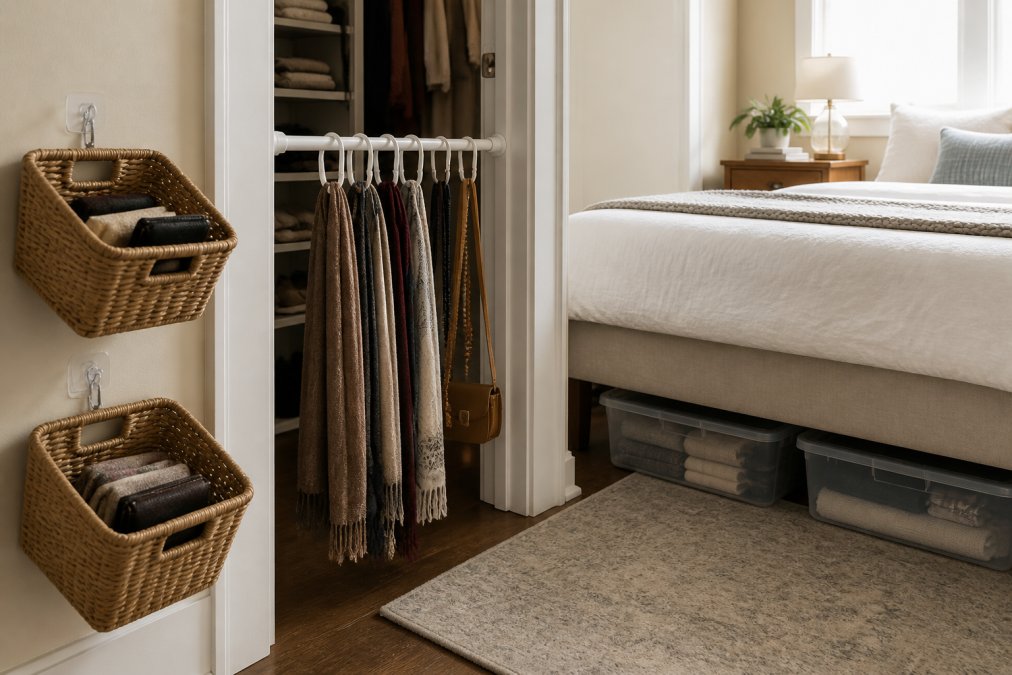
Over-the-door organizers are the workhorse of small apartment storage. They use the door frame itself as the mounting surface, requiring zero wall damage. Tension rods wedge between two walls or inside closets, held by pressure alone. Install one horizontally in a closet to double your hanging space, or use them vertically to create shelf dividers. Both solutions are completely removable without leaving a trace.
Common mistakes: mounting organizers too high on the door (they'll swing awkwardly) or overloading tension rods beyond their weight capacity. Most tension rods handle 10-15 pounds comfortably; check specifications for your model.
Adhesive Hooks and Damage-Free Hanging
Adhesive hooks have transformed renter storage. Command Hooks use special adhesive that bonds to paint without damaging it when removed properly, slow removal at a 45-degree angle prevents paint damage. These hooks come in various weight capacities, from small hooks holding 3 pounds to large utility hooks rated for 15 pounds.
Use adhesive hooks to mount slim shelves, hanging organizers, or small storage boxes. A row of hooks along a hallway or inside a closet door creates instant storage without nail holes. Adhesive hooks fall short in high-humidity environments like bathrooms and won't stick reliably to textured or wallpapered surfaces. Test any adhesive hook on an inconspicuous spot first.
Under-Bed Storage and Vertical Space Maximization
The space under your bed is prime real estate most renters ignore. Under-bed storage containers slide easily and keep seasonal items, extra linens, or off-season clothing completely out of sight. Stackable plastic bins with wheels make accessing stored items painless.
Vertical space maximization is where small apartments transform. Wall-mounted shelving using adhesive or tension-based systems can double your usable storage. Combine multiple strategies: use under-bed storage for quarterly items, wall-mounted shelves for everyday items, and over-the-door organizers for frequently used accessories. This layered approach means nothing competes for the same space.
How to Organize a Rental Apartment Without Damage
Organization without damage isn't just about avoiding holes; it's about choosing installation methods that genuinely don't stress your walls or doors.
Damage-Free Installation Techniques
Never use nails or screws unless absolutely necessary. Adhesive hooks, tension rods, and freestanding furniture should be your default. For shelving, adhesive-backed floating shelf brackets are only reliable for light loads under 10 pounds. For anything heavier, consider freestanding shelving units instead, they're renter-friendly, moveable, and require zero wall attachment.
Protect surfaces before installing anything. Use painter's tape on walls before applying adhesive hooks, giving you a clean removal surface. For over-the-door organizers, place a thin cloth between the organizer and the door frame to prevent finish damage. Install items with the expectation that you'll remove them within 2-3 years and actually follow removal instructions when you leave.
Protecting Your Security Deposit
Your security deposit is typically held for 30-45 days after you move out, during which your landlord inspects the apartment. Any damage beyond "normal wear and tear" can result in deductions. Damage from storage installation falls squarely into this category.
Document everything before and after. Take photos of the apartment when you move in and again when you install storage solutions. Keep all product packaging and installation instructions. When you move out, photograph the space after removal to prove you've restored it to its original condition. This documentation protects you if a dispute arises.
Use only products specifically designed as damage-free. Stick with Command brand adhesive hooks, tension rods from established manufacturers, and over-the-door organizers from reputable brands. Clean walls thoroughly before applying adhesive hooks. Dust, paint residue, or wall texture reduces adhesive effectiveness. A quick wipe with a slightly damp cloth, allowed to dry completely, dramatically improves adhesion and reduces the chance of hooks failing.
Space-Saving Furniture Reviews for Rental Living
Rental-friendly furniture means pieces that are modular, moveable, and don't require permanent installation. The best pieces do double duty: they store items while serving as functional furniture.
Cube Shelving Units and Modular Systems
Cube shelving units like the IKEA KALLAX series are the gold standard for renters. These modular systems stack vertically, use floor space efficiently, and require zero wall attachment. The KALLAX comes in various configurations, 2-cube, 4-cube, 6-cube, allowing you to build custom storage walls that fit your space exactly. Add a cube unit to your living room for display and storage, then move it to your bedroom when you relocate. Pricing depends on quantity, dates, and delivery. For premium options, the Elfa Classic Shelving System from Container Store offers exceptional durability and customization using epoxy-bonded steel. If you plan to move multiple times and want furniture that lasts decades, Elfa is worth the investment.
Multi-Functional Furniture and Integrated Storage
Multi-functional furniture solves the space problem by doing two jobs at once. A bed with built-in drawers stores bedding and off-season clothing. An ottoman with hidden storage provides seating and storage simultaneously. A desk with integrated shelving creates a complete workspace without requiring additional furniture.
Storage benches serve as seating while holding blankets and pillows. Coffee tables with shelves or drawers underneath add storage without expanding the footprint. When evaluating multi-functional furniture, consider durability and whether the storage actually fits your needs.
Decluttering and Inventory Management for Small Apartments
Storage solutions can only do so much if you're storing too much. Decluttering is the foundation that makes everything else work. Apply the "keep, donate, discard" method ruthlessly. If you haven't used something in a year, if it doesn't fit, if it's broken and you haven't fixed it, it goes.
Inventory management systems are genuinely useful for renters. Create a simple spreadsheet or use a photo-based system: photograph items you're storing in less-accessible places (under the bed, in closet boxes, in self-storage) and keep a list of what's where. A practical inventory approach: photograph each storage location and store photos in a phone folder. When you need something, search your photos first. This takes 15 minutes to set up and saves hours of searching.
Self-Storage Unit Selection: When External Storage Makes Sense
Sometimes apartment storage simply isn't enough. Seasonal items, hobby equipment, or extra furniture might justify renting a self-storage unit. Pricing depends on quantity, dates, and delivery.
Self-storage makes sense for seasonal storage (holiday decorations, winter clothing, summer sports equipment) that you won't access for months. It makes less sense for items you need regularly or for general clutter you're not sure about.
Climate Control and Item Preservation
Not all self-storage units are created equal. Standard units experience temperature and humidity fluctuations that can damage sensitive items. Wood furniture warps, electronics fail, and textiles develop mildew in uncontrolled environments.
Climate-controlled storage units maintain stable temperature and humidity year-round, protecting valuable items. They cost 50-100% more than standard units but are essential for anything sensitive to temperature or moisture. Quality facilities maintain 55-85°F and 30-50% humidity. Use acid-free boxes for documents, wrap furniture in moving blankets, and use silica gel packets in sealed containers to control moisture.
Security Features and Insurance Considerations
Self-storage facility security varies dramatically. Basic facilities have a gate and office staff. Quality facilities add 24-hour surveillance, individual unit locks, and climate control. Check whether the facility requires renter's insurance or offers optional coverage. Your personal renters insurance typically doesn't cover items in external storage; you'll need a separate self-storage insurance policy or the facility's coverage. These policies are inexpensive (usually $10-20 per month) and are absolutely necessary to protect your items.
Read the rental agreement carefully before signing. Most facilities limit liability to a few hundred dollars regardless of actual damage, which is why your own insurance matters.
Budget-Friendly Storage Hacks and Affordable Solutions
Effective storage doesn't require expensive systems. Many of the best solutions cost under $50 and deliver disproportionate value.
Stackable storage bins from Honey-Can-Do or similar brands cost $10-$30 per set and maximize vertical space in closets and cabinets. SimpleHouseware under-sink organizers cost $25-$40 and transform wasted space under bathroom and kitchen sinks into functional storage. Command Hooks cost less than $10 per pack and solve countless hanging problems without damage.
The budget approach combines inexpensive solutions strategically. Spend $15 on adhesive hooks for your entryway, $30 on stackable bins for your closet, $25 on an under-sink organizer, and $50 on a small cube shelf unit. Total investment: roughly $120 for storage solutions that genuinely transform your space.
Viva homeStore offers curated selections of practical storage solutions at various price points, focusing on items that deliver real functionality without unnecessary cost. One underrated budget hack: repurpose items you already own. Mason jars become drawer organizers. Shoe boxes become shelf dividers. Tension rods in closets create additional hanging space.
Smart storage solutions for renters succeed when they work within the constraints of a lease rather than fighting them. The best approach combines damage-free installation, multi-functional furniture, strategic decluttering, and honest evaluation of what you actually need to store. Viva homeStore's curated selection of practical home essentials includes many of the tools that make these solutions work, from organizational systems to space-saving furniture, allowing you to create a functional living space without permanent commitment. Start with one area of your apartment, apply the damage-free techniques and organizational principles covered here, and expand from there. Your security deposit and your sanity will thank you.
| Storage Solution | Best For | Damage Risk | Typical Cost |
|---|---|---|---|
| Adhesive hooks | Hanging items, lightweight organizers | Minimal if removed properly | $10-$25 per pack |
| Tension rods | Closet organization, space dividers | None | $15-$40 each |
| Over-the-door organizers | Shoes, accessories, pantry items | None | $20-$50 |
| Cube shelving units | General storage, display, organization | None | Pricing depends on quantity, dates, and delivery |
| Under-bed storage containers | Seasonal items, linens, clothing | None | $25-$60 per set |
| Multi-functional furniture | Workspace + storage, seating + storage | None | Pricing depends on quantity, dates, and delivery |
| Self-storage unit | Seasonal items, hobby equipment | External facility | Pricing depends on quantity, dates, and delivery |
Federal Trade Commission guidance on consumer product safety standards
National Association of Realtors guide to security deposits and tenant rights
Container Store resource on space optimization and storage planning
Frequently Asked Questions
Q: What are the best non-permanent storage solutions for renters?
A: The best non-permanent solutions include adhesive hooks (like Command Hooks), over-the-door organizers, tension rods, under-bed storage containers, and modular shelving units that don't require drilling. These smart storage solutions allow you to maximize vertical space and accessibility without damaging walls or leaving residue. Cube organizers and collapsible fabric storage cubes work well for renters because they're portable and can be reconfigured as your needs change.
Q: How can I maximize storage in a small apartment without drilling holes?
A: Focus on vertical space optimization using over-the-door organizers, wall-mounted tension rods, and adhesive hooks rated for your items' weight. Invest in multi-functional furniture with built-in storage, such as ottomans with compartments or desks with drawers. Under-bed storage containers and stackable bins use floor and shelf space efficiently. Cube shelving systems can be freestanding without wall anchors, and collapsible storage cubes fit into tight spaces while remaining accessible.
Q: Is it worth investing in modular storage furniture for a rental?
A: Yes, modular storage furniture is an excellent investment for renters. Systems like cube organizers and adjustable shelving can be easily reconfigured, moved to a new rental, or adapted as your space needs change. They provide durability and flexibility without permanent installation. While initial costs vary depending on the system, modular furniture offers long-term value since you can take it with you when you move, unlike built-in solutions.
Q: How do I choose between self-storage units and in-home storage solutions?
A: Use in-home storage solutions first to declutter and organize what you actually need daily. Consider self-storage facilities only for seasonal items, hobby supplies, or excess belongings you don't access regularly. Evaluate climate-controlled units if storing sensitive items, check facility security features, and review rental agreements carefully. Self-storage makes sense when your apartment genuinely lacks space despite optimization, but most renters can solve storage challenges through smart in-home organization and space-saving furniture.
This article was written using GrandRanker