

Best Under-Sink Organizers for Kitchen Cleaning Supplies
Table of Contents
- Quick Comparison: Top Under-Sink Organizers for 2026
- How to Organize Under Kitchen Sink: Step-by-Step
- Top Picks: Best Under-Sink Organizers for Kitchen Cleaning Supplies
- Under-Sink Cabinet Storage Hacks for Small Kitchens
- Material Durability and Moisture Resistance: What to Look For
- Weight Capacity and Accessibility: Testing for Real-Life Use
- Conclusion
- Frequently Asked Questions
Last Updated: September 22, 2026
Quick Comparison: Top Under-Sink Organizers for 2026
The best under-sink organizers for kitchen cleaning supplies solve a problem most storage products ignore: pipes. A cabinet with a disposal and a P-trap has maybe half the usable floor space it appears to have, and a unit that fits one kitchen may not fit yours. The shortlist below reflects what holds up in daily use.
| Organizer | Price | Material | Best For |
|---|---|---|---|
| Sevenblue 2-Tier | $25.99 | Metal | Plumbing-friendly fit |
| PHANCIR Under Sink | $15.99 | Plastic | Budget capacity |
| Famovell Under Cabinet | $28.00 | Premium build | Long-term durability |
| mDesign Storage Bin | $12.00 | BPA-free plastic | Minimalist stacking |
How to Organize Under Kitchen Sink: Step-by-Step
Organizing under the kitchen sink works best when you measure first, group second, and install last. Skipping the measurement step is the most common reason organizers get returned.
Measure Your Cabinet and Plumbing Clearance
Measure the cabinet's interior width, depth, and height, then measure around the pipes. Note where the disposal sits and how far the P-trap drops below the cabinet floor. A unit needs roughly 2.5 cm of clearance per side to slide without scraping.
- Cabinet footprint: width x depth of the open floor area
- Plumbing clearance: distance from the back wall to the front of the pipes
- Vertical storage: height between cabinet floor and the sink basin bottom
- Door swing: how far a pull-out drawer extends before it clears the frame
Top Picks: Best Under-Sink Organizers for Kitchen Cleaning Supplies
The best under-sink organizers for kitchen cleaning supplies balance three things: fitting around plumbing, holding heavy detergent bottles, and surviving moisture. Here are the picks that deliver.
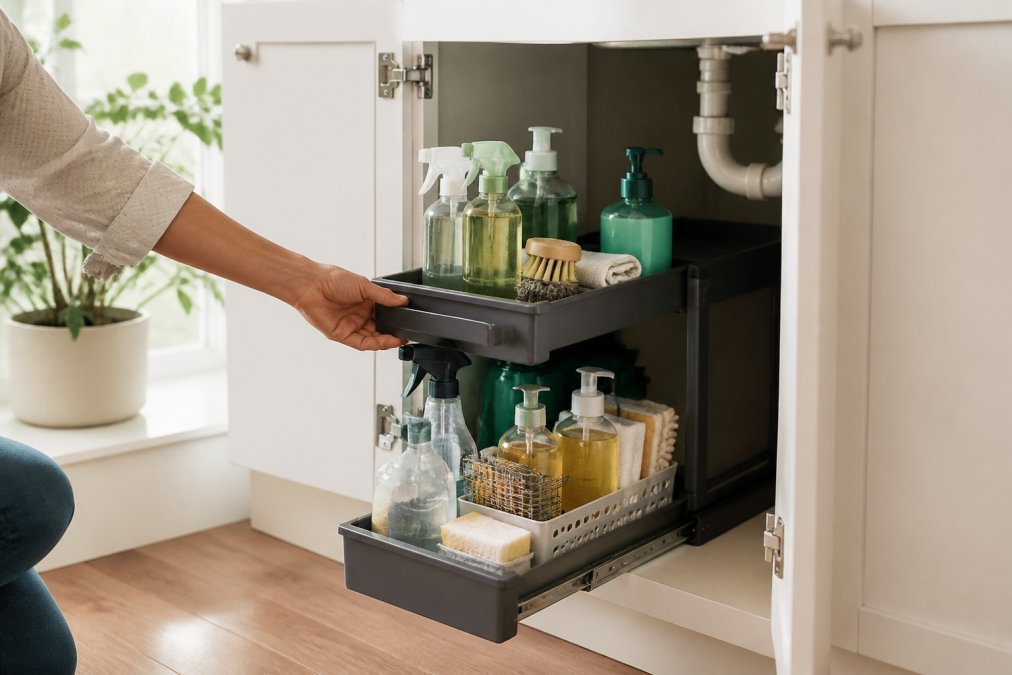
Sevenblue 2-Tier Under Sink Organizer: Best for Plumbing-Friendly Fit
Sevenblue's two-tier unit is built for the awkward reality of a disposal and P-trap. The pull-out drawer slides around common pipe layouts, and the metal frame includes hanging hooks and side cups for sponges and brushes. Assembly needs no tools. The catch: it demands specific clearance measurements, so measure twice.
PHANCIR Under Sink Organizer: Best Budget High-Capacity Option
PHANCIR packs two tiers of storage into its frame. The sliding drawer keeps bottles reachable, and the water-resistant construction suits a damp cabinet. The limitation is the plastic build, which flexes under very heavy liquid containers over time.
Famovell Under Cabinet Organizer: Best Premium Durability
Famovell targets plumbing clearance directly, with a high-quality build and an easy-glide drawer that stays smooth after months of use. It costs more than plastic models, and that premium buys longevity rather than extra capacity.
mDesign Under Sink Storage Bin: Best for Minimalist Stacking
mDesign's clear, stackable bins take a different approach: no drawers, just visible, portable storage. The BPA-free plastic and integrated handles make it easy to carry a whole bin to the sink. It won't give you vertical sliding access, but for grouping smaller items it's hard to beat.
Under-Sink Cabinet Storage Hacks for Small Kitchens
Small kitchens reward vertical storage and ruthless decluttering. A few under-sink cabinet storage hacks make the difference between a cabinet you dread and one that works.
- Mount a tension rod across the cabinet to hang spray bottles by their triggers
- Use stackable bins to double storage capacity without a drawer system
- Add a leak-proof mat to catch drips and protect the cabinet floor
- Group supplies by task (dish, floor, glass) so you grab one caddy, not five bottles
- Keep a non-slip liner under sliding baskets to stop rattling
Material Durability and Moisture Resistance: What to Look For
Moisture destroys cheap organizers faster than weight does. A cabinet under a sink sees humidity, splashes, and the occasional leak, so material choice matters more here than anywhere else. The difference between a unit that lasts three years and one that lasts ten comes down to four things: base material, coating or finish, airflow, and sealed joints.
Metal: Coating Quality Beats Metal Type
Stainless steel and powder-coated carbon steel are the two common metal options. The failure point is rarely the metal itself, it is the coating at joints, welds, and cut edges, where moisture wicks under the finish and rust starts. Look for a unit where the coating wraps the wire ends and the drawer glides are stainless or nylon rather than bare steel.
Plastic: Thickness and Resin Type Decide Load Behavior
Plastic resists moisture well but flexes under load, and flex cracks bins over time. Two numbers matter: wall thickness and resin type. Polypropylene (PP) is more fatigue-resistant than polystyrene (PS) or acrylic, which turn brittle with age and temperature swings. A bin with a base under about 2 mm thick will bow under a full gallon of detergent.
Eco-Friendly and Non-Toxic Material Comparison
Most guides stop at plastic versus metal. If material sourcing matters, here is how the common options compare on moisture resistance, load capacity, and end-of-life:
- Recycled polypropylene: Same moisture resistance as virgin PP, often slightly less color-stable. Widely recyclable where #5 plastics are accepted. Best all-around eco pick for a damp cabinet.
- Powder-coated recycled steel: Strongest load capacity of the group and fully recyclable at end of life, but only as durable as its coating. Choose one with a sealed edge finish.
- Bamboo: Renewable and attractive, but it is a grass, not a wood, and it swells when wet. It needs a sealed, food-safe finish and should never sit directly on a cabinet floor that sees drips. Best used for dry-item caddies, not detergent storage.
- Stainless steel (uncoated): Fully recyclable and naturally corrosion-resistant, but fingerprints and water spots show, and thin-gauge stainless dents under heavy bottles.
- BPA-free copolyester: Clear, tough, and moisture-proof, but harder to recycle in many curbside programs. A reasonable compromise if visibility matters more than recyclability.
Airflow and the Mildew Problem
Closed bins trap the humidity that rises from a slow drip or damp sponge. Wire, mesh, and slotted designs let air circulate and dry out between uses, which is why open-frame organizers mildew less than sealed drawers. If you prefer closed drawers, choose a unit with ventilation slots and leave the cabinet door cracked after use when the kitchen is humid.
Skipping a leak-proof mat is the mistake that shortens an organizer's life most. One slow drip under a detergent bottle can warp a cabinet floor and rust a metal frame within a season. A raised, lipped mat that keeps bottle bases out of standing water does more for longevity than upgrading the organizer itself.
Buy for the coating and the base thickness, not the material name. A well-coated steel frame or a thick polypropylene bin will outlast a thin "premium" unit every time, and if sustainability matters, recycled PP and powder-coated recycled steel are the two options that survive a damp cabinet without compromise.
Weight Capacity and Accessibility: Testing for Real-Life Use
Weight capacity is where under-sink organizers quietly fail. A full bottle of liquid detergent is heavy, and stacking several on one shelf tests the frame, the glides, and the cabinet floor. Accessibility matters just as much, a unit you can reach without kneeling beats one with more capacity but awkward access, especially for older users and people with limited mobility.
How Much Do Cleaning Supplies Actually Weigh?
Before trusting a weight rating, know what you are loading:
- A standard 1-gallon (128 fl oz) jug of liquid laundry detergent weighs roughly 8.5 to 9.5 pounds.
- A 1-gallon jug of bleach weighs close to 9 pounds.
- A 32-ounce spray bottle of all-purpose cleaner weighs about 2.5 pounds.
- A 24-ounce bottle of dish soap weighs about 1.75 pounds.
- A box of dishwasher pods (about 60 count) weighs roughly 2 to 3 pounds.
Reading Load Ratings and Glide Types
When a manufacturer publishes a capacity, treat it as a per-shelf figure, not a total, unless it says otherwise. Two mechanisms decide whether a unit holds that load:
- Full-extension ball-bearing glides carry the most weight and let the drawer pull all the way out, so you are not reaching over the front edge. They are the right choice for a detergent-heavy cabinet.
- Partial-extension or friction glides are common on budget units. They sag under heavy loads and often cannot be pulled far enough to reach back-row bottles.
- Static shelves and stackable bins have no glide to fail, but they shift the entire load onto the cabinet floor and the bin walls. A thin plastic bin will bow; a wire or ribbed base will not.
Plumbing Obstruction Troubleshooting
This is the step most guides skip, and it is the reason organizers get returned. The right unit depends on your specific configuration:
- Standard P-trap, no disposal: The trap drops straight down at the back center. A two-tier unit with a notched or split back panel slides around it; a solid-back drawer will not.
- Garbage disposal: The disposal hangs off one side of the sink drain and is wider than a P-trap. Measure the horizontal distance from the cabinet side wall to the disposal body, that gap is usually the only full-height space you have. A narrow side unit or a stackable bin fits there; a wide drawer does not.
- Disposal plus P-trap: The most cramped layout. The usable space is typically the front half of the cabinet and the side opposite the disposal. Favor a low-profile unit that stays under the trap arm, or a two-tier unit whose top shelf clears the trap by at least an inch.
- Offset or rear drain: The trap sits close to the back wall, leaving more front space. This layout handles a full-width drawer better than a center-drain setup.
Designing for Limited Mobility and Arthritis
Reaching into a low, deep cabinet is hard on shoulders, backs, and hands. A few design choices make a real difference:
- Full-extension pull-out drawers bring contents to the front edge, so you do not have to reach past the door frame.
- Loop or D-shaped handles are easier to grip than recessed finger pulls, which require pinching.
- Lazy Susan or rotating trays let you spin items to the front instead of reaching to the back.
- Lift-out caddies with a single central handle let you carry the whole group to the sink rather than bending repeatedly.
- Non-slip liners keep bottles from shifting when a drawer is pulled, reducing the need to steady items with one hand.
Households storing bulk detergent or reaching into a deep, low cabinet, where load-bearing and easy access matter most. If you have a disposal plus a P-trap, prioritize a notched-back or side unit over a full-width drawer.
Add up the weight of what you plan to store before you buy. Two gallon jugs plus a bleach bottle is 25 to 30 pounds, more than many budget units are rated for. Match the glide type and the plumbing clearance to your cabinet, and the organizer will hold up for years instead of sagging in one.
Conclusion
The right organizer turns a pipe-cluttered cabinet into storage you actually use. Viva homeStore offers a curated selection of practical home essentials designed to maximize space and simplify daily tasks, so you can organize cleaning supplies without fighting your plumbing. Shop now and reclaim the space under your sink.
Frequently Asked Questions
What is a good cleaning supply organizer for under the sink?
A good organizer should fit around your plumbing, resist moisture, and hold heavy bottles. Look for pull-out drawers with rust-resistant coating, like the Sevenblue 2-Tier or Famovell models. Measure your cabinet's interior and pipe clearance first. Adjustable shelves and modular designs let you customize the fit. Prioritize heavy-duty frames if you store large detergent jugs.
Are pull-out organizers better than stackable bins for under-sink storage?
Pull-out organizers make items at the back easy to reach without bending or removing front items. They work well for frequently used supplies. Stackable bins are more affordable and portable, good for grouping small items. However, bins can hide spills and require lifting. For heavy liquid detergents, pull-out drawers with weight capacity over 20 pounds are safer. Many people combine both: a pull-out for bottles and bins for sponges.
How to store cleaning products under the sink safely?
Keep products in their original containers with labels intact. Place heavy items on lower tiers and lighter items above. Use a leak-proof mat to catch drips. Avoid storing food or pet items under the sink. If you have young children, install childproof latches. Ensure pipes are free of leaks; moisture can ruin cardboard packaging and cause rust. Ventilate the cabinet by leaving doors open occasionally.
What should I measure before buying an under-sink organizer?
Measure the cabinet's interior width, depth, and height. Note the location and diameter of plumbing pipes and the garbage disposal. Check the height from the cabinet floor to the bottom of the sink basin. Also measure the height of your tallest bottles. Leave at least an inch of clearance for pull-out mechanisms. Write down these dimensions and compare with product specs before ordering.
The hardest part of under-sink storage isn't finding a unit; it's finding one that fits your specific pipes and holds up to moisture. Viva homeStore curates practical, functional home essentials built around organizing and maximizing your space, with a focus on everyday efficiency. Browse the collection and get a cabinet that works as hard as you do.