

How to Organize Deep Kitchen Cabinets Effectively
Table of Contents
- Assess Your Current Cabinet Setup and Declutter
- Categorize and Sort Kitchen Items by Frequency of Use
- Install Pull-Out Cabinet Organizers for Easy Access
- How to Organize Deep Pantry Shelves with Strategic Placement
- Kitchen Cabinet Storage Hacks: Maximize Vertical Space
- Accessibility and Weight Distribution for Daily Use
- Maintain Your Organization System Long-Term
Last Updated: August 30, 2026
Deep kitchen cabinets are a blessing and a curse. They offer storage space you desperately need, but once you shove things in, retrieving what you actually want becomes a frustrating treasure hunt. The real challenge isn't the cabinet itself, it's the lack of a system. This guide walks you through the exact steps to organize deep kitchen cabinets effectively, from the initial assessment to maintaining your system long-term. 🏠
Assess Your Current Cabinet Setup and Declutter
Before you install a single organizer, you need to see what you're actually working with. Open every deep cabinet and pull everything out. Yes, everything. Lay items on your counter or kitchen table so you can see the full picture of what's hiding in there.
This is your chance to be honest about what you use and what's just taking up valuable real estate. That fancy serving platter you haven't touched in three years? The duplicate measuring cups? The expired spices? These items are stealing space from things you actually need. A common mistake is keeping things "just in case", but deep cabinets are premium storage. They deserve to hold items that earn their place.
As you pull items out, sort them into three piles: keep, donate, and discard. Be ruthless. Items you genuinely use regularly go in the keep pile. Anything broken, expired, or unused for over a year goes in donate or discard. This decluttering step alone often frees up 30-40% of your cabinet space, making the remaining items much easier to manage (peer-reviewed research).
Measure your cabinet dimensions while it's empty. Note the height, width, and depth. Check if there are any shelves already installed and measure the space between them. Understanding your exact cabinet depth and shelf spacing is critical for choosing the right organizers. Deep cabinets typically range from 12 to 24 inches deep, knowing your exact measurement prevents buying organizers that don't fit (nkba.org).
Categorize and Sort Kitchen Items by Frequency of Use
Now that you know what you're keeping, organize items by how often you use them. This is the foundation of any effective system. Items you reach for daily should be most accessible. Items you use monthly can go deeper. Seasonal items belong in the hardest-to-reach spots.
Create categories that make sense for your household. Common groupings include: baking supplies, canned goods, snacks, spices, oils and vinegars, breakfast items, cooking utensils, and serving pieces. Your categories depend entirely on what you cook and how you shop. A family that meal preps weekly might have a dedicated "meal prep containers" section. Frequent entertainers might prioritize serving dishes and barware.
Once you've identified your categories, group similar items together. This makes inventory management easier and prevents buying duplicates. You'll know exactly where your pasta is, how many boxes you have, and when you need to restock. This kind of organization saves time during meal planning and reduces food waste from forgotten items pushed to the back.
Stack similar items vertically when possible. Canned goods, for example, stack efficiently and take up less horizontal space. Boxed items like pasta or crackers also stack well. However, avoid stacking items more than 4-5 high in a deep cabinet, you won't be able to see or reach what's at the bottom (the CDC). The goal is accessibility, not just fitting more in.
Install Pull-Out Cabinet Organizers for Easy Access
This is where your cabinet transforms from a black hole into an organized system. Pull-out organizers are game-changers for deep cabinets because they bring everything forward without requiring you to reach to the back. Instead of fishing around blindly, you pull out a drawer and see everything at once.
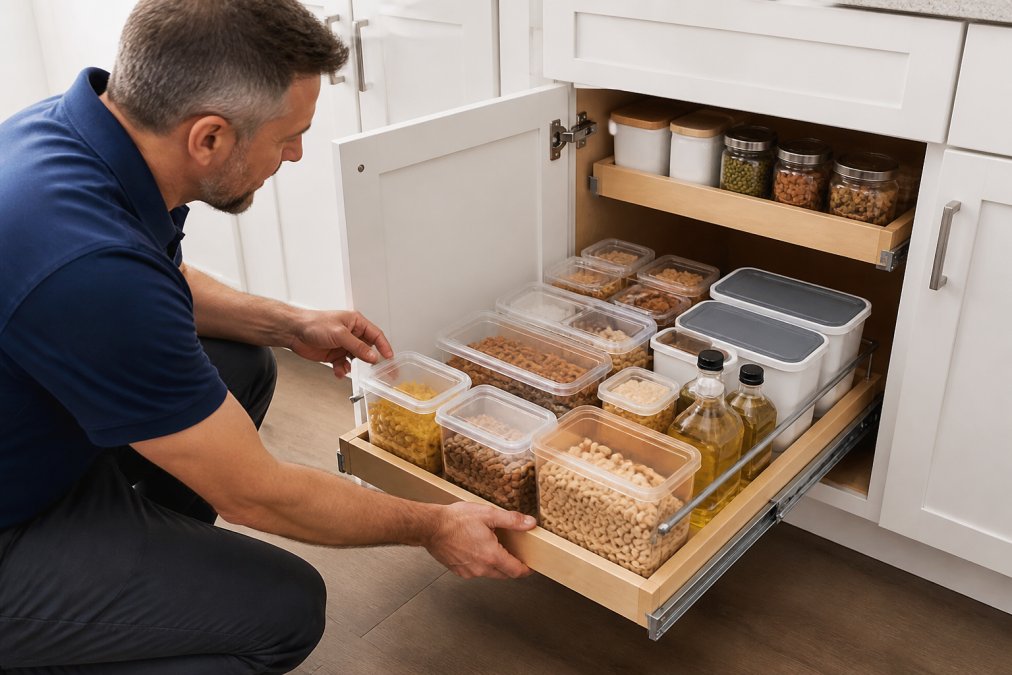
Pull-out drawers come in various styles and sizes. Sliding shelf organizers fit between existing shelves and extend outward. Basket-style pull-outs hang from the shelf above. Drawer inserts sit on top of existing shelves. Choose based on your cabinet's current setup and what items you're storing. For canned goods and jars, sliding shelves work best. For softer items like bags of chips or flour, baskets are ideal.
Installation is straightforward for most pull-out organizers. Sliding shelves typically use brackets that attach to the existing shelf. Baskets hang on rails mounted to the cabinet sides. Most systems come with all necessary hardware and instructions. If you're not comfortable installing them yourself, many home improvement stores offer installation services.
The key advantage of pull-out organizers is visibility. When everything slides forward, you can see exactly what you have without playing guessing games. This prevents overbuying duplicate items and makes meal planning faster. You'll spend less time searching and more time cooking.
Position heavier items on lower pull-out shelves and lighter items higher up. This follows basic ergonomics and makes the organizers easier to pull out without straining. A fully loaded pull-out shelf on a lower shelf is easier to manage than one loaded with heavy items at eye level.
How to Organize Deep Pantry Shelves with Strategic Placement
Strategic placement means putting the right items in the right spots based on weight, frequency of use, and accessibility. This approach maximizes your space while keeping your most-used items within easy reach.
Start with the eye-level shelf, this is prime real estate. Store items you use several times a week here: cooking oils, frequently used spices, breakfast cereals, or snack items. Eye level is where your hands naturally go first, so make it count. Items stored here should be your daily drivers.
The shelf below eye level is your second-priority zone. This works well for backup supplies, less-frequently used ingredients, or heavier items. Canned goods, bulk pasta, and baking supplies fit well here. You can reach down easily without straining, and heavier items won't be overhead.
Upper shelves work best for lighter items and things you use occasionally. Specialty baking ingredients, decorative serving pieces, or seasonal items belong up high. Keep weight distribution in mind, don't load the top shelf so heavily that it sags or becomes difficult to access.
The lowest shelf handles your heaviest items: large jars, bulk supplies, small appliances you use regularly. This shelf can handle weight better than upper shelves, and you won't strain your back reaching down occasionally. However, avoid storing anything on the floor of your cabinet itself, moisture and pests are more likely to reach items sitting directly on the cabinet base.
Deep pantry shelves specifically benefit from shelf risers and stackable containers. Risers create a second level on the same shelf, effectively doubling your storage capacity. Clear containers let you see contents without opening them, reducing the time spent searching for specific items. Label everything clearly so family members know where items belong and can return them to the right spot.
Kitchen Cabinet Storage Hacks: Maximize Vertical Space
Vertical space is where deep cabinets truly shine. Most people use only the shelf space itself, ignoring the height available above and between items. Smart vertical organization can double your usable storage.
Shelf risers are your first vertical hack. These simple platforms sit on existing shelves and create a second tier. You can store items underneath and items on top of the riser. For example, place a riser on your spice shelf and store spice jars underneath while keeping frequently used oils on top. This simple addition transforms a single-layer shelf into double storage.
Lazy Susans are perfect for deep cabinets. Spin one around and grab what you need without reaching to the back. They work especially well for oils, vinegars, sauces, and spices, items you need quick access to while cooking. A 9 or 10-inch lazy Susan fits well on most cabinet shelves and rotates smoothly even when fully loaded.
Stackable clear containers maximize vertical space while keeping contents visible. Instead of storing pasta boxes flat, stack them vertically in clear containers. Same with snacks, cereals, and baking supplies. Stackable containers with lids also protect items from moisture and pests better than open shelving.
Door-mounted organizers add storage without taking up shelf space. Spice racks, small baskets, or adhesive hooks on the inside of cabinet doors hold frequently used items. This keeps your shelf space free for larger items while keeping spices and small bottles organized and visible.
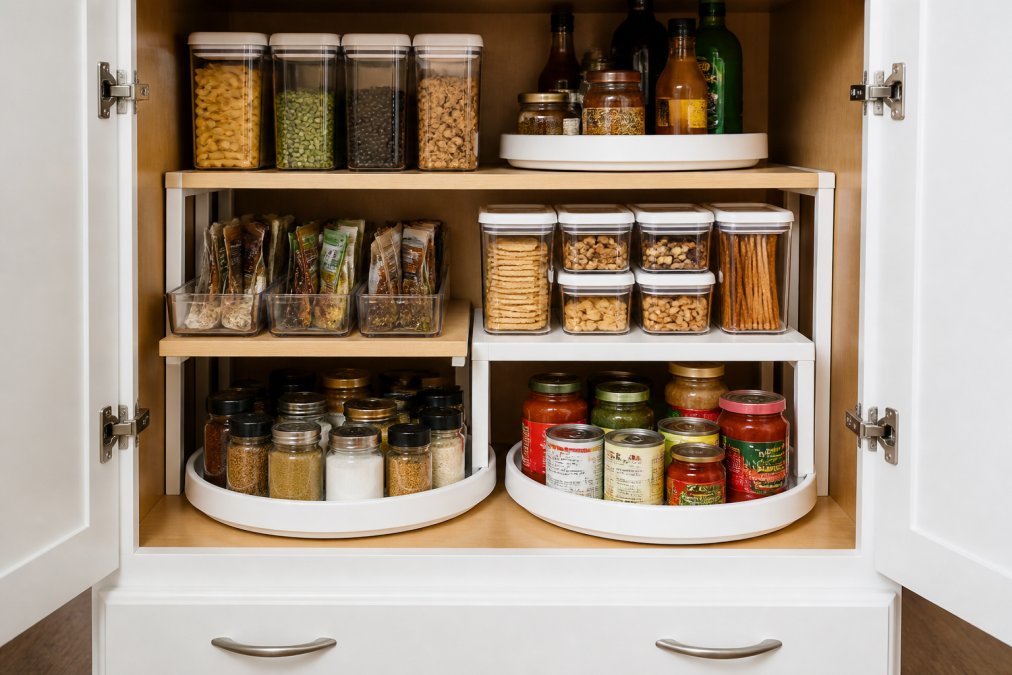
Hanging baskets suspended from upper shelves create storage for lightweight items like bags of chips, cereal boxes, or snack items. These baskets don't take up shelf space and keep items visible and accessible. Make sure the hanging hardware is rated for the weight you're storing.
The goal of vertical organization is using every inch of height. Most deep cabinets have 12-18 inches of height per shelf. Using risers, stackable containers, and hanging solutions, you can effectively triple your storage capacity compared to flat shelving alone.
Accessibility and Weight Distribution for Daily Use
Proper accessibility means your system actually gets used. If items are too hard to reach or too heavy to grab safely, you'll end up reorganizing everything within weeks. Design your cabinet with real-world use in mind.
Ergonomics matter more than you might think. Items at eye level and within arm's reach (roughly 12-18 inches from the edge) are easiest to access. Items below that require bending. Items above require stretching. Daily-use items should be in the easy-access zone. Seasonal or occasional items can be harder to reach.
Weight distribution prevents shelf sagging and reduces strain on your back. Distribute weight evenly across each shelf rather than loading one side heavily. Heavier items belong on lower shelves where the cabinet structure supports them better. Upper shelves handle lighter loads more safely.
If you have mobility challenges or accessibility concerns, keep this front and center when organizing. Items you use daily should be between waist and shoulder height. Avoid storing anything above shoulder height or below knee height if reaching those spots causes strain. Turntables and pull-out organizers are especially helpful for accessibility, they bring items to you rather than requiring you to reach far back.
Consider who in your household uses the cabinets. If children need access to snacks or dishes, store those items at their height. If elderly family members have limited reach, prioritize pull-out organizers that don't require stretching. A well-organized cabinet works for everyone in the household, not just the person who organized it.
Test your system in real use. After a few days, notice which items are hardest to reach and which are most convenient. Make adjustments as needed. Your first attempt won't be perfect, and that's fine. The best organization system evolves based on actual usage patterns.
Maintain Your Organization System Long-Term
Organization isn't a one-time project, it's an ongoing practice. Without maintenance, even the best system degrades within weeks. The good news is that maintaining an organized cabinet takes far less effort than the initial setup.
Set a monthly maintenance schedule. Once a month, spend 15 minutes doing a quick review. Check that items are in the right categories, that nothing has expired, and that everything is still accessible. This prevents small messes from becoming big problems.
Return items to their designated spots immediately after use. This is the single most important maintenance habit. If everyone in your household puts items back where they belong, your system stays intact. If items drift to random spots, organization quickly falls apart. Make it easy for family members to do this by ensuring categories are clear and logical.
Wipe down shelves quarterly to prevent dust buildup and catch any spills before they become sticky messes. Use a dry cloth or a slightly damp microfiber cloth. This keeps your cabinets looking clean and prevents items from sticking to shelves.
Review your categories seasonally. What you cook in winter might differ from summer. Adjust your organization to match your current cooking patterns. If you've stopped using certain items, donate them and free up space for things you actually use.
Keep a simple inventory list on your phone or posted inside the cabinet door. Note quantities of staple items like pasta, rice, canned goods, and baking supplies. This prevents overbuying and helps with meal planning. Update it whenever you restock.
Viva homeStore offers a range of organizers, risers, and storage solutions designed specifically for kitchen optimization. From pull-out shelves to stackable containers and turntables, having the right tools makes maintenance effortless. Quality organizers last years, not months, and actually encourage you to maintain the system because they make it so convenient.
Organize your deep kitchen cabinets once and enjoy the benefit for years. The initial time investment pays dividends every single day when you can find what you need instantly instead of searching through a cluttered mess. Start with decluttering, add strategic organizers, and commit to simple maintenance habits. Your future self will thank you every time you open a cabinet and find exactly what you're looking for. Explore Viva homeStore's kitchen organization collection to find the perfect organizers for your space, shop now and transform your cabinets today. 🛠️
Frequently Asked Questions
Q: What is the best type of organizer for deep kitchen cabinets?
A: Pull-out shelves, sliding drawers, and shelf risers are among the most effective organizers for deep cabinets. Pull-out systems bring items forward so you can access the back without reaching. Shelf risers add vertical storage, while lazy Susans work well for items you use regularly. The best choice depends on your cabinet dimensions, budget, and what you store. Measure your cabinet depth and width before purchasing to ensure proper fit.
Q: How do you organize deep kitchen cabinets without losing items?
A: Use clear, labeled containers so you can see what's inside without opening each one. Group similar items together (spices with spices, baking supplies with baking supplies) and assign them specific zones. Install pull-out drawers or sliding shelves to prevent items from sliding to the back. Take inventory when you organize and maintain a simple list of what goes where. Regular maintenance checks every few months help you catch items before they get forgotten.
Q: Are pull-out drawers worth it for deep kitchen storage?
A: Yes, pull-out drawers significantly improve access and usability in deep cabinets. They eliminate the need to reach far back and make it easier to see everything you have. This reduces food waste because you're less likely to forget about items hidden in the back. While they require an upfront investment, the time saved and reduced waste often justify the cost. Rental-friendly options like removable sliding shelf inserts are also available if permanent installation isn't possible.
Q: How do you decide where to put things in kitchen cabinets?
A: Place items you use daily at eye level and within easy reach. Store heavy items on lower shelves and lighter items higher up to maintain balance and safety. Keep frequently used cookware and dishes near your stove and sink. Group related items together (baking supplies, spices, canned goods) so you know exactly where to find them. Consider your kitchen workflow: place items in the cabinet closest to where you'll use them. Adjust placement seasonally if you rotate between different cooking styles or entertaining needs.
This article was written using GrandRanker