

Smart Storage Solutions for Eco-Friendly Homes in 2026
Table of Contents
- What Makes Storage Truly Eco-Friendly? A Lifecycle View
- Non-Toxic Storage Containers for Food and Family
- Modular Storage Systems for Small Spaces
- Eco-Friendly Decluttering Methods: A Room-by-Room Plan
- Plastic-Free Alternatives: Baskets, Bamboo, and Upcycled Finds
- The End-of-Life Disposal Guide for Storage Bins
- Budget-Friendly vs. Premium Sustainable Sourcing
- Conclusion: Build a Storage System That Gives Back
- Frequently Asked Questions
Last Updated: September 7, 2026
Most home organization advice stops at the shelf. But for the growing number of households pursuing sustainable living, the real question goes deeper: what happens to that storage bin when it breaks, and where did the materials come from in the first place? Smart storage solutions for eco-friendly homes address the full lifecycle of organization, not just the tidy result. This guide breaks down how to choose, use, and eventually retire your storage systems without expanding your carbon footprint.
The shift toward zero-waste and conscious consumption has changed how we shop for everything, including home organization. Rather than buying the cheapest plastic tote, eco-conscious homeowners are now weighing material sourcing, durability, and recyclability. Below, we'll walk through the decisions that matter most, from non-toxic food containers to modular shelving, so you can build a system that is both functional and kind to the planet.
What Makes Storage Truly Eco-Friendly? A Lifecycle View
Eco-friendly storage is any container or organizational system designed to minimize environmental harm across its entire lifespan, from raw material extraction to final disposal. A bamboo basket and a recycled plastic bin can both claim green credentials, but they serve very different lifecycles. The key is understanding that sustainability isn't a single attribute; it's a process that includes sourcing, daily use, and eventual end-of-life handling.
Beyond the Bin: Sourcing, Use, and End-of-Life
The most common mistake is focusing only on the material itself. A natural fiber basket sounds great, but if it's shipped halfway around the world in virgin plastic packaging, its footprint grows. Similarly, a highly durable plastic bin that lasts decades might outperform a flimsy "biodegradable" alternative that ends up in a landfill after one season. When evaluating any product, consider its full journey to support waste reduction and resource management.
Non-Toxic Storage Containers for Food and Family
Non-toxic storage containers are food-safe and chemical-free options made from materials like glass, stainless steel, or food-grade silicone, ideal for meal prep and family kitchens. But in an eco-friendly home, the real test isn't just what the container is made of, it's how well it supports the specific habits that reduce waste in the first place. A container that doesn't fit your bulk-bin haul or your fermentation routine will get abandoned, and an abandoned container is an environmental liability.
The Zero-Waste Pantry Setup
A common pattern in low-waste households is buying grains, nuts, and dried goods from bulk bins to avoid single-use packaging. That habit only works if you have a storage system that keeps those items fresh and visible. The standard solution is a set of uniform glass jars with airtight lids, typically 32-ounce or 64-ounce sizes, that fit neatly on a dedicated shelf. Uniformity matters here: it makes stacking efficient and lets you see at a glance what needs restocking, which cuts down on forgotten items that spoil.
For dry goods that need protection from pantry moths, glass with a rubber gasket seal outperforms most plastic lids. For items you use frequently, like flour or sugar, consider a 2-quart glass jar with a flip-top lid for easy scooping. Stainless steel canisters are another strong option for coffee or tea, as they block light better than glass and won't shatter if dropped.
Storage That Supports Fermentation and Food Preservation
A less-covered but growing eco-habit is home fermentation, think sauerkraut, kimchi, or sourdough starter. These practices require specific storage conditions that most generic container guides ignore. Fermentation needs containers that allow gases to escape while keeping oxygen out. A common solution is a glass mason jar fitted with a silicone fermentation lid that has an airlock, which lets carbon dioxide bubble out without letting contaminants in. These lids are reusable and cost far less than dedicated ceramic crocks.
For sourdough enthusiasts, a glass or ceramic proofing container with straight sides makes it easier to see when the dough has doubled. And for storing finished ferments, swing-top glass bottles with rubber gaskets are a staple, they tolerate the pressure from carbonation better than standard screw-top jars.
The Transition Strategy: Replacing Plastic Without the Splurge
A common approach is to build a collection gradually, replacing worn plastic containers with sturdier, non-toxic versions as your budget allows. A practical rule of thumb is to replace plastic containers that show scratches, stains, or warping first, as these signs indicate the material is degrading and may leach chemicals into food (the FDA). Glass and stainless steel are the primary replacements, but food-grade silicone bags are a useful bridge for items like sliced produce or sandwiches where you need flexibility.
Look for containers with airtight seals to reduce food waste, a core tenet of eco-friendly homes. This investment pays off in both longevity and peace of mind, especially for families storing daily meals. A well-sealed glass container can keep leftovers fresh for an extra day or two compared to a loose-fitting plastic lid, which directly reduces the amount of food you toss.
Modular Storage Systems for Small Spaces
Modular storage systems for small spaces maximize vertical and underutilized areas through stackable bins, adjustable shelving, and interlocking units that grow with your needs. The beauty of modular design is its flexibility: a single system can organize a pantry, a closet, or a home office without requiring permanent installation. This approach is a cornerstone of space optimization in apartments and studios where every square foot counts.
For renters or those who prefer not to mount fixtures, freestanding modular shelving units made from reclaimed wood or bamboo offer sturdy, movable solutions. Pair these with stackable bins to create a custom configuration that fits your exact dimensions. The goal is functional design that reduces clutter without locking you into a single layout, which is essential for maintaining a clutter-free environment over time.
Eco-Friendly Decluttering Methods: A Room-by-Room Plan
Eco-friendly decluttering is the process of reducing household excess with the explicit goal of diverting waste from landfills through donation, upcycling, or responsible recycling. It flips the traditional "throw it away" mindset into one of resource management. By handling each room methodically, you avoid the overwhelm that leads to bagging everything and sending it to the trash.
Step 1: Sort with Purpose
Begin by emptying one zone, such as a single closet shelf, and sort items into four categories: keep, donate, recycle, and repurpose. This prevents the common pitfall of creating a "maybe" pile that stalls progress. As you sort, ask whether each item serves a current need or brings genuine value; this supports minimalism without forcing you to discard useful goods.
Step 2: Assign a Sustainable Home
Once you've sorted, assign a permanent eco-friendly home for the "keep" items before putting them back. Use recycled material bins or upcycled crates to group similar objects, ensuring everything has a designated spot. This step is critical; without it, clutter simply migrates to another surface.
Plastic-Free Alternatives: Baskets, Bamboo, and Upcycled Finds
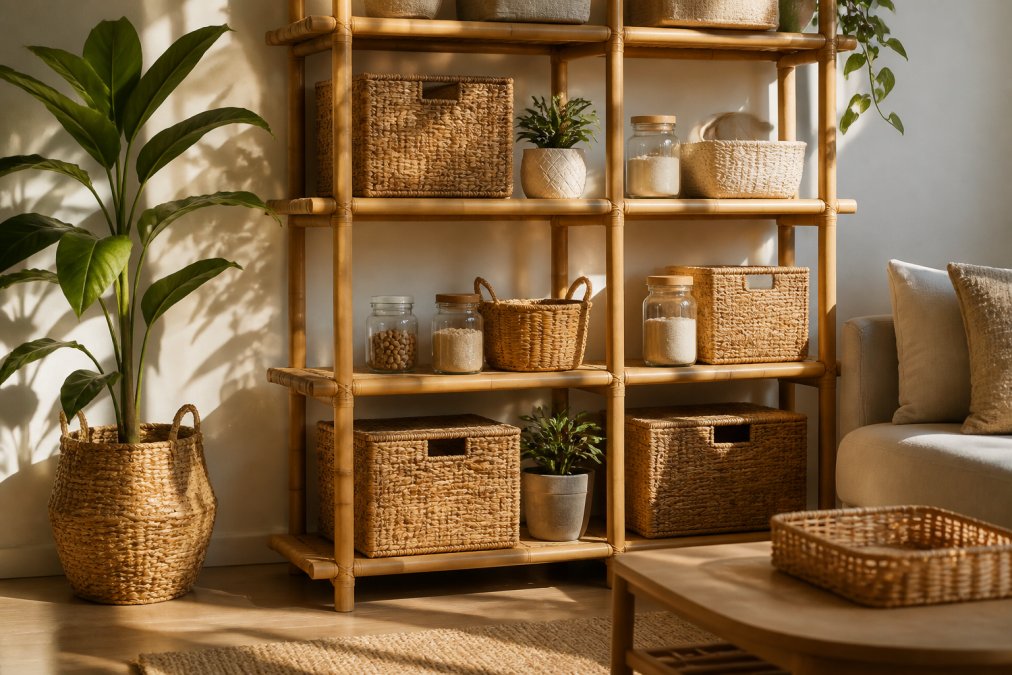
Plastic-free storage alternatives rely on rapidly renewable or recycled inputs, such as seagrass, jute, bamboo, and reclaimed wood, to provide durable organization without petrochemicals. These materials bring warmth and texture to a room that plastic simply cannot match. Woven baskets are excellent for linens and toys, while bamboo bins offer a moisture-resistant option for bathrooms or entryways.
Repurposing household items is another powerful strategy. Clean glass jars from pasta sauce become herb containers, and wooden crates from a local market can be sanded and stacked for shelving. This upcycling approach is often the most budget-friendly and unique way to organize, reducing the demand for new products entirely. For those seeking ready-made options, brands like Ecozoi's bamboo storage line and Paper Mart's natural fiber baskets provide durable, plastic-free starting points.
The End-of-Life Disposal Guide for Storage Bins
Proper disposal ensures that worn-out storage items re-enter the circular economy rather than persisting in landfills for centuries. The right method depends entirely on the material, and on your local municipal recycling rules, which vary widely across the United States. This guide walks through the most common storage materials and the specific end-of-life pathways available for each.
Natural Fibers: Composting and Mulching
Natural fibers like jute, seagrass, and hemp can often be composted at home, but there are caveats. If the basket or bin is untreated, no dyes, glues, or synthetic linings, you can cut it into smaller pieces and add it to your compost pile. It will break down slowly, so it's best to chop it into pieces no larger than a few inches. Bamboo is denser and takes longer to decompose; a common approach is to chip it for garden mulch if untreated. If the item has a synthetic lining or was treated with a waterproofing agent, it should not go in your compost.
Rigid Plastics: Navigating Resin Identification Codes
For rigid plastics, check local recycling guidelines, as many municipalities accept #1 (PET) and #2 (HDPE) plastics but reject mixed-material bins or those with metal hinges. A critical detail: the chasing arrows symbol with a number does not guarantee your local program accepts it. Many curbside programs in the United States only accept #1 and #2 bottles and jugs, not bulky bins or totes. For larger rigid plastic storage bins, the most reliable pathway is often a drop-off location at a local recycling center or a specialized event.
If your plastic bin is cracked or broken, check whether it's made of #5 polypropylene, which some municipal programs and dedicated recyclers like Trex's film recycling program accept. For bins that are still intact but no longer needed, donation is the most sustainable option, extending its useful life. Organizations like Habitat for Humanity ReStores accept used storage bins and shelving units in good condition.
Metal Containers: High-Value Recycling
Metal containers, such as galvanized steel or aluminum bins, are highly recyclable and often accepted at scrap yards, where you may even receive a small payment based on weight. Galvanized steel is durable but can rust over time; if it's beyond repair, remove any plastic or rubber components before recycling. Aluminum bins are less common but command a higher scrap value. Check with your local scrap yard for current acceptance policies, as some require a minimum quantity.
Glass: Closed-Loop Recycling
Glass storage jars and containers are infinitely recyclable, but the pathway depends on your municipality. Some areas have single-stream recycling where glass is accepted curbside; others require drop-off at a dedicated glass recycling center. A growing number of communities are moving to glass-only drop-off programs because broken glass contaminates other recyclables in single-stream systems. If your glass jar is chipped or cracked, it can still be recycled in most programs, but check for any local restrictions.
Composite and Mixed-Material Items
Many storage products combine materials, a bamboo lid with a silicone gasket, or a metal frame with plastic bins. These composites are the hardest to recycle. The general rule is to disassemble what you can and sort each material into its proper stream. Many communities also host specialized recycling events for bulky or composite items, so a quick search of local waste management resources is worthwhile. Some retailers, including IKEA, have in-store recycling programs for certain materials, though availability varies by location.
Budget-Friendly vs. Premium Sustainable Sourcing
Choosing between budget and premium sustainable storage often comes down to material durability versus initial cost. Budget-friendly options, such as recycled plastic bins or upcycled crates, offer immediate affordability and are excellent for utility areas like garages. Premium options, such as hand-woven artisan baskets or custom bamboo cabinetry, command higher prices due to craftsmanship and guaranteed longevity.
A practical strategy is to mix tiers: invest in premium, high-visibility pieces for your living room or pantry, and opt for budget-friendly recycled options for closets or basements. This approach balances aesthetics with cost. Whichever route you take, sourcing from companies that prioritize recycled materials and fair labor practices amplifies your positive impact, supporting a broader shift toward ethical production.
Conclusion: Build a Storage System That Gives Back
Building a sustainable home is a marathon, not a sprint. By viewing storage through a lifecycle lens, you make choices that benefit both your daily routine and the environment, reducing waste and supporting a circular economy. The most effective system is one that is durable, adaptable, and sourced responsibly.
At Viva homeStore, we understand the challenge of maximizing space while staying true to your values. Our curated selection of practical and innovative home essentials, from unique accessories to space-saving furniture, is designed to help you create a more organized and comfortable home.
Frequently Asked Questions
What are the best sustainable materials for home storage?
Bamboo, seagrass, jute, rattan, and reclaimed wood are top choices for eco-friendly homes. These natural fibers are renewable and biodegradable. For non-toxic storage containers, look for glass, stainless steel, or food-grade silicone instead of plastic. These materials avoid harmful chemicals and often last longer, reducing the need for frequent replacements.
How do I choose non-toxic storage containers for my home?
Check labels for materials like glass, stainless steel, or bamboo. Avoid containers with BPA, phthalates, or PVC. For food storage, glass jars with bamboo or stainless steel lids are safe and durable. For general organization, look for untreated natural fiber baskets or bins made from recycled materials. A simple sniff test can also help: strong chemical odors often signal harmful off-gassing.
What are the benefits of modular storage systems for sustainable living?
Modular storage systems for small spaces reduce waste because they adapt to your needs. Instead of buying new furniture when your storage needs change, you simply reconfigure the modules. This extends the product's life and prevents unnecessary consumption. Many modular systems also use recycled or responsibly sourced materials, making them a smart choice for reducing your carbon footprint.
What are some clever storage ideas for small, eco-friendly houses?
Use vertical space with wall-mounted shelves made from reclaimed wood. Choose multi-functional furniture, like ottomans with hidden storage. Repurpose glass jars for pantry items and hardware. Stackable bamboo bins maximize closet space without plastic. Focus on eco-friendly decluttering methods, like the one-in-one-out rule, to keep your small space organized and your consumption conscious.
What are the alternatives to smart storage?
Alternatives to smart storage include simple, static solutions like basic plastic bins, which often end up in landfills. Other options are custom-built permanent shelving, which is less flexible. However, these lack the space optimization and modular flexibility of smart systems. For eco-friendly homes, the best alternative is often upcycling existing furniture, like using vintage crates or suitcases for stylish, sustainable storage.