

Wall-Mounted Storage for Tiny Offices: Does It Work?
Table of Contents
- Why Wall-Mounted Storage Works for Tiny Offices
- How to Organize a Small Home Office with Vertical Solutions
- Vertical Office Storage Ideas That Actually Fit Small Spaces
- Space-Saving Office Furniture That Complements Wall Storage
- Installation Safety and Weight Capacity Guidelines
- Cable Management and Ergonomic Placement
- Real Pros and Cons of Wall-Mounted Storage in Tiny Offices
- Frequently Asked Questions
Last Updated: September 1, 2026
Why Wall-Mounted Storage Works for Tiny Offices
Wall-mounted storage solves a specific problem: floor space is precious, and vertical space usually sits empty. When you're working in a confined area, wall-mounted storage transforms wasted wall real estate into functional storage that keeps your desk surface clear and your workflow uninterrupted.
Every square foot of floor space in a small office needs to earn its keep. A filing cabinet takes up 15 square feet of floor area. Wall-mounted file organizers take up zero. Wall-mounted storage isn't a luxury addition, it's a structural necessity for making tiny offices actually work.
Not all wall-mounted storage is created equal, and placement matters as much as the storage itself. A poorly positioned shelf creates clutter at eye level. The wrong weight capacity leads to sagging shelves and damaged walls. Rental situations demand mounting solutions that don't destroy your security deposit. These details separate a workspace that feels organized from one that feels cramped and chaotic.
How to Organize a Small Home Office with Vertical Solutions
Organizing a small home office with vertical solutions means treating your walls as prime real estate and your floor as sacred ground. Move everything that doesn't need to be on your desk up onto your walls, organized by frequency of use and ergonomic reach.
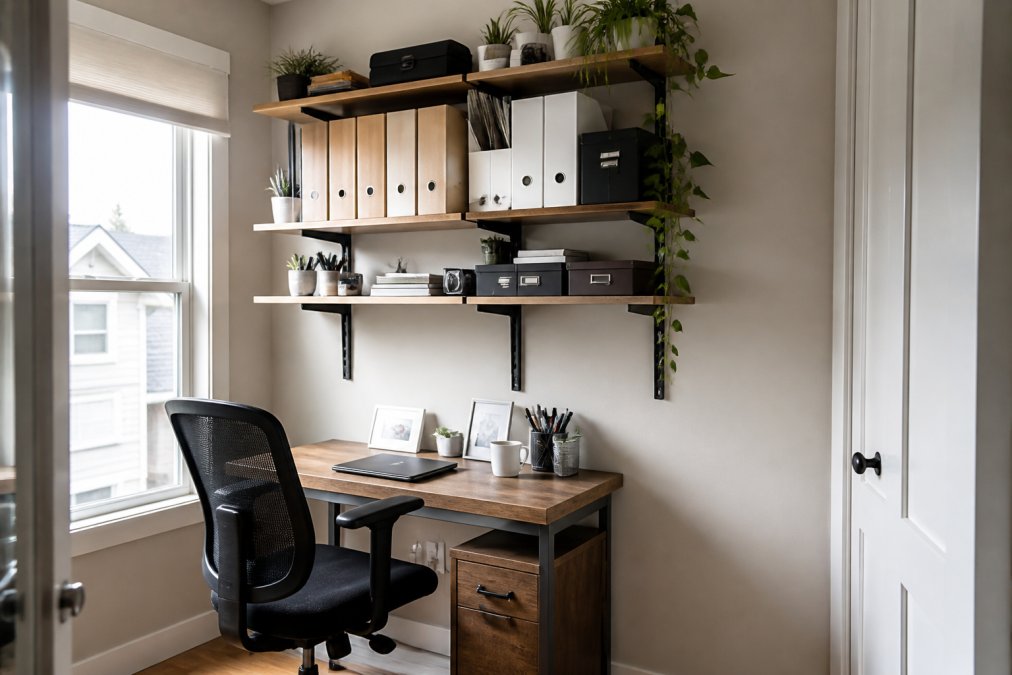
Start by auditing what's currently on your desk and floor. Separate items into three categories: daily use, weekly use, and archive. Daily-use items should sit within arm's reach of your seated position, typically 24 to 36 inches from your desk surface (osha.gov). Weekly items can go higher or to the side. Archive materials belong on upper shelves or in wall-mounted cabinets with doors.
Next, measure your available wall space carefully. Small offices often have awkward layouts with windows, doors, and electrical outlets creating dead zones. Map out these constraints before buying anything. Knowing your actual available dimensions prevents expensive mistakes and wasted purchases.
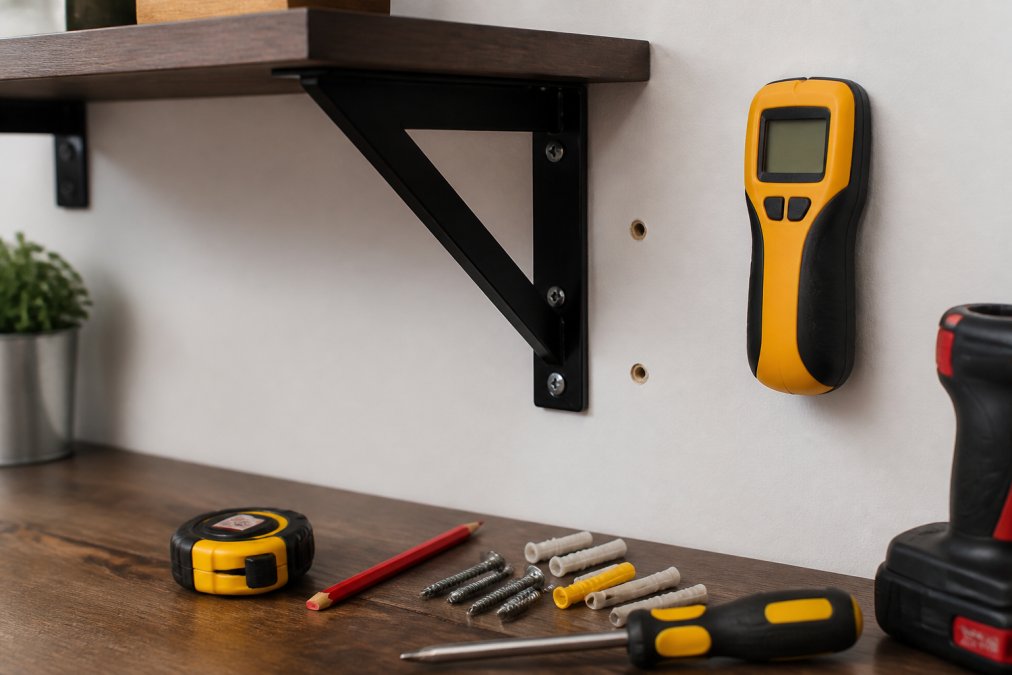
Choose the right mounting hardware for your wall type. Drywall requires different anchors than plaster or concrete. Load-bearing studs hold more weight than drywall alone. Getting this wrong leads to shelves that sag or collapse. Understanding your wall type before purchasing storage is critical.
Finally, arrange your wall-mounted storage to support your actual workflow. If you're handling files constantly, wall-mounted file organizers should be at eye level. If you're on video calls, keep the wall behind your chair clear or use closed cabinets instead of open shelving to avoid visual clutter in the background.
Vertical Office Storage Ideas That Actually Fit Small Spaces
Vertical office storage comes in several distinct types, each solving different problems. Match the storage type to what you're actually storing and how often you access it.
Floating Shelves and Open Storage
Floating shelves are the most popular choice for small offices because they're visually light and highly flexible. The mounting hardware is hidden inside the shelf itself, creating a clean, minimal look that doesn't feel heavy in a cramped space.
Floating shelves are adaptable. You can install them at any height, adjust spacing between shelves, and add or remove shelves as your needs change. For a tiny office, this flexibility is valuable.
Most floating shelves designed for home use hold between 25 and 50 pounds per shelf (peer-reviewed research). That's adequate for files, books, and office supplies, but not for heavy equipment. Know your shelf's actual weight capacity and distribute weight carefully.
Open shelving creates visual airiness in a small space. Unlike closed cabinets, open shelves don't block light or create visual bulk. The downside is dust accumulation and visual clutter. If your office is visible during video calls, open shelving shows every item you own.
Wall-Mounted Cabinets and Closed Storage
Wall-mounted cabinets solve the visual clutter problem by hiding contents behind doors. For tiny offices where you're on video calls or hosting clients, this is often the better choice.
Cabinets come in two main styles: shallow cabinets (6 to 8 inches deep) and standard cabinets (12 to 15 inches deep). In a small office, shallow cabinets are usually smarter. They provide storage without protruding far into your already-limited floor space.
A full cabinet loaded with supplies can weigh 40 to 80 pounds. That weight needs to be properly distributed across wall studs or heavy-duty anchors. A cabinet that's undersupported will eventually sag or pull away from the wall.
Pegboards and Modular Systems
Pegboards are underrated for small offices. A pegboard is essentially a panel with evenly-spaced holes that accept hooks, shelves, baskets, and other accessories. The genius of pegboards is modularity, you can rearrange the entire system in minutes without tools.
For a tiny office where your storage needs might change frequently, pegboards offer flexibility that fixed shelving doesn't. A well-organized pegboard with color-coded baskets and labeled sections can look intentional and designed.
Pegboards typically support 5 to 15 pounds per hook depending on the hook type and pegboard thickness. That's fine for light supplies and small baskets, but not for heavy equipment or large quantities of files.
Space-Saving Office Furniture That Complements Wall Storage
Wall-mounted storage works best when paired with furniture that also respects your limited floor space.
A wall-mounted desk is the natural partner for wall-mounted storage. A wall-mounted desk can be as simple as a shelf that's deep enough to work at, or as sophisticated as a fold-down desk that closes against the wall when not in use. Either way, it eliminates the need for a freestanding desk frame, freeing up floor space.
Vertical filing solutions replace traditional filing cabinets. Wall-mounted file organizers or shallow cabinets use vertical space. Some wall-mounted file systems hold 50 to 100 files in a footprint smaller than a standard piece of paper.
Shelving units that extend to the ceiling use every inch of vertical space. Keep upper shelves organized and uncluttered so they don't create a visual ceiling that makes the room feel smaller.
Wall-mounted monitor arms free up desk space by moving your screen off the desk surface. A typical monitor takes up 6 to 8 inches of depth on your desk. A wall-mounted monitor takes up zero.
Cable management systems that attach to walls or desks keep cords organized and off the floor. Wall-mounted cable trays or adhesive cable clips organize cords vertically, running them up the wall instead of across the floor.
Installation Safety and Weight Capacity Guidelines
Poor installation creates safety hazards. A shelf that pulls away from the wall can injure someone. Installation safety isn't optional.
Understanding Wall Types and Load-Bearing Capacity
Different wall types support different weight limits.
Drywall is the most common wall material in residential spaces. Drywall alone can hold approximately 10 to 15 pounds using heavy-duty anchors (osha.gov). That's enough for light shelves, but not for storage loaded with files or supplies.
Wall studs are the wooden or metal framing behind drywall, typically spaced 16 inches apart. A stud can hold 20 to 30 pounds per fastener. A shelf mounted directly into studs can hold 50 to 100 pounds depending on the number of fasteners and the shelf design. For loaded file storage, stud mounting is essential.
Plaster walls are common in older buildings. Plaster can hold 15 to 20 pounds using specialized plaster anchors, but drilling into plaster requires care, the material can crack if you use standard drywall anchors.
Concrete or masonry walls require concrete anchors or masonry screws. Concrete can hold 25 to 50 pounds per anchor depending on anchor type and installation depth.
Before installing anything, locate the studs in your wall using a stud finder. This is non-negotiable. Mark the stud locations with a pencil before drilling.
If your desired shelf location doesn't align with studs, heavy-duty drywall anchors (toggle bolts or molly bolts) can hold 25 to 50 pounds in drywall alone, but only if properly installed. They're reliable if you follow installation instructions exactly, but they're not as strong as stud mounting.
Calculate the total weight you're planning to hang. Add up the shelf weight, the hardware weight, and the weight of everything you're storing. Never exceed your wall's capacity.
Rental-Friendly Mounting Options
Renters face a specific constraint: you can't damage the walls without losing your security deposit.
Adhesive mounting strips can hold 10 to 20 pounds depending on the brand and surface preparation. The wall must be clean, dry, and free of dust or texture for the adhesive to grip properly.
Damage-free picture hanging hooks use special adhesive that removes cleanly without damaging paint or drywall. They typically hold 5 to 10 pounds, adequate for light shelves or pegboards but not for loaded file storage.
Tension rods can work for lightweight storage between studs or in corners. A tension rod mounted horizontally can support lightweight baskets or supplies using pressure instead of fasteners.
For heavier storage in rental situations, freestanding shelving units that don't require wall mounting are often the practical choice.
Cable Management and Ergonomic Placement
Wall-mounted storage only works if it doesn't create new problems. Poor placement creates ergonomic strain, and poor cable management creates visual chaos.
Ergonomic placement means storing items where you can access them without repetitive strain. Your most frequently-used items should sit between shoulder and waist height when seated. Items you use occasionally can go higher or lower.
Cable management prevents visual chaos that undermines your storage efforts. Cable trays, adhesive clips, or cable sleeves organize cords vertically, running them up the wall and hiding them behind shelves or in cable management channels.
If you have a wall-mounted monitor, run the monitor cable and power cable up the wall using adhesive clips, spacing them 12 to 18 inches apart. If you have multiple devices, a cable tray mounted behind your desk consolidates all cables in one location.
Position task lighting to the side of your monitor to avoid glare. If you're using wall-mounted shelves above your desk, position lighting so it illuminates the shelf contents without creating shadows on your work surface.
Real Pros and Cons of Wall-Mounted Storage in Tiny Offices
Wall-mounted storage is genuinely useful for tiny offices, but it's not universally the right choice.
When Wall-Mounted Storage Wins
Wall-mounted storage is the right choice when floor space is genuinely precious. If you're working in a 100-square-foot office and you need file storage, a wall-mounted solution preserves floor space that a traditional filing cabinet would consume.
Wall-mounted storage also wins when you need visual organization. Open shelving with labeled sections creates a sense of order that makes a small space feel intentional instead of cramped.
Wall-mounted storage is superior when you're on video calls. Closed wall-mounted cabinets keep clutter out of your background. Open shelving with organized supplies looks intentional and professional.
Wall-mounted storage is the right choice when you have limited vertical wall space but adequate wall height. You're using space that's otherwise wasted.
When It Falls Short
Wall-mounted storage isn't ideal when you need heavy-duty storage for equipment. A wall-mounted shelf can hold files and office supplies, but not a server, large printer, or heavy equipment.
Wall-mounted storage also falls short when you need frequent access to archived materials. If you're constantly pulling files from upper shelves, you're creating ergonomic strain and wasting time.
Wall-mounted storage is problematic in rental situations if you're not comfortable with damage-free mounting. Adhesive strips and tension rods have weight limits that might not accommodate your storage needs.
Wall-mounted storage also requires planning and installation effort. If you're not comfortable drilling into walls or locating studs, the setup barrier is higher than buying a freestanding shelving unit.
Finally, wall-mounted storage can feel visually cluttered if it's poorly organized. Open shelving with disorganized supplies looks worse than a closed cabinet with the same contents. If you're not naturally organized, closed cabinets or freestanding storage with doors is a better choice.
Wall-mounted storage genuinely works for tiny offices when you understand its real strengths and limitations. It's not a universal solution, but for offices where floor space is genuinely precious and you need to preserve every square foot, it's often the most practical choice. The key is matching the storage type to your actual workflow, ensuring proper installation for safety, and organizing contents so the storage contributes to visual calm instead of creating visual chaos.
At Viva homeStore, we understand that tiny offices demand storage solutions that work harder than traditional furniture. Our curated selection of wall-mounted shelving, cabinets, and organizational systems is designed specifically for spaces where every inch matters. Whether you're setting up a home office for the first time or optimizing an existing workspace, we have practical storage solutions that maximize your vertical space while maintaining the functionality your work requires. Explore our collection to find the wall-mounted storage that transforms your tiny office into a workspace that actually works.
Frequently Asked Questions
Q: What is the best wall storage for small spaces?
A: Wall-mounted storage works best for small spaces because it uses vertical space instead of consuming floor area. Floating shelves, wall-mounted cabinets, and pegboards all maximize storage capacity while keeping your desk surface clear. Choose closed cabinets if you want a professional aesthetic and to hide clutter, or open shelving if you need quick access to frequently used items. The best option depends on your office layout and what you need to store.
Q: How much weight can wall-mounted shelves actually hold?
A: Weight capacity depends on your wall type and mounting hardware. Shelves mounted into wall studs can typically hold 25-50 pounds per shelf, while drywall anchors alone hold 10-25 pounds. Always check your shelf's specifications and use the appropriate anchors for your wall. For tiny offices with heavier items like books or equipment, stud mounting is essential. Never exceed the manufacturer's weight limit, as overloading can damage walls and create safety hazards.
Q: Can renters use wall-mounted storage without losing their security deposit?
A: Yes, renters have rental-friendly options. Command strips and adhesive-backed shelves require no drilling and leave no permanent damage when removed properly. Tension rods and freestanding shelving units also work without wall modifications. Before installing anything, review your lease and contact your landlord. For small offices, these damage-free solutions can provide significant storage without the commitment of permanent installation.
Q: Does wall-mounted storage actually make a tiny office feel bigger?
A: Wall-mounted storage can make a small office feel larger because it clears floor space and reduces visual clutter. When items are organized vertically instead of stacked on surfaces, the room feels more open and functional. Open shelving creates an airy feel, while closed cabinets provide a minimalist appearance. The key is keeping wall-mounted items organized and accessible so they enhance the space rather than create a cramped, cluttered impression.
This article was written using GrandRanker